Little Nicholas: Life of a Scoundrel
Netflix, 2023–2024 · The Spanish fraud case of "El Pequeño Nicolás"
Quick facts
What Is the Series About?
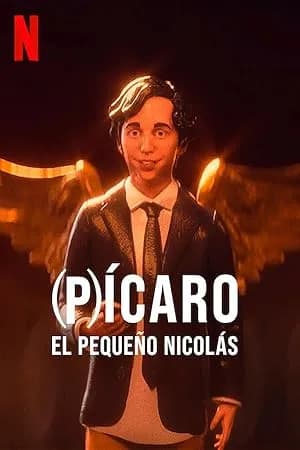
Little Nicholas: Life of a Scoundrel is a Netflix documentary series about the real-life Spanish fraud case of Francisco Nicolás Gómez Iglesias, the young man from Madrid who became nationally infamous under the nickname El Pequeño Nicolás — Little Nicolás. The three-episode docuseries, directed by Tomás Ocaña and created by Adolfo Moreno, revisits how a teenager with no official position allegedly managed to move freely through Spain's most guarded corridors of power: political party offices, royal circles, business élites, and even the fringes of the country's intelligence services. Netflix lists the series as a 2023 production, while IMDb and Rotten Tomatoes record its streaming release date as February 15, 2024.
The series is not a murder case documentary. It belongs to a rarer and arguably more unsettling sub-genre of true crime: the long con — a story about social engineering, institutional credulity, and the dangerous gaps in accountability that allow a determined impostor to flourish.
---
The Case
Who Is Francisco Nicolás Gómez Iglesias?
Francisco Nicolás Gómez Iglesias was a young Spaniard who, according to the public record and the framing of the Netflix trailer, began his rise through Madrid's elite social and political networks while still a teenager. Starting in nightlife promotion and PR work — sectors where personal charisma and name-dropping open doors — he allegedly leveraged each new contact into the next, gradually constructing a reputation as someone with genuine official influence.
His nickname, El Pequeño Nicolás, was partly a reference to his youth and partly a nod to the outsized ambition that seemed wildly disproportionate to his age and actual status. The trailer for the docuseries describes him as the Spanish rogue who "put the government in check" — language that captures the scale of the embarrassment his case caused for Spain's political establishment.
The Crime: Fraud, Impersonation, and Influence-Peddling
The core allegations against Gómez Iglesias center on fraud, impersonation, and influence-peddling. He is accused of presenting himself as a figure with official authority or deep government connections, using that manufactured credibility to gain access, extract favors, and benefit materially and socially from relationships that were built on deception. The case was rooted primarily in Madrid, and his arrest was ordered in 2014 after his activities came under scrutiny.
What made the case particularly explosive in Spain was not just the alleged deception itself, but the list of people and institutions the deception reportedly touched: politicians, businessmen, members of the Royal House, and individuals connected to the country's secret services. The documentary frames this as a scandal that implicated not only one young con man but also the systems and gatekeepers that failed to stop him.
Victims and Legal Proceedings
Because this is a fraud and impersonation case rather than a violent crime, there is no single named homicide victim. The people and institutions allegedly deceived are diffuse — political contacts, business figures, and state bodies that may have been manipulated or embarrassed through Gómez Iglesias's access. The full final legal outcome of his case — including any definitive sentence — is not fully verifiable from the sources available for this article, and the docuseries itself presents the case as an ongoing subject of controversy rather than a closed chapter.
---
Production
The series was directed by Tomás Ocaña and created by Adolfo Moreno. It runs to three episodes and is produced in European Spanish, rated TV-MA. According to Netflix's own description, the docuseries "revisits his case through key testimonies," and the trailer promises unpublished material alongside accounts from "different protagonists" — phrasing that suggests the production secured access to people who had not previously spoken publicly about their encounters with Gómez Iglesias.
The format — retrospective testimony combined with archival and previously unseen material — is consistent with prestige true-crime documentary production. The choice to frame the series around political scandal and institutional failure, rather than purely personal villainy, gives it a dimension closer to investigative journalism than to a conventional perpetrator-focused crime documentary.
The series can be streamed on Netflix and is catalogued on Rotten Tomatoes under the genres Documentary and Crime.
---
Reception
Rotten Tomatoes classifies the series as a Documentary Crime production and summarizes it as an investigation into the case of fraudster Little Nicolás. Detailed critical scores and audience ratings are not available in the sources consulted for this article. IMDb lists the series under the title Little Nicholas: Life of a Scoundrel (TV Series 2024) with title ID tt31183676, but a verified user rating score was not available at the time of publication.
The trailer's emphasis on political scandal, royal connections, and intelligence-service intrigue suggests that the series was marketed to an audience already familiar with the case in Spain, while simultaneously positioning it as an accessible entry point for international viewers discovering the story for the first time through Netflix's global platform.
---
The Case Today
As of the documentary's release, Francisco Nicolás Gómez Iglesias remains one of the most talked-about figures in recent Spanish legal and political history — not because of violence, but because of what his story reveals about access, power, and the willingness of established institutions to accept someone at face value. The full legal resolution of the various charges brought against him has not been definitively verified in the English-language sources available for this article.
The decision by Netflix and the production team to revisit the case in 2023–2024 suggests that, nearly a decade after his 2014 arrest, the questions his story raises — about who gets access to power and why — remain unresolved and culturally resonant in Spain and beyond.