Killer Sally
Netflix, 2022 — the Valentine's Day murder of bodybuilder Ray McNeil by his wife Sally
Quick facts
What Is the Series About?
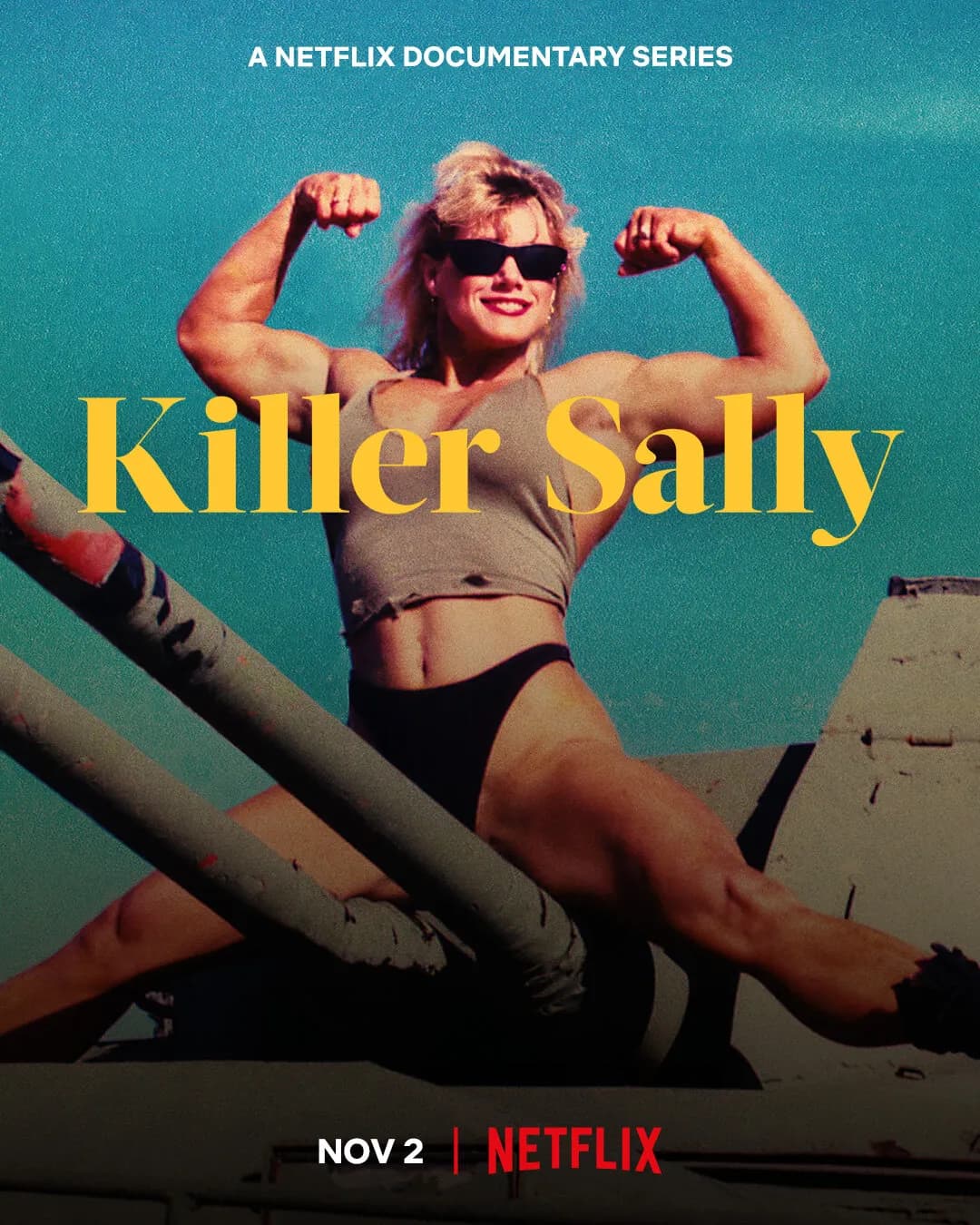
Killer Sally is a Netflix true-crime limited documentary series covering the 1995 Valentine's Day shooting death of bodybuilder Ray McNeil by his wife, Sally McNeil, in Oceanside, California. Directed by Nanette Burstein and released on November 2, 2022, the three-part series weaves together archival footage, competition recordings, and first-person interviews to reconstruct one of the most sensational cases to emerge from the professional bodybuilding world in the 1990s.
Netflix describes the series as a documentary charting "a bodybuilding couple's rocky marriage — and its shocking end in a Valentine's Day murder," featuring interviews with friends, family members, and Sally McNeil herself. The series does not shy away from the contradictions at the heart of the case: was Sally a cold-blooded killer, or a domestic abuse survivor who acted in desperation?
---
The Case
The Couple
Sally Marie McNeil — known professionally as Killer McNeil — was a former U.S. Marine sergeant who became a competitive professional bodybuilder. Her husband, Ray McNeil, was also a bodybuilding competitor and former Marine. By all outward appearances, they embodied physical power and discipline. Behind closed doors, according to Sally and those close to her, their relationship was defined by volatility, jealousy, and violence.
The couple's world also intersected with the darker edges of the bodybuilding subculture, including allegations of steroid abuse and what some sources have described as "muscle prostitution" — a term that surfaced in coverage of the case and of the documentary, referring to Sally's work performing for male fans as a way to generate income.
Valentine's Day, 1995
On the night of February 14, 1995, Sally McNeil shot Ray McNeil at their home in Oceanside, California. Ray McNeil died from his gunshot wounds. Sally called 911 herself. Her account to investigators was that Ray had returned home that evening and attacked her, choking her, and that she shot him in self-defense to save her own life.
Prosecutors presented a starkly different narrative: that the shooting was deliberate and premeditated, the act of a woman who had decided to kill her husband rather than leave him.
Trial and Conviction
The case went to trial and drew widespread media attention, in part because of the couple's striking physiques and their backgrounds as Marines turned competitive bodybuilders. On March 19, 1996, Sally McNeil was found guilty of second-degree murder and sentenced to 19 years to life in prison. According to reporting around the documentary, her conviction was briefly overturned on appeal before ultimately being reinstated, and she served her sentence.
Central to both the trial and the documentary are unresolved questions about the role of domestic violence and steroid abuse in the relationship — questions that made the case a flashpoint in broader debates about how the justice system treats women who kill abusive partners.
---
Production
The series was directed by Nanette Burstein, a documentary filmmaker known for character-driven nonfiction work. Burstein secured a significant degree of access for the project: Sally McNeil herself appears on camera, speaking directly about her marriage, the night of the shooting, her trial, and her years in prison. Friends and family members of both Sally and Ray also participate, providing a multi-perspective account that resists easy conclusions.
According to Esquire's deep-dive into the true story behind the series, the documentary places Sally's account of abuse within the broader context of her life — her military service, her drive as an athlete, and the financial and emotional pressures of the bodybuilding circuit. Burstein's approach gives Sally substantial room to present her own version of events while also allowing other voices, including those skeptical of her self-defense claim, to be heard.
The series is structured across three episodes, each building on the last to trace the arc from the couple's early relationship through the crime, the trial, and Sally's life after prison.
---
Reception
Critical and audience reception to Killer Sally has been largely positive, with reviewers particularly noting the documentary's emotional weight. Boing Boing described the series as "a heartbreaking tale of abuse and trauma," emphasizing the domestic-violence dimension of the case and praising Burstein's willingness to sit with the moral complexity of Sally's story.
Other coverage highlighted the controversy the series generated. The documentary's frank discussion of steroid culture, the bodybuilding world's more exploitative corners, and the nature of Sally and Ray's relationship sparked debate among viewers about how to weigh Sally's claims of victimhood against the fact of Ray McNeil's death. Den of Geek's breakdown of the true story notes that the series does not attempt to deliver a clean verdict on Sally's guilt or innocence, instead presenting the available evidence and testimony and leaving interpretation to the audience.
Public reaction, as reflected in social media commentary and forum discussions, has been polarized — some viewers sympathizing with Sally as a domestic abuse survivor, others remaining unconvinced by her self-defense account. The IMDb listing for the series carries the title ID tt22646714; a precise aggregate rating was not available at time of publication.
---
The Case Today
Sally McNeil was paroled in 2020 after serving the bulk of her sentence. People magazine reports that she has since remarried and is living privately, away from the public spotlight that surrounded her during the trial and again following the release of the Netflix documentary.
Ray McNeil's death remains a case study in the intersection of domestic violence, the culture of competitive bodybuilding, and the limits of self-defense law. The release of Killer Sally in 2022 reignited public discussion about these themes and introduced the case to a new generation of true-crime viewers who were not yet born when Ray McNeil was shot on Valentine's Day, 1995.
For those seeking to understand the full arc of the case — from the couple's early relationship to Sally's life after prison — the three-part Netflix series remains the most comprehensive account publicly available.