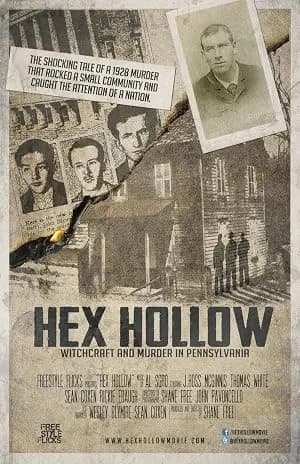
Hex Hollow: Witchcraft and Murder in Pennsylvania
Apple TV Store, 2015 — the 1928 powwow murder in York County, Pennsylvania
Quick facts
What Is the Series About?
Hex Hollow: Witchcraft and Murder in Pennsylvania is a 2015 feature-length documentary film directed by Shane Free and available on the Apple TV Store (IMDb: tt3145016). It investigates one of Pennsylvania's most bizarre and enduring true-crime cases: the 1928 murder of Nelson Rehmeyer, a folk healer killed by three local men who were convinced he had placed a supernatural hex on them. The film blends criminal history, regional folklore, and cultural anthropology to tell a story that is as much about belief systems as it is about bloodshed.
---
The Case
On Thanksgiving night, 1928, in the rural hollow that now bears the victim's name, three men — John Blymire, Wilbert Hess, and John Curry — made their way to the remote York County farmhouse of Nelson Rehmeyer. Rehmeyer was a local farmer and a practitioner of Braucherei, a Pennsylvania Dutch tradition of faith healing and folk magic popularly known as "powwow." According to accounts of the case, Blymire had come to believe that Rehmeyer was responsible for a hex that had blighted his life for years — causing illness, bad luck, and misfortune. He was not alone in that belief.
Blymire had consulted another powwow practitioner, who reportedly identified Rehmeyer as the source of the curse and advised that the only way to break it was to obtain Rehmeyer's personal copy of a famous German-American folk-magic book, Long Lost Friend, and bury it — or, alternatively, to take a lock of Rehmeyer's hair and bury that. What followed was not a simple theft. The three men attacked Rehmeyer, beat him to death, and subsequently attempted to burn his body inside his own home. The killing met the legal threshold for first-degree murder, and the arson added another layer of horror to an already shocking crime.
Police arrested all three suspects quickly. The trial that followed became a sensation — locally and nationally — because the defendants' stated motive was not greed, jealousy, or rage in any conventional sense, but a sincere and deeply held belief in witchcraft and folk curses. The courtroom effectively became a venue for debating the Pennsylvania Dutch powwow tradition itself.
John Blymire was convicted of first-degree murder and sentenced to life in prison. Wilbert Hess and John Curry were each convicted of second-degree murder. Historical sources offer somewhat conflicting sentencing details for Hess and Curry — some cite sentences of 10 to 20 years, while others suggest all three originally received life terms — but all three men were eventually paroled and went on to live comparatively quiet lives after their release. The exact details of their later years are not fully documented in available historical records.
---
Production
Directed by Shane Free, Hex Hollow is a feature-length documentary rather than a multi-episode series. It was released in 2015 and made available through the Apple TV Store. Free's film draws on the rich historical record of the 1928 case — court documents, local newspaper archives, and the cultural history of Pennsylvania Dutch powwow tradition — to reconstruct both the crime itself and the world that produced it.
The documentary is notable for treating its subject with a degree of anthropological seriousness. Rather than sensationalizing the witchcraft angle purely for shock value, it attempts to contextualize the powwow tradition within Pennsylvania German immigrant culture — a tradition that blended Christian prayer, herbal folk medicine, and ritual into a coherent (if, to outsiders, strange) belief system. Understanding why Blymire, Hess, and Curry genuinely feared Rehmeyer is central to the film's approach.
No major details about production budget, crew size, or behind-the-scenes access are confirmed in available sources. The documentary's IMDb identifier is tt3145016.
---
Reception
Critical and audience reception data for Hex Hollow is limited in publicly available sources. No verified IMDb score is currently confirmed. However, the documentary has been positively cited within Pennsylvania local history circles: at least one York County history source describes the film as "accurate" and recommends it to researchers and curious viewers interested in the case. Among true-crime and folklore enthusiasts, the underlying story is consistently highlighted as one of Pennsylvania's strangest and most culturally layered criminal cases — and the film is noted as a credible entry point into that history.
The case itself remains a persistent point of fascination and mild controversy. The central tension — between folk-magic belief as a lived cultural reality and folk-magic belief as a driver of violence — has never fully resolved in popular retellings. Some accounts frame Blymire and his accomplices primarily as victims of extreme superstition and rural isolation; others emphasize that a man died a brutal death regardless of the metaphysical justifications offered. The documentary, according to available descriptions, navigates this tension without fully resolving it, which may account for its appeal to audiences interested in both true crime and American folklore.
---
The Case Today
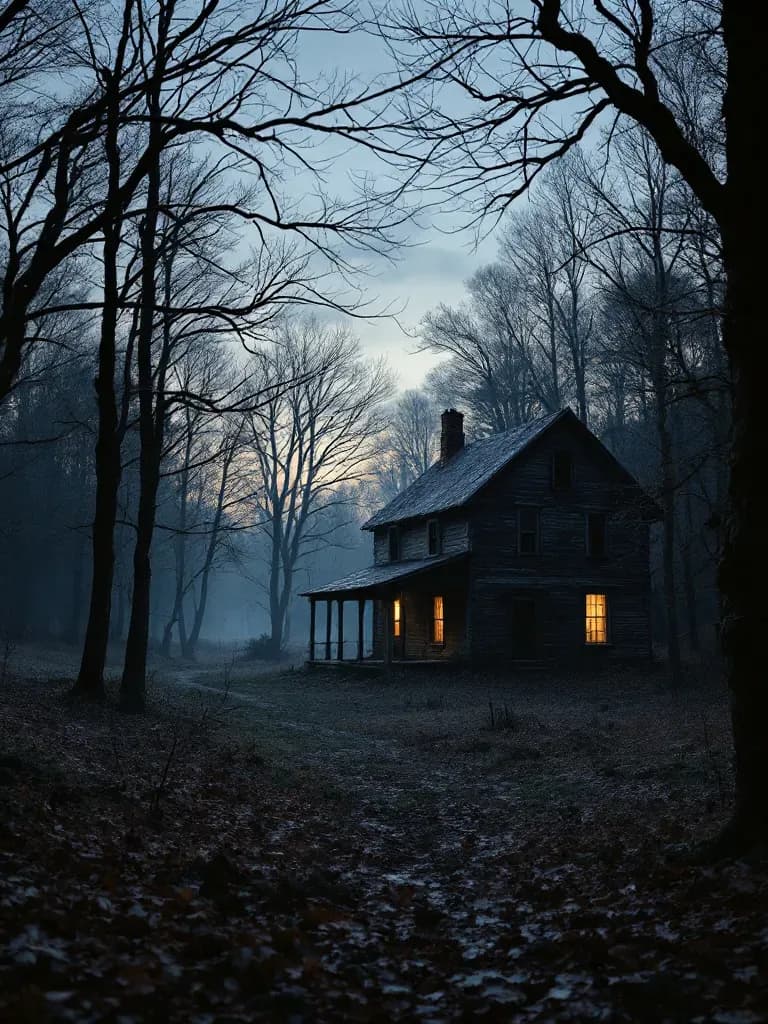
Rehmeyer's Hollow in York County, Pennsylvania, still exists and remains a site of local historical interest. The hollow and the Rehmeyer farmhouse have been referenced repeatedly in regional history publications, podcasts, and documentary media in the decades since the murder. The story has also been adapted into theatrical and literary forms over the years, a testament to its stubborn grip on the American folk imagination.
All three perpetrators died years ago. The powwow tradition they so grotesquely inverted has itself largely faded from active practice in Pennsylvania Dutch communities, though it remains a subject of serious academic and folkloric study. Nelson Rehmeyer's farmhouse still stands.
For viewers discovering the case through Hex Hollow, the documentary serves as a solid introduction to a murder that is equal parts American folk history and true-crime horror — a case that, nearly a century later, has lost none of its power to unsettle.