Grégory (Who Killed Little Gregory?)
Netflix, 2019 — The unsolved 1984 murder of four-year-old Grégory Villemin in France
Quick facts
What Is the Series About?
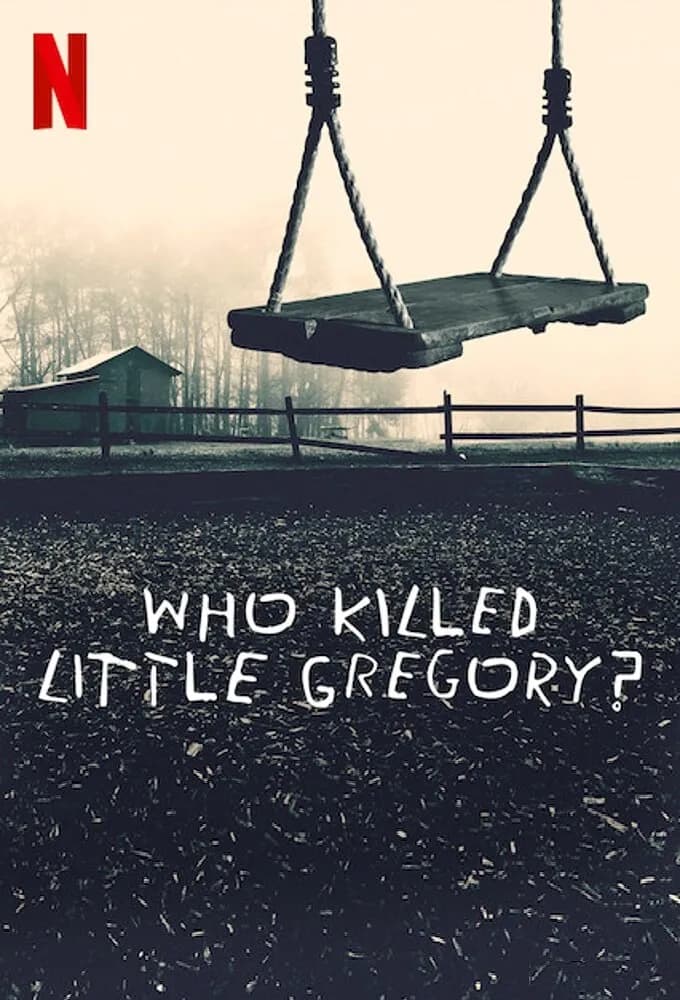
Who Killed Little Gregory? (original French title: Grégory) is a Netflix true crime documentary series that examines one of France's most haunting and enduring unsolved criminal cases: the 1984 murder of four-year-old Grégory Villemin. Released on 20 November 2019, the five-episode limited series reconstructs more than four decades of investigation, judicial missteps, media hysteria, and family tragedy — a saga so complex and emotionally charged that it permanently altered the French public's relationship with both the justice system and tabloid journalism.
The series has been widely described as France's first contemporary true-crime saga, and its 8.2/10 rating on IMDb reflects the gripping quality that has drawn viewers across the world to a case that, despite all the years and all the suspects, has never been resolved.
The Case: L'Affaire Grégory
On the afternoon of 16 October 1984, four-year-old Grégory Villemin vanished from his family home in Lépanges-sur-Vologne, a small commune in the Vosges department of northeastern France. Within hours, his small body was recovered from the Vologne river, near the village of Docelles. His hands and feet had been bound with rope. He had been drowned.
The tragedy was compounded almost immediately by the arrival of an anonymous letter. A figure who had long tormented the Villemin family with threatening correspondence — known only as Le Corbeau (The Raven) — claimed responsibility for the murder, stating that the killing was an act of personal revenge against the family. The letters, filled with venom and specific knowledge of the Villemins' private life, pointed toward someone close to the family. But who?
What followed was one of the most chaotic and painful criminal investigations in French legal history. Police, journalists, and the public alike became consumed by the case. Suspicion fell on several individuals over the years.
Christine Villemin, Grégory's own mother, was detained in 1985 following accusations fueled in part by Le Corbeau's letters and an overzealous media. She was released without charge, but the damage to her reputation was catastrophic. Her case became a cautionary tale about trial by media.
Bernard Laro, an uncle of Grégory, was suspected due to inconsistencies in his alibi. He never faced formal charges. In 1989, Grégory's father — consumed by grief and suspicion — shot and killed Laro. The father was subsequently imprisoned.
Jacqueline Jacob, Grégory's great-aunt, has remained a figure of interest for investigators well into the 21st century. In June 2017, she, along with a great-uncle and an aunt, were arrested based on new DNA evidence. Investigations have continued into 2025, with Jacob questioned again and the possibility of formal indictment reported.
Despite all of this — the arrests, the tears, the decades of legal wrangling — no one has ever been convicted of Grégory Villemin's murder. The case remains officially open.
A Nation Obsessed: The Media Dimension
One of the most extraordinary aspects of l'Affaire Grégory is not just the crime itself, but the way France consumed it. The documentary series places significant emphasis on the role of the press in distorting the investigation. Journalists published unverified accusations, camped outside the Villemin home, and helped transform Christine Villemin into a public villain without a shred of legal evidence. Critics of the coverage have called it a modern-day witch trial.
As The Independent noted in its coverage of the Netflix series, the case exposed how dangerously the French tabloid press of the 1980s could influence public perception of criminal suspects — and how little protection ordinary citizens had against that kind of exposure.
The anonymous letter-writer, Le Corbeau, added another layer of sinister theater to the case. The letters were not just threats — they were performances, suggesting a perpetrator who wanted not only to harm but to be seen harming. Whether Le Corbeau was one person or several, whether they acted alone or as part of a coordinated conspiracy of neighbors driven by long-festering resentments, remains one of the case's central unanswered questions.
Production
Who Killed Little Gregory? was released as a Netflix Original production on 20 November 2019, running across five episodes of approximately 60 minutes each. The director has not been publicly credited in official sources. The series draws on archival news footage, court documents, family interviews, and expert testimony to reconstruct both the crime and the decades of investigation that followed.
The production is notably thorough in its attention to detail. It maps the labyrinthine cast of suspects, relatives, investigators, and journalists who have orbited this case for over 40 years. Community discussions have noted that the sheer number of characters can be challenging for non-French viewers, particularly those unfamiliar with the family dynamics and regional context — but most agree the series handles this complexity with admirable clarity.
Netflix has described the series as riveting, provocative, and inquisitive — a characterization that holds up across all five episodes.
Reception
The series has been warmly received by both critics and audiences. Its IMDb rating of 8.2/10 places it among the most highly regarded true crime documentaries on the platform. Viewers have praised its haunting tone, its refusal to offer easy answers, and its rigorous reconstruction of a case that has defied resolution for more than four decades.
Critically, the documentary has been lauded for its willingness to interrogate not just the crime but the institutions — press, judiciary, police — that repeatedly failed to deliver justice. The portrayal of Christine Villemin's ordeal has been particularly noted: some viewers see it as a damning indictment of media excess; others continue to debate her potential involvement, a controversy the series presents without false resolution.
The dense narrative and large cast of characters have been flagged as potential accessibility issues for international viewers, but the majority consensus is that the reward is worth the effort.
The Case Today
L'Affaire Grégory is not history — it is an ongoing investigation. In June 2017, French authorities made three new arrests, including that of Grégory's great-aunt Jacqueline Jacob and other family members, following fresh DNA analysis. Those arrests generated enormous media attention and briefly rekindled hope that the case might finally be resolved.
That hope has not yet been fulfilled. As of June 2025, Jacqueline Jacob has been questioned again by investigators, with reports suggesting a formal indictment may be approaching. The current working theory among investigators involves a conspiracy of several neighbors or family members, motivated by deep-seated animosity toward the Villemin family.
More than 40 years after a four-year-old boy was pulled from the Vologne river with his hands and feet tied, France is still asking: who killed little Gregory?
Who Killed Little Gregory? is streaming now on Netflix.