Dancing for the Devil: The 7M TikTok Cult
Netflix, 2024 — The cult abuse allegations against Robert Shinn and 7M Films
Quick facts
What Is the Series About?
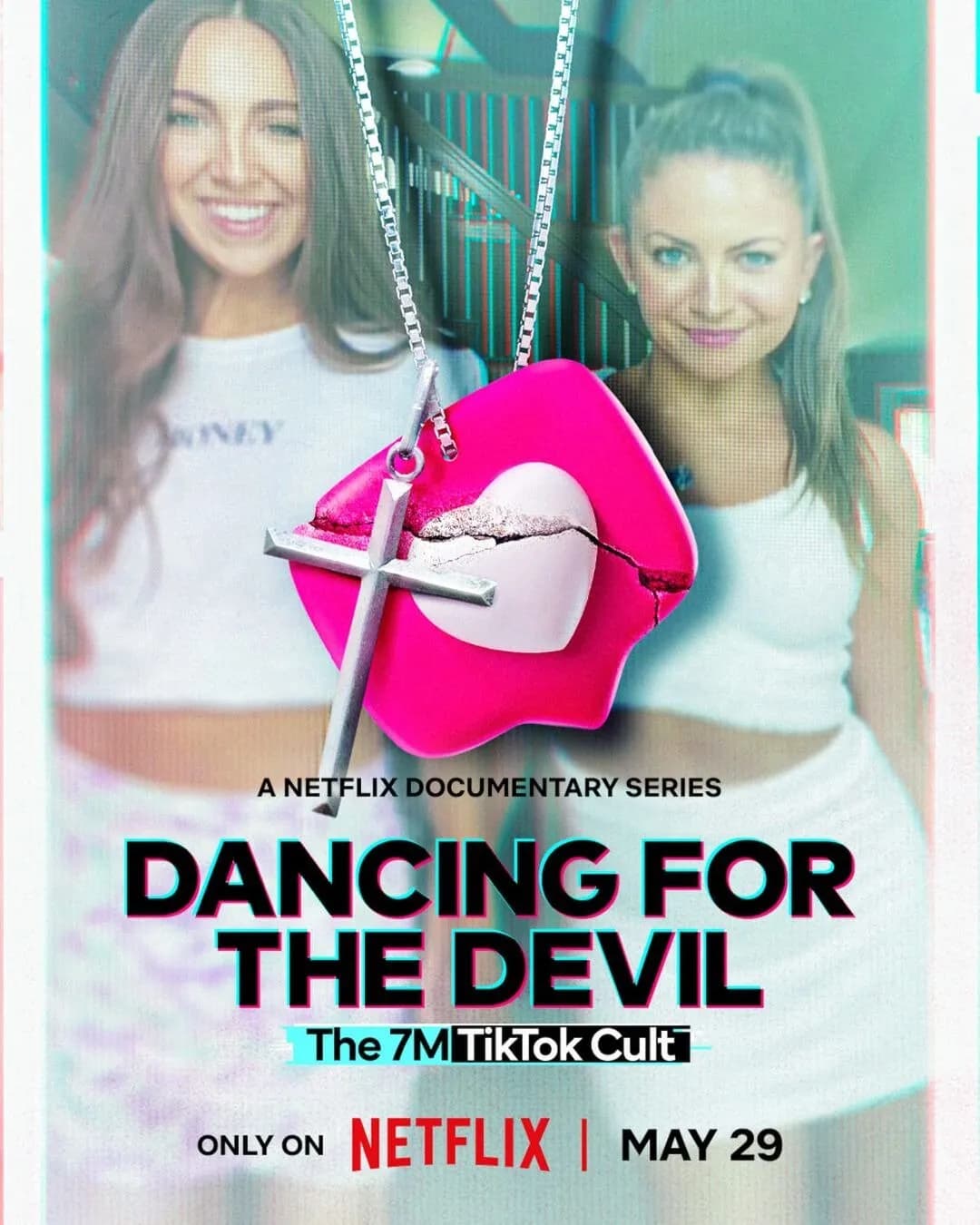
Dancing for the Devil: The 7M TikTok Cult is a three-part Netflix documentary series — directed by Derek Doneen and released on May 29, 2024 — that investigates the allegations of cult-like abuse surrounding Robert Israel Shinn, founder of talent management company 7M Films and pastor of Shekinah Church in Los Angeles, California. The series does not document a single solved homicide or a closed criminal prosecution. Instead, it places viewers inside an ongoing and deeply unsettling story: families torn apart, young TikTok dancers cut off from the people who love them, and civil lawsuits that were still winding toward trial as the cameras rolled.
At its emotional core, the documentary follows Melanie Wilking and her desperate effort to reach her sister Miranda Derrick (born Miranda Wilking), a successful TikTok dancer who became deeply embedded in the 7M and Shekinah world. Their story became a focal point for the broader allegations against Shinn — allegations that his operation used religious devotion, psychological manipulation, and financial control to isolate members from their families and exploit their talent and labor.
The Case
Robert Israel Shinn is described across reporting as the CEO and founder of 7M Films as well as the pastor of Shekinah Church, which he established in 1994. Over the following decades, according to former members and their families, Shinn built a structure in which young, ambitious performers — many of them Christian — were recruited into what was presented as a faith-based talent management agency, only to find themselves increasingly isolated, financially dependent, and psychologically controlled.
In March 2023, former members filed a civil lawsuit that alleged a sweeping pattern of misconduct: brainwashing, physical abuse, sexual abuse, emotional abuse, manipulation, and exploitation. The suit painted a picture of an organization that used the language of religion and career advancement to trap vulnerable people. Several women also reportedly brought sexual assault allegations to police.
Yet, as The Guardian noted at the time of the series' release, Shinn had not been formally arrested or charged with a criminal offense. He denied wrongdoing and did not participate in the documentary. The civil case was set for trial in 2025, making this one of the rare true-crime series where the central legal question remained genuinely unresolved while audiences were watching.
The alleged crimes span a wide spectrum: coercive control, fraud, labor abuse, extortion, grooming, assault, sexual abuse, and financial exploitation — a playbook that investigators and cult experts have documented in other high-control religious organizations, but which takes on a distinctly modern shape here, weaponized through social media fame and algorithmic visibility.
Production
Director Derek Doneen began filming at the end of 2022, according to reporting around the series' release. His approach leaned heavily on the families left on the outside — parents, siblings, and former friends who had watched their loved ones disappear into the orbit of Shinn and Shekinah Church. Because Shinn himself declined to participate and many current members remained inside the organization, the documentary works largely through interviews with former members and affected families, alongside social media footage, legal documents, and expert commentary on cult psychology.
The three-episode structure gives Doneen room to build the case methodically: establishing what 7M Films presented itself as, documenting the warning signs that families noticed, and then excavating the specific allegations that former members brought forward. The result is a docuseries that feels less like a postmortem and more like a live dispatch from an unfolding crisis — because that is precisely what it is.
Reception
The series drew 4.4 million views in its first week on Netflix, according to figures reported by Variety and covered by the Los Angeles Times — a significant debut that reflected genuine public appetite for the story. Coverage across major outlets emphasized the unusual, unsettling quality of watching a true-crime documentary where the people at the center of the allegations were still living inside the situation being filmed.
Vanity Fair and CNN both highlighted the real-world stakes, noting that individuals featured in the series remained involved with 7M and Shekinah Church even as it aired. That lack of resolution — the absence of an arrest, a verdict, or an escape — gave the documentary an urgency that more conventional true-crime fare often lacks.
On IMDb, the series holds a rating of 6.1 out of 10, reflecting a viewer response that was engaged and often disturbed but not uniformly enthusiastic. Some critics noted that the docuseries' inability to access Shinn or current members created an inevitable imbalance, while others argued that the families' testimonies were sufficiently harrowing to carry the narrative. The central controversy — whether 7M Films is a legitimate talent management company or a cult that exploits its members — remained genuinely contested, with Shinn's representatives maintaining his innocence throughout.
The Case Today
As of the information available at the time of the series' release and in subsequent reporting, Robert Shinn has not been criminally convicted in connection with the allegations detailed in the documentary. The civil lawsuit filed in March 2023 was moving toward a trial date in 2025. Several women had reported sexual assault allegations to police, but no arrest had been made public.
The broader questions the documentary raises — about the intersection of social media celebrity, religious authority, and psychological manipulation — remain as live as ever. Miranda Derrick, whose estrangement from her family became one of the documentary's most painful through-lines, had not publicly broken from 7M or Shekinah Church by the time of the series' release. For the families featured in the film, the documentary was not a conclusion. It was a plea.
For viewers, Dancing for the Devil stands as a reminder that the most disturbing true-crime stories are sometimes the ones that have not yet ended.