Curry & Cyanide: The Jolly Joseph Case
Netflix, 2023 — Six family deaths by cyanide poisoning in Kerala, India
Quick facts
What Is the Series About?
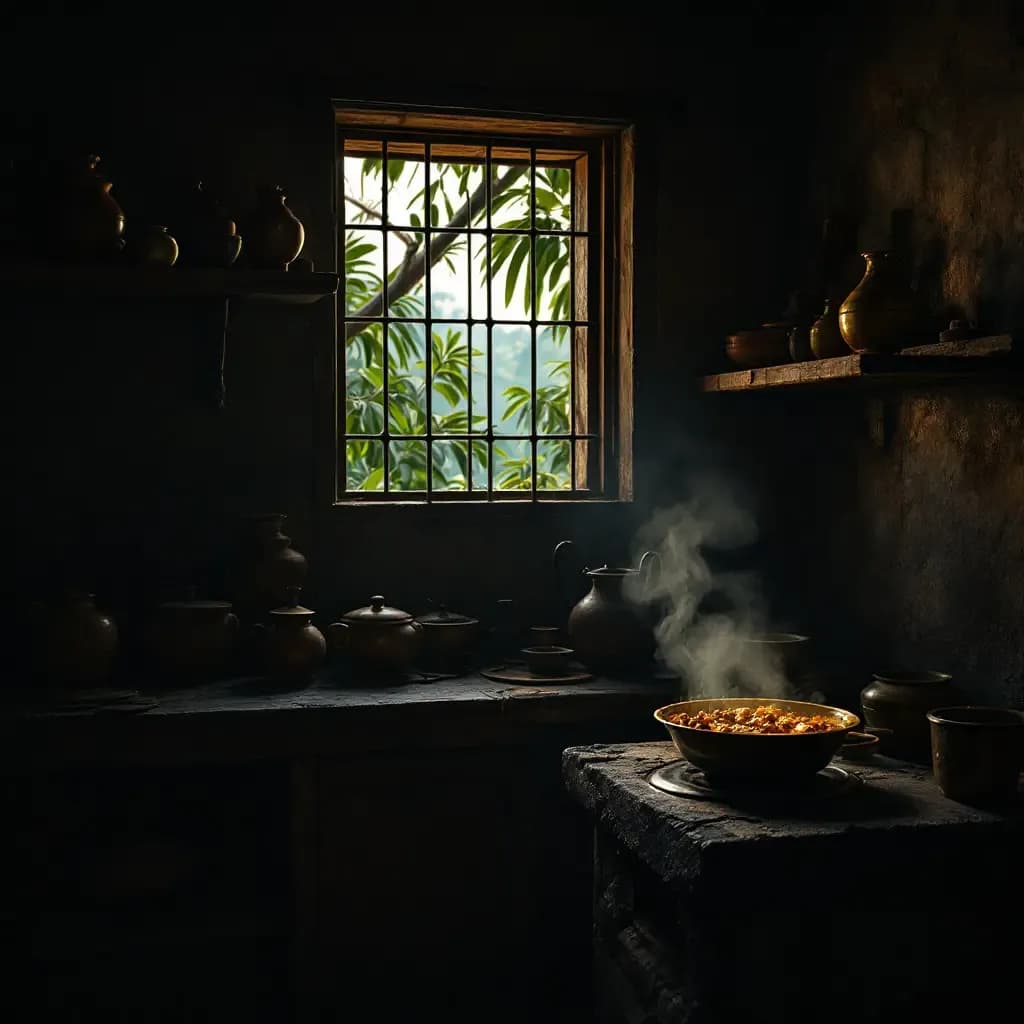
Curry & Cyanide: The Jolly Joseph Case is a Netflix true crime documentary about one of India's most chilling serial poisoning cases — the Koodathayi cyanide killings in Kerala. Released on 22 December 2023 and directed by Christo Tomy, the film runs 1 hour and 35 minutes and is available in Malayalam, Hindi, and English with subtitles in multiple languages. It follows the story of Jolly Joseph, a housewife from the quiet village of Koodathayi in Kozhikode district, who allegedly poisoned six members of her extended family using cyanide-laced food over the course of 14 years — all in pursuit of property, inheritance, and a new marriage.
The documentary draws on first-person testimonials from people connected to the case, weaving together survivor accounts, investigative details, and courtroom context to reconstruct how a woman living in plain sight of her community managed to carry out six murders without raising serious alarm for over a decade.
---
The Case
The Koodathayi killings unfolded between 2002 and 2014 in a small, close-knit village in Kerala, India. According to investigators and the subsequent conviction, Jolly Joseph systematically eliminated family members who stood between her and financial assets or a new romantic relationship.
The six victims, all connected to Jolly's family network, died under circumstances that were individually deemed unremarkable — sudden collapses, apparent health emergencies — but which formed a deeply disturbing pattern in retrospect:
1. Roy Joseph (2002) — Jolly's first husband, who collapsed in the bathroom.
2. An infant (circa 2005–2006) — the young child of a man Jolly had targeted for marriage, who allegedly choked on food.
3. The infant's mother (circa 2007–2008) — the wife of the same man, who died at a dentist's office.
4. Jolly's uncle (circa 2010) — collapsed without warning.
5. Jolly's father-in-law (circa 2011) — collapsed under similarly unexplained circumstances.
6. Jolly's mother-in-law (circa 2014) — the final victim, whose death eventually contributed to growing suspicion.
Following the last death, whispers within the community and persistent questions from family members prompted a closer look by authorities. In 2018–2019, forensic examinations — including exhumation of remains — confirmed the presence of cyanide in victims' bodies, providing the breakthrough investigators needed.
Jolly Joseph was arrested in January 2019. Her alleged motive was twofold: to inherit family property and to clear the path for her relationship with M. S. Mathew, her first husband Roy's cousin, whom she eventually married. Mathew was also arrested and charged as a co-conspirator, though his trial remained pending as of 2026.
In August 2024, the Kozhikode Additional Sessions Court convicted Jolly Joseph on charges of murder and criminal conspiracy, sentencing her to life imprisonment — the maximum penalty for murder under the Indian Penal Code. She remains in custody.
---
Production
The documentary was directed by Christo Tomy (also credited as Christy Tom in some sources), marking a significant entry into the emerging space of Indian true crime content on international streaming platforms. The film is classified as a Netflix India original and represents a growing trend of regional-language true crime productions being made accessible to global audiences.
Rather than relying solely on news footage or archival material, the documentary incorporates first-person testimonials from individuals directly involved in or affected by the case, giving it an intimate, if contested, emotional register. The production team structured the narrative as a single feature-length film rather than a multi-episode series — a choice that some critics felt limited its ability to fully explore the case's complexity.
The official trailer was released ahead of the December 2023 premiere, generating significant interest particularly among Malayalam-speaking audiences familiar with the real-world case, which had been extensively covered by local Kerala media outlets including Manorama and Mathrubhumi.
---
Reception
Critical reception to Curry & Cyanide was decidedly mixed, with reviewers largely acknowledging its subject matter's inherent power while questioning the documentary's execution.
The Times of India awarded the film 3 out of 5 stars, calling it "a chilling recount" of events but noting it remained "surface-level" in its treatment of the material — engaging but not probing.
India Today critic Anuj Kumar described the film as "gripping in parts" but argued it "does not offer new insights," relying heavily on information already in the public domain rather than delivering fresh investigative revelations.
The most pointed critique came from the Indian Express, which called the documentary "dissatisfying," "sensationalist," and likened it to "a sleazy slasher movie masquerading as exhaustively researched" journalism. The review specifically suggested the film would have benefited from a three-episode structure that allowed for greater depth and nuance.
Viewer reactions, particularly on platforms like Reddit's r/MalayalamMovies community, were similarly split — some praised the film's emotional impact and accessibility for non-Malayalam audiences unfamiliar with the case, while others felt it was overly dramatic and insufficiently rigorous for a case of such severity.
No numerical IMDb rating is confirmed in available sources, though qualitative reviews consistently describe the documentary as "gripping" and "chilling" despite its structural limitations. It is listed on Rotten Tomatoes as a Documentary/Crime/Drama with a runtime of 1h 35m.
The documentary also attracted legal scrutiny. In January 2024, co-accused M. S. Mathew filed a plea seeking a ban on the film, arguing it contained misleading material that could prejudice his ongoing trial. The court rejected the plea in March 2024, ruling that Netflix could continue streaming the documentary — a decision that reinforced the documentary's visibility at a critical point in the ongoing judicial proceedings.
---
The Case Today
As of 2026, Jolly Joseph is serving her life sentence following her conviction in August 2024 by the Kozhikode Additional Sessions Court. The verdict closed one chapter of the Koodathayi killings saga, but the legal proceedings are not entirely complete: the trial of M. S. Mathew, the second accused and alleged co-conspirator, remains pending.
The case continues to hold a significant place in India's true crime consciousness, not only because of the extraordinary duration of the killing spree and the intimacy of its domestic setting, but also because it raises uncomfortable questions about how unexplained deaths in close communities can go unexamined for years. The documentary, whatever its critical shortcomings, has ensured that the Koodathayi case reaches audiences far beyond Kerala — and keeps pressure on the justice system to fully account for all those allegedly responsible.
For viewers interested in the full case record, local Kerala media including The Hindu, Manorama, and Mathrubhumi offer more granular reporting on victim identities, exact dates, and court documents than the documentary itself provides.