24 Hours in Police Custody
Channel 4 / ITVX, 2014 — fly-on-the-wall series following real Bedfordshire Police investigations
What Is 24 Hours in Police Custody?
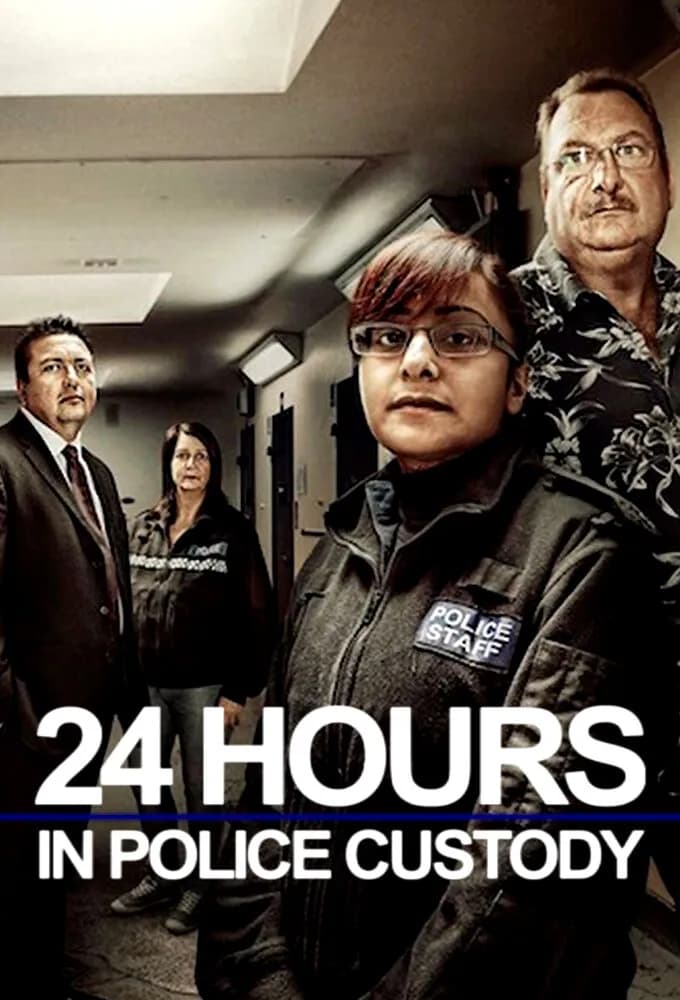
24 Hours in Police Custody is an ongoing fly-on-the-wall documentary series that has aired on Channel 4 since 2014, with episodes also available to stream on ITVX. Produced by The Garden — the same production company behind the acclaimed hospital series 24 Hours in A&E — the show follows real detectives and officers from Bedfordshire Police, primarily its Major Crime Unit, as they investigate serious crimes in and around Luton and the wider East of England, including parts of Cambridgeshire.
Unlike many true crime productions that dramatise or reconstruct events, 24 Hours in Police Custody is filmed entirely in real time with real officers, real suspects, and real victims' families. Cameras are granted extraordinary access inside police interview rooms, incident command suites, and crime scenes. The result is one of the most transparent and unfiltered portrayals of how British law enforcement actually operates.
The title refers to a core legal reality of the UK justice system: police are generally permitted to hold a suspect for only 24 hours before they must charge, release, or apply to a magistrate for an extension. In serious cases such as murder, that window can be extended to 96 hours. This ticking-clock pressure forms the dramatic backbone of every episode.
The Cases
This is not a series about a single crime or a single perpetrator. Each episode — or double-bill — focuses on one distinct investigation, making every instalment a standalone true crime story. Over 20 episodes have aired since the series began in 2014, covering a wide range of serious offences including murder, cold case reinvestigations, stalking, and missing persons inquiries.
Butcher of Suburbia
Among the most talked-about episodes is the double-bill titled Butcher of Suburbia, which follows the investigation into the disappearance of Annette Smith, a 74-year-old vulnerable landlady from Stotfold, Bedfordshire. What begins as a missing persons inquiry escalates into a full murder investigation after her body is discovered in a suburban garden. The case was handled by the Bedfordshire, Cambridgeshire and Hertfordshire Major Crime Unit, and the episode offers a rare look at how major crime teams transition between different categories of investigation under intense time pressure.
The Cold Case Murder
Broadcast as a two-part episode in April 2024, The Cold Case Murder follows detectives as they reopen a historic murder case. The episode illustrates how advances in forensic science and renewed witness testimony can reignite investigations that went cold years or even decades earlier — a theme that resonates strongly with true crime audiences.
Peterborough Stalking and Murder
A 2024 episode broadened the series' geographic scope by following a stalking and murder investigation centred on Peterborough, Cambridgeshire. This case highlighted the intersection of coercive control, stalking legislation, and homicide investigation — issues of acute public interest in the UK following high-profile changes to stalking laws.
Because the series covers multiple cases across its run, there is no single perpetrator, victim, or verdict that defines it as a whole. Viewers are encouraged to treat each episode as an independent documentary investigation.
Production
The series is produced by The Garden, a London-based independent production company with a strong track record in access documentary filmmaking. The Garden secured an unusually close working relationship with Bedfordshire Police, embedding camera crews within the force's operations in a way that few productions have managed with any UK constabulary.
Filming takes place in real police custody suites, briefing rooms, and at live crime scenes — environments that are rarely, if ever, opened to documentary crews. Officers and detectives appear as themselves, and suspects are shown in interview footage that is later cleared for broadcast in accordance with legal and editorial guidelines. The production does not use reconstructions, actors, or scripted narration in place of real footage.
The format — one case, one episode or double-bill — keeps the storytelling focused and avoids the narrative sprawl that can dilute other long-running true crime series. Clips from the series are available on Channel 4's official YouTube playlist, where individual moments from investigations have attracted significant organic viewership.
Reception
The series holds an IMDb rating of 7.6 out of 10 based on approximately 1,200 user ratings as of 2025, reflecting consistently strong audience engagement across its multi-year run. Critics and viewers have praised the series for its raw authenticity, describing it as both gripping and genuinely informative about the realities of British policing.
Channel 4 has described the series as offering an insightful and uncompromising look at front-line law enforcement, and the production has faced no major public controversies regarding its editorial approach or treatment of victims and suspects. Unlike some fly-on-the-wall police formats that have drawn criticism for glorifying law enforcement or misrepresenting suspects, 24 Hours in Police Custody is generally regarded as taking a balanced, ethical approach — showing both the competence and the constraints of the officers it follows.
On social media, the series has maintained a notable presence, with Channel 4 Documentaries regularly promoting episodes on TikTok, where clips highlighting tense interview room exchanges and real-time investigative breakthroughs have drawn substantial engagement from younger audiences unfamiliar with the linear broadcast version.
The Series Today
As of 2025–2026, 24 Hours in Police Custody remains in active production and continues to air new episodes on Channel 4. The forthcoming Butcher of Suburbia double-bill, scheduled for broadcast in June 2026, suggests the series shows no sign of concluding. Its ongoing access arrangement with Bedfordshire Police — and its expanding remit into Cambridgeshire and Hertfordshire — indicates that the production retains the institutional trust necessary to continue filming live, sensitive criminal investigations.
For British true crime audiences, the series occupies a unique space: it is neither sensationalist nor sanitised. It is, as close as television currently allows, the real thing.