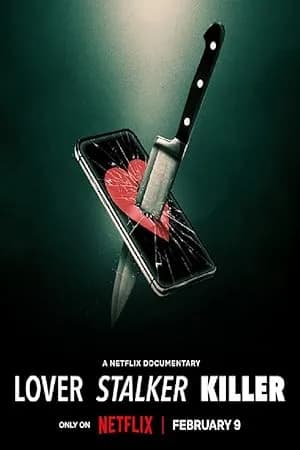
Lover, Stalker, Killer
Netflix, 2024 — the murder of Cari Farver and a years-long digital impersonation campaign
Quick facts
What Is the Series About?
Lover, Stalker, Killer is a 2024 Netflix feature documentary that tells the story of the 2012 disappearance and murder of Cari Farver, a single mother from Macedonia, Iowa, and the years-long campaign of digital deception, stalking, and harassment that followed her death. Directed by Sam Hobkinson and produced by Curious Films, the film runs 90 minutes and premiered on February 9, 2024. Rather than an episodic series, it is a single feature-length documentary — a format that allows the filmmakers to build the story's extraordinary twists at a carefully controlled pace. The New York Times summed it up neatly, calling it "True Crime With Lots of Twists."
At its center is a question that haunted investigators for years: who was sending all those messages? Farver had seemingly vanished, yet her phone number kept firing off threatening, obsessive texts to her ex-boyfriend Dave Kroupa and others. The answer, when it finally came, was as disturbing as anything investigators in the Omaha area had seen.
---
The Case
In 2012, Cari Farver met Dave Kroupa, an Omaha-area man who was also dating another woman, Lisa "Liz" Golyar. What initially appeared to be a complicated but ordinary love triangle rapidly descended into something far darker. Shortly after Farver met Kroupa, she vanished. No body. No clear crime scene. Just silence — and then an avalanche of messages.
For years, thousands of threatening and harassing texts, emails, and social media posts arrived, seemingly from Farver herself. Investigators eventually concluded that Farver had not sent a single one of them. Instead, Golyar had gained access to Farver's phone number and digital identity and was using them to wage an elaborate impersonation campaign — terrorizing Kroupa, threatening other women in his life, and effectively keeping Farver "alive" in digital form while her actual whereabouts remained unknown.
The scale of the deception was staggering. Golyar sustained the impersonation for years, sending messages that mimicked Farver's voice and personal details with enough accuracy to confuse even those who had known the real woman. Law enforcement in Douglas County, Nebraska, faced a case with no body, no obvious crime scene, and a digital trail deliberately designed to mislead.
The breakthrough came through a combination of digital evidence and blood evidence recovered from Farver's vehicle. That forensic trail, painstakingly assembled, was sufficient for prosecutors to move forward even without Farver's remains, which have never been found. Golyar was arrested on December 22, 2016, and charged with first-degree murder and second-degree arson.
In 2017, a Douglas County judge convicted Golyar on both counts. She was sentenced to life in prison without parole for the murder, with a consecutive 18–20-year sentence for the arson. Golyar continues to maintain her innocence and remains incarcerated. Cari Farver's body has never been recovered.
The documentary reconstructs the case primarily through interviews with Dave Kroupa, law enforcement officials, and others who lived through the investigation. Pottawattamie County investigators also participated in the film, discussing what it was like to work a case in which the apparent victim appeared, digitally at least, to still be alive.
---
Production
The film was directed by Sam Hobkinson and produced by Curious Films, a production company with a track record in character-driven true crime and investigative documentary work. Netflix acquired and distributed the title globally.
Hobkinson's approach, as reflected in the film's structure, leans heavily on first-person testimony. Dave Kroupa — the man at the center of the love triangle who was also the primary target of Golyar's stalking and harassment — is a key on-screen presence, walking viewers through years of confusion, fear, and gradual realization. Law enforcement contributors ground the narrative in the procedural reality of building a murder case without a body, while the documentary's pacing mirrors the slow, disorienting experience of the investigation itself.
The use of digital records, reconstructed message threads, and archival materials gives the film a texture that distinguishes it from more straightforward interview-driven true crime documentaries. The impersonation campaign — spanning thousands of messages over multiple years — is, in many ways, the documentary's most compelling and unsettling subject, raising questions about digital identity, obsession, and how long a determined person can sustain a false reality.
---
Reception
Lover, Stalker, Killer arrived on Netflix on February 9, 2024, and generated immediate reaction online. Viewers described the film as "creepy," "crazy and wild," and were particularly stunned by the scope of the digital deception at the story's heart. The "fatal attraction" framing used in some entertainment coverage accurately captures the film's emotional register — this is a story about romantic obsession taken to a criminal extreme.
Time noted that the documentary leans heavily on interviews with Kroupa and law enforcement to reconstruct events, a structural choice that keeps the human cost of the case front and center rather than allowing the procedural elements to overwhelm the story.
On IMDb, the film holds a rating of 7.0/10 (IMDb title ID: tt30852970), reflecting solid mainstream audience approval for a true crime documentary that delivers genuine surprises without resorting to sensationalism. The combination of a compelling central mystery, a perpetrator who has never confessed, and a victim whose remains have never been found gives the film a lingering quality that many viewers found difficult to shake.
Some discussion in the aftermath of the documentary's release has focused on the ethical dimensions of the case itself: the years during which Farver's family did not know what had happened to her, the extraordinary psychological toll on Kroupa, and the unsettling ease with which Golyar was able to digitally impersonate another person for so long before investigators caught up with her.
---
The Case Today
As of the documentary's release in 2024, Liz Golyar remains in prison, serving her life-without-parole sentence for the murder of Cari Farver, plus the consecutive arson sentence. She has not recanted and continues to deny responsibility for Farver's death.
Cari Farver's body has never been found. That fact — unresolved, perhaps permanently — sits at the heart of the documentary's most troubling questions. A conviction was secured on the strength of digital and physical forensic evidence, but for Farver's family and the investigators who worked the case, the absence of her remains means a certain kind of closure remains out of reach.
The case stands as a landmark example of digital-age stalking and identity fraud taken to a murderous extreme, and it has drawn renewed attention to the ways in which digital impersonation can be weaponized — not just to harass, but to conceal a crime for years. Lover, Stalker, Killer ensures the full, documented story of what happened to Cari Farver reaches the widest possible audience.