The Gambino Crime Family: Power, Murder, and Decline
How New York's most infamous organized crime dynasty rose through calculated assassinations and fell to federal prosecution
Published June 6, 2025
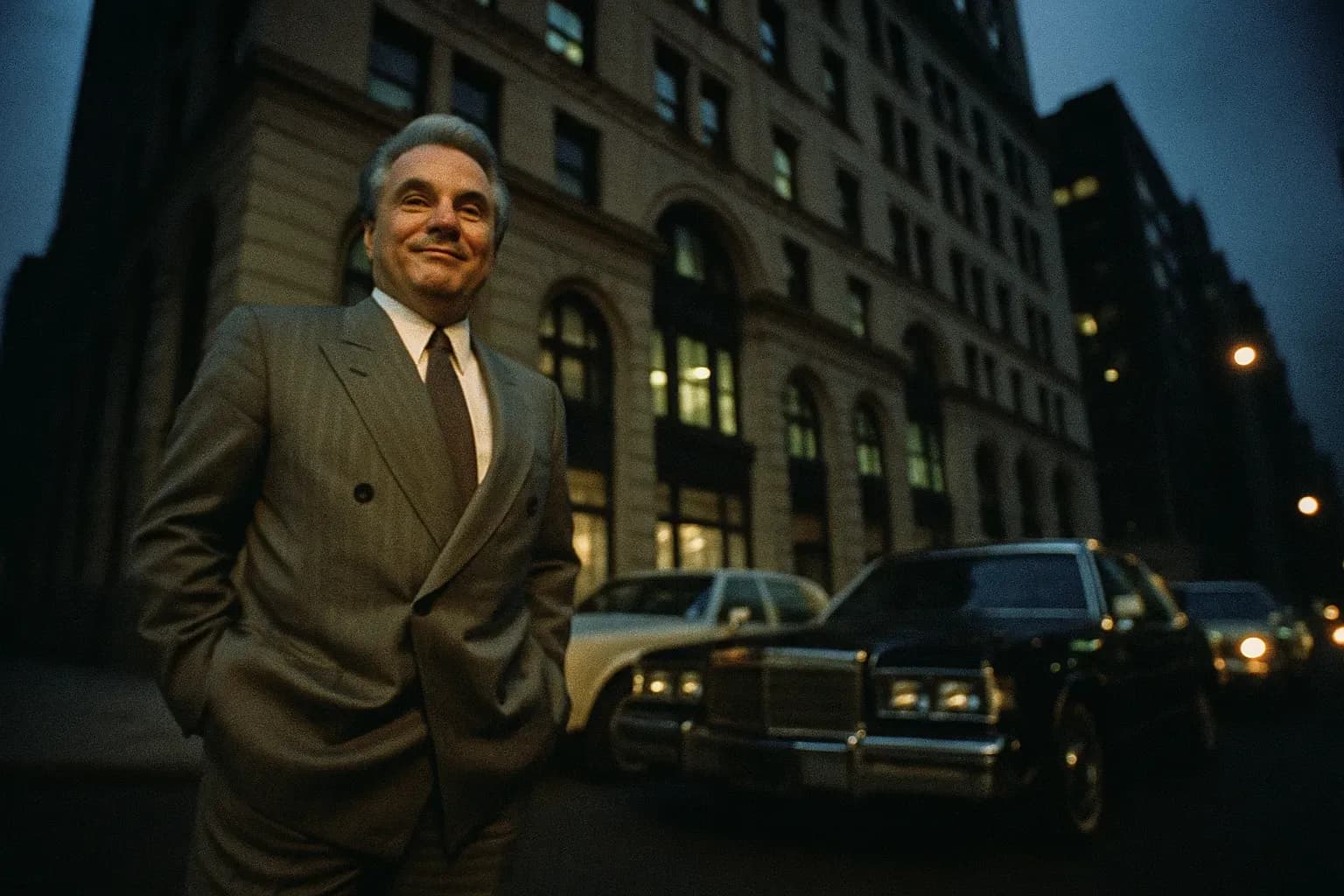
Case Details
Quick Facts
Classification:
Quick facts
The Gambino crime family's transformation from a Sicilian-rooted syndicate into one of America's most powerful organized crime enterprises is a story written in blood and calculated treachery.
With roots tracing to late 19th-century Sicily, the family became one of five major New York La Cosa Nostra groups under Vincent Mangano's original leadership. The organization's reach extended across traditional rackets—gambling, loansharking, extortion, prostitution, and union racketeering—but the family's real power lay in controlling New York's construction and trucking industries, the Manhattan and Brooklyn waterfronts, and cargo theft operations.
Mangano's reign ended abruptly in 1951 when he disappeared and was presumed murdered, orchestrated by his own underboss, Albert Anastasia. Mangano's brother Philip was killed the same day. Anastasia's seizure of control proved short-lived. By October 25, 1957, Anastasia himself was murdered—gunned down with the backing of underboss Carlo Gambino and support from the other families. The family's name changed to reflect its new leader, and Carlo Gambino would dominate the organization for nearly two decades.
Timeline
Founding of the organization
The predecessors of the Gambino family establish themselves in New York as part of the American Cosa Nostra.
Murder of Paul Castellano
Paul Castellano is killed in New York, allegedly with the involvement of John Gotti. The exact date is not documented in the available sources.
Strengthening of international connections
The Gambino family intensifies its relations with the Sicilian Cosa Nostra and expands its international network.
Expansion into cybercrime
The organization begins shifting focus from traditional crimes to modern cybercriminal activities.
Gambino's tenure from 1957 to 1976 was marked by relative stability compared to his predecessors, though personal tragedy struck the family in 1972 when his nephew Manny was kidnapped and murdered by the Irish Mob, specifically the crew of James "Jimmy from Queens" McBratney. The response was swift and brutal. In May 1973, three Gambino soldiers—John Gotti, Angelo "Fat Angie" Ruggiero, and Ralph "Ralphie Wigs" Galione—murdered McBratney in a Staten Island tavern. All three were convicted and imprisoned.
Following Gambino's death, power passed to Paul Castellano, but his leadership would prove contentious. On December 16, 1985, Castellano and his underboss Tommy Bilotti were assassinated outside Sparks Steak House in Manhattan. The hit was carried out by Gambino soldiers acting on orders from John Gotti, who reportedly watched the executions from a nearby car. Castellano's downfall stemmed partly from his absence at the wake of respected caporegime Neil Dellacroce, who died in early December 1985. Gotti's decisive action gained him support from multiple families—the Lucchese, Colombo, and Bonanno organizations all backed his consolidation of power.
Gotti's ascendancy represented a dramatic shift in organized crime's public profile. Unlike his predecessors, Gotti courted media attention, earning the nickname "The Teflon Don" for his ability to evade convictions. That reputation collapsed in the early 1990s when federal prosecutors, armed with FBI surveillance bugs and testimony from Gotti's own underboss Salvatore "Sammy the Bull" Gravano—who turned informant—successfully convicted him of multiple serious crimes. Gravano's cooperation proved devastating, exposing the full scope of Gotti's criminal operations.
Gotti's imprisonment marked a turning point for the Gambino family. Subsequent leaders including John (Jackie) D'Amico, Domenico Cefalù, and Francesco (Frank) Cali stepped into a weakened organization. By the early 2000s, while the family retained a presence in traditional organized crime activities—gambling, loan-sharking, and labor racketeering—it no longer wielded the influence it once commanded.
The Gambino story illustrates a central paradox of American organized crime: empires built on violence and secrecy eventually succumb to the same forces. Federal law enforcement ultimately achieved what rival families could not—the systematic dismantling of a criminal dynasty that once seemed untouchable.
Sources: https://allthatsinteresting.com/gambino-crime-family https://themobmuseum.org/notable_names/carlo-gambino/ https://www.britannica.com/topic/Gambino-crime-family
Ask about this case
Answers from KrimiNyt's coverage onlyFollow this case
Get an email when a new documentary, podcast or book about The Gambino Crime Family: Power, Murder, and Decline appears, or when a verdict is reached.