The Fox Hollow Farm Murders — Indiana serial killings
Westfield, Indiana, 1990s — suspect died before trial, partial identification
Published June 3, 2026
Quick Facts
The Case
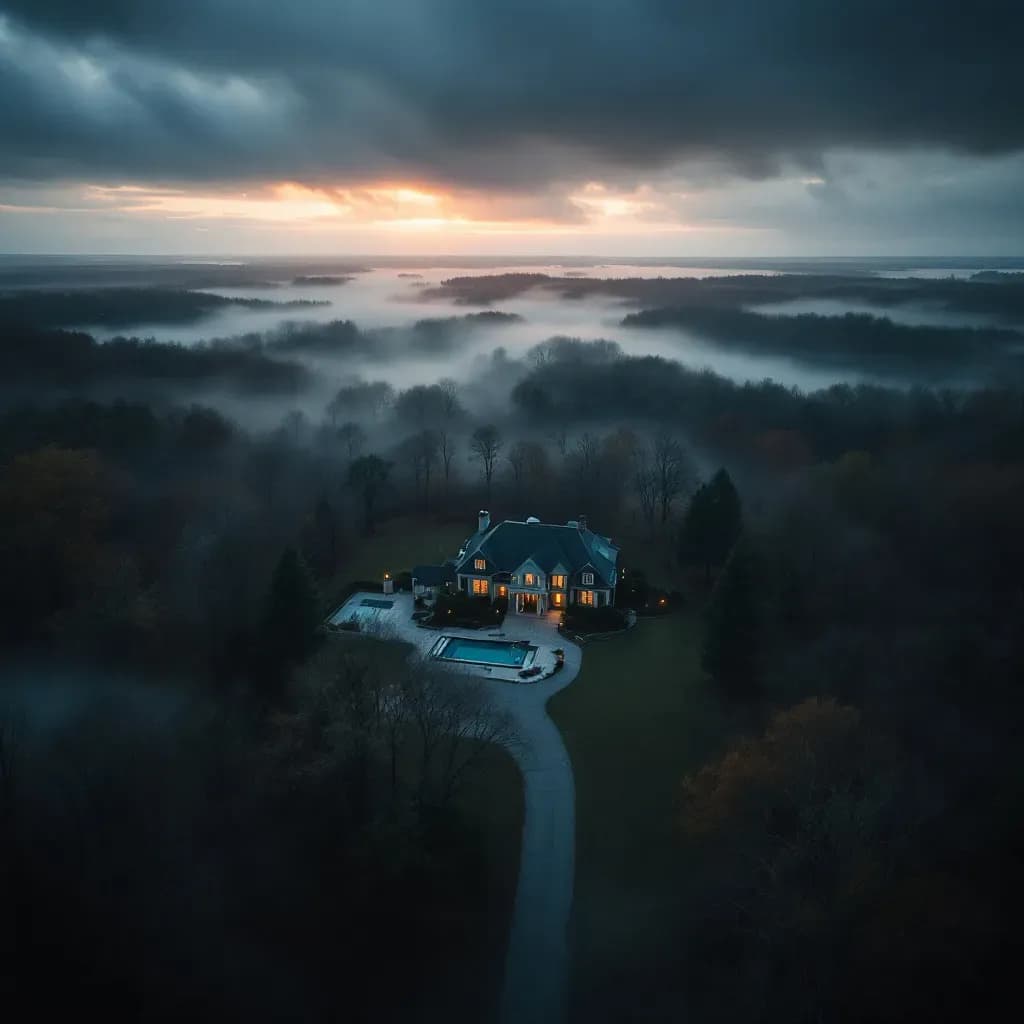
The Fox Hollow Farm murders are a serial homicide investigation centered on an 18-acre estate in Westfield, Hamilton County, Indiana, where businessman Herbert Richard Baumeister killed at least 13 men during the early-to-mid 1990s. The case remains partially resolved because Baumeister died by suicide before he could be arrested or tried, and investigators continue working to identify additional victims from the thousands of bone fragments recovered from the property. Modern DNA technology and genetic genealogy have recently enabled authorities to identify previously unknown victims, reopening a case that has haunted central Indiana for nearly three decades.
Herbert Baumeister appeared to lead a double life: publicly, he was a local business owner and family man living on a sprawling estate north of Indianapolis; privately, investigators believe he targeted gay men from Indianapolis-area bars and brought them to his home, where he murdered them. The crimes only came to light after police received tips in 1994 and subsequently discovered one of the most extensive crime scenes in Indiana history.
The Crime
Baumeister is believed to have murdered his victims at Fox Hollow Farm, with most killings thought to have occurred in and around the home's indoor pool area. When authorities searched the property in June 1996, they uncovered a massive crime scene: remains of at least 11 men plus more than 10,000 bones and bone fragments scattered across the estate. The sheer volume of human remains suggested the murders had been occurring over an extended period, likely spanning several years in the early-to-mid 1990s.
Timeline
Herbert Richard Baumeister is born
Herbert Richard Baumeister is born on April 7, 1947. He later settles in Westfield, Indiana, as a businessman.
Victims begin disappearing from Indianapolis area
Starting in 1993, a number of men, mostly gay men, go missing, last seen at bars in the Indianapolis area. The disappearances continue until around 1995.
Human remains found at Fox Hollow Farm
In June 1996, authorities find human remains on the Fox Hollow Farm property in Westfield, Hamilton County, Indiana. The investigation intensifies.
Baumeister dies by suicide in Canada
On July 3, 1996, Herbert Baumeister takes his own life in Canada. He was never formally charged or indicted. The case cannot be tried in court.
The victims were primarily gay men, and investigators believe Baumeister met many of them at bars in the Indianapolis area. The exact method of killing has not been fully disclosed in available reports, but the discovery of remains throughout the property, particularly near the pool, suggests a deliberate pattern of luring victims to the isolated estate where they could be killed without detection. The 18-acre property provided Baumeister with the privacy needed to commit multiple murders and dispose of bodies without immediate discovery.
The extent of the crimes only became apparent during the 1996 excavation, when forensic teams realized they were dealing with fragmented remains from numerous individuals. The condition and distribution of the bones indicated that bodies had been dismembered and scattered, making identification extraordinarily difficult with the technology available at the time.
The Victims
At least 13 men are believed to have been killed by Baumeister, though the exact total remains unknown due to the fragmented nature of the remains. The investigation has worked for decades to identify victims from the thousands of bone fragments recovered from the property.
Roger Goodlet is one of the definitively identified victims recovered from Fox Hollow Farm. He was last seen on July 22, 1994, and his disappearance prompted his friend Tony Harris to contact police with information that would prove crucial to the investigation. Goodlet's case represented one of the earlier identifications made through dental records.
Allen Lee Livingston, who had been missing since 1993, was identified through modern DNA analysis as another victim. Recent forensic work suggests he may have been the first person killed at the farm, making his case particularly significant for understanding the timeline of Baumeister's crimes. His identification came decades after the initial investigation through advanced genetic genealogy techniques.
Many victims remain unidentified despite ongoing efforts. The fragmented condition of the remains has made traditional identification methods challenging, requiring a combination of dental records, DNA analysis, and forensic anthropology. The victims are believed to have been men from the Indianapolis area, many from the gay community, who disappeared without trace during the early 1990s.
Investigation
The investigation began in 1994 when Tony Harris, a friend of victim Roger Goodlet, provided tips to police about Goodlet's disappearance. Harris's information eventually led investigators to focus on Herbert Baumeister and his Westfield estate, though it would take time to gather sufficient evidence for a search warrant.
In June 1996, authorities executed a search warrant at Fox Hollow Farm that uncovered the horrific scope of the crimes. The excavation revealed remains of 11 men and approximately 10,000 additional bone fragments. Initial identifications relied on dental records, which allowed forensic experts to match some remains to missing persons reports from the Indianapolis area.
As evidence mounted against him, Baumeister fled Indiana before he could be arrested. He died by suicide in Canada, never facing trial for the murders and taking with him definitive answers about the number of victims and details of his crimes. His death left investigators with a massive crime scene but no living suspect to provide information about the victims or the chronology of the murders.
The case has been reopened in recent years using modern forensic techniques. Hamilton County Coroner Jeff Jellison's team has collaborated with Indiana State Police, the forensic genetics company Othram, and the University of Indianapolis forensic archaeology lab to apply advanced DNA methods, forensic anthropology, and genetic genealogy to the decades-old evidence. These modern techniques have enabled investigators to identify previously unknown victims and potentially connect Baumeister to additional disappearances.
Trial and Verdict
No trial ever occurred in the Fox Hollow Farm murders because Herbert Baumeister died by suicide before he could be arrested. His death in 1996 meant he was never formally charged, never provided testimony about his crimes, and never faced justice in court. This has left many questions permanently unanswered about the exact number of victims, the timeline of the murders, and whether Baumeister may have committed additional crimes elsewhere.
The absence of a trial has been particularly difficult for victims' families, who have been denied the opportunity to hear a full accounting of what happened to their loved ones. Without Baumeister's testimony or cooperation, investigators have had to piece together the story of the crimes entirely through physical evidence and witness accounts.
The case is treated as solved in the sense that authorities are confident Baumeister was the killer, but it remains partially unresolved because not all victims have been identified and the full scope of his crimes may never be known. Investigators continue to work on identifying additional victims from the bone fragments, meaning the case remains actively investigated despite the death of the primary suspect.
Today
The Fox Hollow Farm investigation continues decades after the initial discoveries. Modern DNA technology and genetic genealogy have breathed new life into efforts to identify the remaining victims from the thousands of bone fragments recovered in 1996. The identification of Allen Lee Livingston through advanced forensic techniques demonstrates that progress is still possible, offering hope to families of other missing men from the era.
The case has attracted significant media attention, including documentaries and series examining Baumeister's crimes. The story has been featured in multiple productions, including "The Haunting of Fox Hollow Farm" on Apple TV and "The Fox Hollow Murders" documentary series, which explore both the crimes and the ongoing investigation.
Forensic teams continue to analyze evidence from the property using techniques that were unavailable in the 1990s. Each new identification brings closure to another family while also raising questions about how many other victims remain unidentified. The investigation serves as an example of how cold cases can be reopened and advanced through modern forensic science, even when the perpetrator is deceased.
The Fox Hollow Farm property itself has become a landmark of true crime history in Indiana, representing one of the state's most extensive serial murder investigations. The case remains a priority for Hamilton County authorities and Indiana State Police, who are committed to identifying all victims and providing answers to families who have waited decades for information about their missing loved ones.
Media coverage
TV series
- Herb Baumeister: The Serial Killer Hidden in Plain Sight(2026)
Books
- DNA Technology Solves Indiana Serial Killer Case Decades Later(2026)
Ask about this case
Answers from KrimiNyt's coverage onlyFollow this case
Get an email when a new documentary, podcast or book about The Fox Hollow Farm Murders — Indiana serial killings appears, or when a verdict is reached.