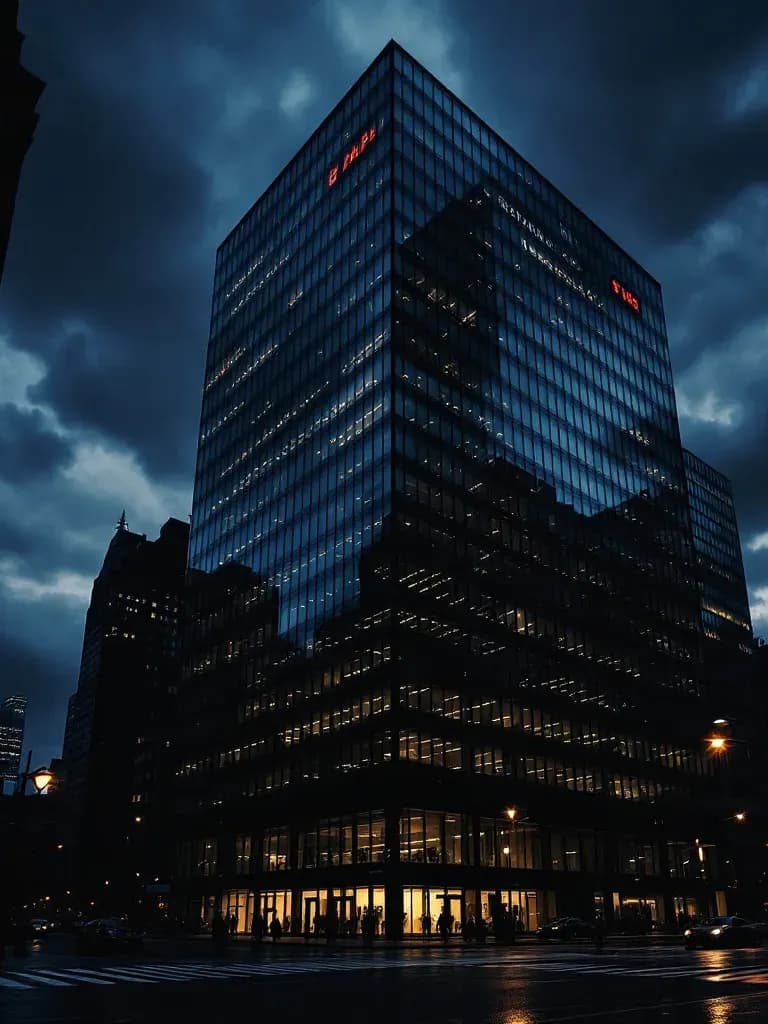
The Bernie Madoff Ponzi Scheme — Decades of Wall Street Fraud
New York City, United States, 1970s–2008. Solved federal fraud case; offender sentenced to 150 years.
Published June 2, 2026

Case Details
Quick Facts
Classification:
The Case
The Bernie Madoff Ponzi Scheme is one of the largest financial frauds in modern history, a decades-long securities fraud run from New York City by Wall Street financier Bernard Lawrence Madoff through his firm Bernard L. Madoff Investment Securities LLC. The scheme collapsed during the 2008 financial crisis, leading to Madoff's arrest on December 11, 2008, a guilty plea in March 2009, and a 150-year federal prison sentence in June 2009. The case became a defining example of investor fraud and regulatory failure, documented in detail by encyclopedic case summaries and by official regulators.
The Crime
Madoff's fraud was a classic Ponzi scheme operating on an unprecedented scale. He told clients that his investment advisory business was buying and hedging a basket of S&P 100 stocks using a so-called "split-strike conversion" strategy, producing remarkably steady returns year after year. In reality, the strategy was fabricated: securities were neither bought nor sold as claimed, and the consistent profits investors saw on their statements were fictional. New investor deposits were used to pay redemptions to earlier investors, sustaining the illusion of legitimate returns.
To keep the scheme alive, Madoff's operation relied on backdated trades, fabricated account statements and false financial reporting. According to the Wikipedia overview of the Madoff investment scandal, the fraudulent investment advisory arm ran in parallel with a legitimate market-making business, which helped Madoff project an image of a respected Wall Street insider. Public-facing sources commonly date the start of the fraudulent activity to the early 1970s, meaning the scheme operated for roughly three decades before collapsing.
Timeline
Madoff is born
Bernard Lawrence Madoff is born; he would later become a prominent Wall Street financier and former chairman of NASDAQ.
Ponzi scheme begins
According to several sources, Madoff's fraudulent investment activity began in the early 1970s through Bernard L. Madoff Investment Securities LLC.
Confession to family
Madoff confesses to his family that his investment advisory business is a massive Ponzi scheme.
Arrest in New York
Madoff is arrested in New York City and charged with 11 crimes related to securities fraud and related offenses.
Guilty plea
Madoff pleads guilty to 11 federal crimes at the U.S. District Court for the Southern District of New York.
Sentenced to 150 years in prison
Madoff is sentenced to 150 years in a federal prison, one of the longest sentences ever handed down for financial crime.
The Victims
Rather than a single victim, the Madoff scheme harmed thousands of investors worldwide. Losses were spread across individual retail investors, wealthy private clients, charitable foundations, university endowments, pension funds and financial institutions in the United States, Europe and beyond. Many victims had entrusted Madoff with their life savings; some charities were forced to shut down after losing their entire endowments. A research case study from NASAA describes how Madoff's social and professional reputation — including his role as former chairman of NASDAQ — was central to drawing in victims who believed they were investing with one of Wall Street's most trusted figures.
The paper account balances reported to investors totalled tens of billions of dollars at the time of collapse, although much of that sum represented fictitious profits rather than real principal. Even so, the actual cash losses suffered by investors were enormous, making this the largest Ponzi scheme ever uncovered.
Investigation
The scheme unravelled in late 2008 as the global financial crisis triggered a surge in investor withdrawals that Madoff could not meet. On December 9, 2008, Madoff confessed to his family that the advisory business was "one big lie." Two days later, on December 11, 2008, FBI agents arrested him at his Manhattan apartment, and federal prosecutors in the Southern District of New York charged him with 11 felony counts, including securities fraud, investment adviser fraud, mail fraud, wire fraud, money laundering and perjury.
Key evidence in the case included fabricated trade records, false account statements and financial filings, and proof that the securities described to clients had never actually been bought or sold. A subsequent executive summary from the SEC Office of Inspector General examined how regulators had failed to detect the fraud despite multiple tips and examinations over many years, becoming a central document in later debates about regulatory reform. Academic analyses, including a University of Michigan piece on the scandal and regulatory failure, describe how the fraud hid in plain sight for decades.
Trial and Verdict
On March 12, 2009, Madoff pleaded guilty to all 11 federal counts in the U.S. District Court for the Southern District of New York, waiving a trial. On June 29, 2009, U.S. District Judge Denny Chin sentenced him to 150 years in federal prison, the statutory maximum and one of the harshest white-collar sentences in U.S. history. A separate state-level regulatory case file on the Madoff Ponzi scheme reflects how authorities across multiple jurisdictions documented the fraud for the public record. Court-appointed trustees subsequently pursued years of clawback litigation to recover funds for defrauded investors.
Today
Bernie Madoff died in federal prison in 2021 while serving his sentence, but the case remains a touchstone in discussions of financial fraud, due diligence and regulatory oversight. The recovery effort for victims, led by court-appointed trustees, has continued for over a decade, returning billions of dollars to investors through settlements and asset sales. The scandal has been the subject of extensive documentary and journalistic coverage, including video explainers on how the scheme operated. It is widely taught in finance and law programs as a case study in how charisma, reputation and weak oversight can enable fraud on a historic scale.
Media coverage
TV series
- Madoff: The Monster of Wall Street(2026)
Ask about this case
Answers from KrimiNyt's coverage onlyFollow this case
Get an email when a new documentary, podcast or book about The Bernie Madoff Ponzi Scheme — Decades of Wall Street Fraud appears, or when a verdict is reached.