July 22, 2011: Breivik's Terror Attack on Oslo and Utøya
From a car bomb in Oslo to 69 killed on Utøya — how Anders Behring Breivik carried out Norway's deadliest peacetime attack
Published June 6, 2025
Case Details
Quick Facts
Classification:
July 22, 2011: Breivik's attacks killed 77 and shook Norway
July 22, 2011, is an indelible date in Norwegian history — a day that marked a profound national trauma. Right-wing extremist terrorist Anders Behring Breivik carried out two coordinated terror attacks that brutally claimed 77 lives. The attacks began with a devastating car bomb in Oslo's government quarter and culminated in a merciless massacre at a summer camp for young social democrats on the island of Utøya. The violence shook the nation to its core and exposed vulnerabilities in an otherwise peaceful Scandinavian society that few had imagined possible.
The Oslo bombing: A 950 kg explosion kills eight
At 3:25 p.m., a powerful bomb detonated when a white van exploded outside the Høyblokken building in Oslo's government quarter. The van contained 950 kg of homemade explosives based on fertilizer and diesel — a crude but devastating device. The blast left a three-meter-deep crater, sent destructive shockwaves through surrounding buildings, and caused widespread material damage. Eight people were killed and more than 200 were injured. The death toll could have been far higher, but many offices were lightly staffed due to the summer holiday period. Then-Prime Minister Jens Stoltenberg, whose office was near the explosion site, escaped unharmed.
While chaos and shock paralyzed central Oslo and emergency responders rushed to the scene, Anders Behring Breivik was already on his way to his next target: the annual summer camp of the Workers' Youth League (AUF) on the idyllic island of Utøya in the Tyrifjorden lake, west of Oslo.
Timeline
Bombing in Oslo's government quarter
At 3:25 p.m., a car bomb containing 950 kg of explosives detonated outside Høyblokka in the Regjeringskvartalet in Oslo. 8 people were killed and over 200 injured in the explosion.
Arrival at Utøya
Breivik traveled to the island of Utøya in a fake police uniform and gained access to the AUF summer camp through deception.
Mass shooting on Utøya begins
Breivik began shooting at participants of the AUF summer camp on Utøya. 69 people, mostly young, were killed in the attack.
Breivik arrested
Police arrested Anders Behring Breivik on Utøya after the massacre.
22 July Commission established
The Norwegian government established the 22 July Commission by royal decree to evaluate the attacks and the authorities' handling of them.
Breivik convicted
Anders Behring Breivik was convicted and sentenced to 21 years of preventive detention for the terrorist attacks.
Breivik's arrival: Posing as a police officer to reach Utøya
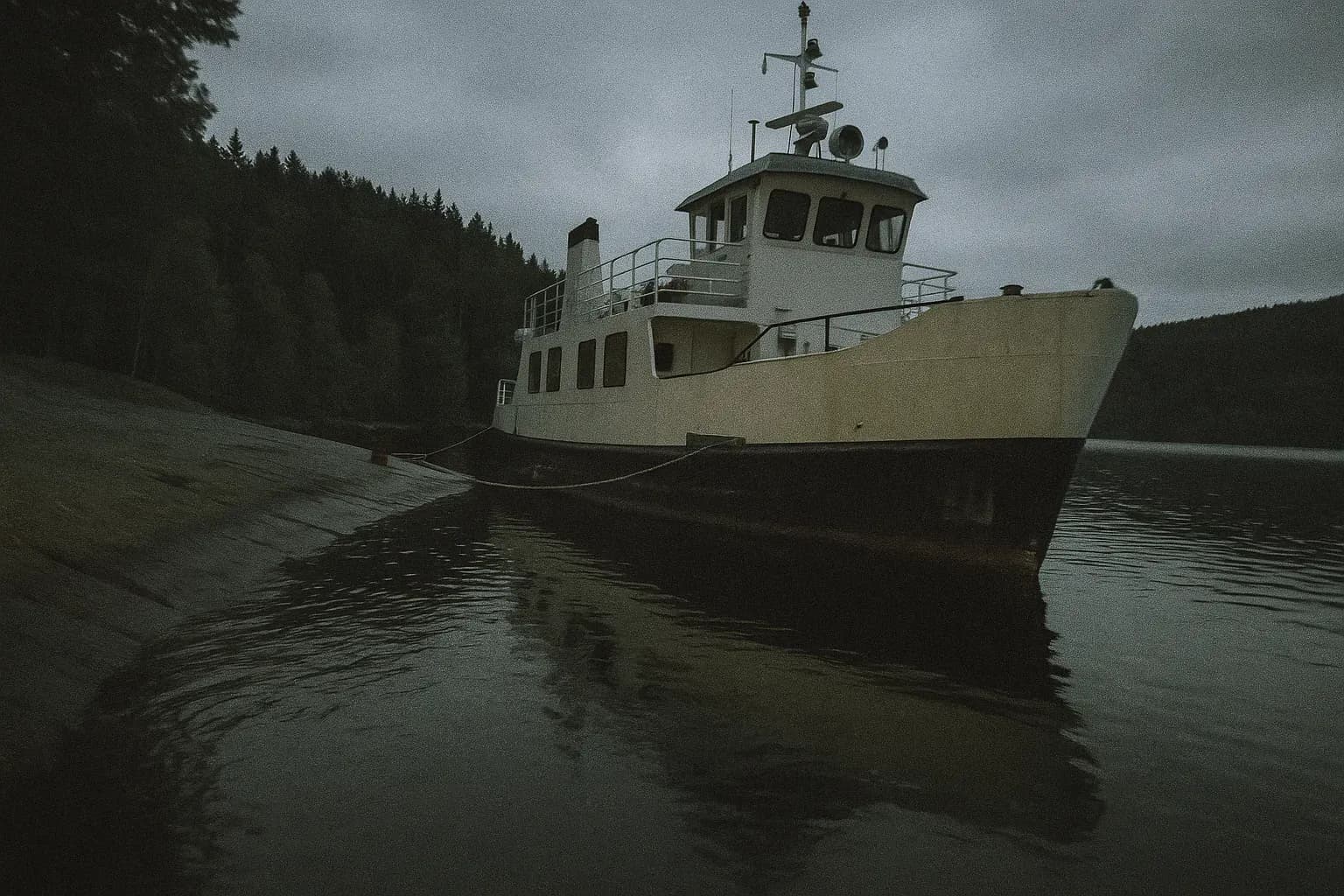
Between 5:00 and 5:25 p.m., Breivik arrived at the ferry landing near Utøya. He was dressed in a fake but convincing police uniform and was heavily armed with both a rifle and a pistol. He claimed to be a police officer sent to secure the island following the bombing in Oslo. This calculated lie gained him passage on the ferry MS Thorbjørn. Shortly after, he came ashore on Utøya — disguised as a protector, but determined to carry out a brutal massacre.
The Utøya massacre: 69 killed in 60 to 90 minutes
Within minutes of arriving on the island, the first shots rang out near the camp's café building. Breivik had opened fire on a group of unsuspecting young people. Among the first victims was Trond Berntsen, a 51-year-old volunteer security guard at the camp and the stepbrother of Crown Princess Mette-Marit of Norway.
Over the course of approximately one to one and a half hours, Breivik turned Utøya into a war zone. He systematically hunted the 564 young people and adults on the island — many of them members of the AUF — underscoring the politically motivated nature of the mass shooting. He exploited his fake uniform to lure victims into the open, shouting that he was there to help before executing them at close range.
The young campers fled in panic, desperately trying to escape the gunfire. Some hid in rock crevices, others barricaded themselves inside buildings, and some jumped into the cold waters of Tyrifjorden in an attempt to swim to the mainland. In total, 69 people were killed on Utøya.
Horror and rescue: Civilian courage and a slow police response
Survivor testimonies from the Utøya massacre paint a picture of unimaginable terror and desperate attempts to survive. A group of 47 young people saved their lives by barricading themselves inside a room known as the Skolestua; the door withstood Breivik's attempts to shoot his way in. Others fled along the rocky shoreline or threw themselves into the Tyrifjorden — with a water temperature of only 14 degrees Celsius — in an attempt to swim toward the mainland.
At the same time, a heroic civilian rescue effort unfolded, as local residents took private boats out toward Utøya to pull young people from the water, often at risk to their own lives. A single fishing boat from Sundvolden rescued 29 people alone.
The official police response, however, was slow. It took 49 minutes from the first report of the shooting on Utøya for the first police unit to arrive — a delay that later became a central point of criticism in the official inquiry report, known as the Gjørv Report, and sparked a wide-ranging public debate about policing failures in the wake of July 22.
Aftermath: Arrest, trial, and Norway's road to healing
Anders Behring Breivik was arrested on Utøya. During initial questioning, he claimed to be a commander in an alleged anti-Muslim organization called the Knights Templar, and described his terrorist acts as a necessary strike against multiculturalism. The subsequent high-profile trial in 2012 — held from April to June — further exposed his diagnosed narcissistic personality disorder and the deep radicalization into a far-right extremist ideology that drove his actions. His ideological worldview was laid out in a 1,500-page manifesto titled 2083: A European Declaration of Independence.
Breivik was sentenced to Norway's most severe punishment: 21 years of preventive detention, with the possibility of extension. The verdict, and the intense public debate over his mental state and sentencing, reflected a society's desperate effort to make sense of the senseless violence and killings that had taken place.
The Gjørv Report, published in 2012, identified a series of systemic failures and weaknesses in both the police and emergency services, including inadequate communication and a failure to act on earlier concerns regarding Breivik's behavior and his purchases of materials used to make explosives. The report led to sweeping reforms of Norway's emergency preparedness.
The July 22 terror attacks left deep and lasting wounds on Norwegian society. It is estimated that up to a quarter of Norway's population personally knew or had a connection to one of the victims. Families of the killed and survivors have since worked tirelessly to honor the memory of those lost and to ensure that this tragedy is never forgotten — including through the transformation of Utøya into a national memorial site and a learning center dedicated to democracy and tolerance, as a bulwark against radicalization and extremism.
Ask about this case
Answers from KrimiNyt's coverage onlyFollow this case
Get an email when a new documentary, podcast or book about July 22, 2011: Breivik's Terror Attack on Oslo and Utøya appears, or when a verdict is reached.