DeLorean: From Auto Visionary to Cocaine Defendant
How the DMC-12 creator faced two major federal trials in the 1980s and walked free from both
Published June 6, 2025
Case Details
Quick Facts
Classification:
Quick facts
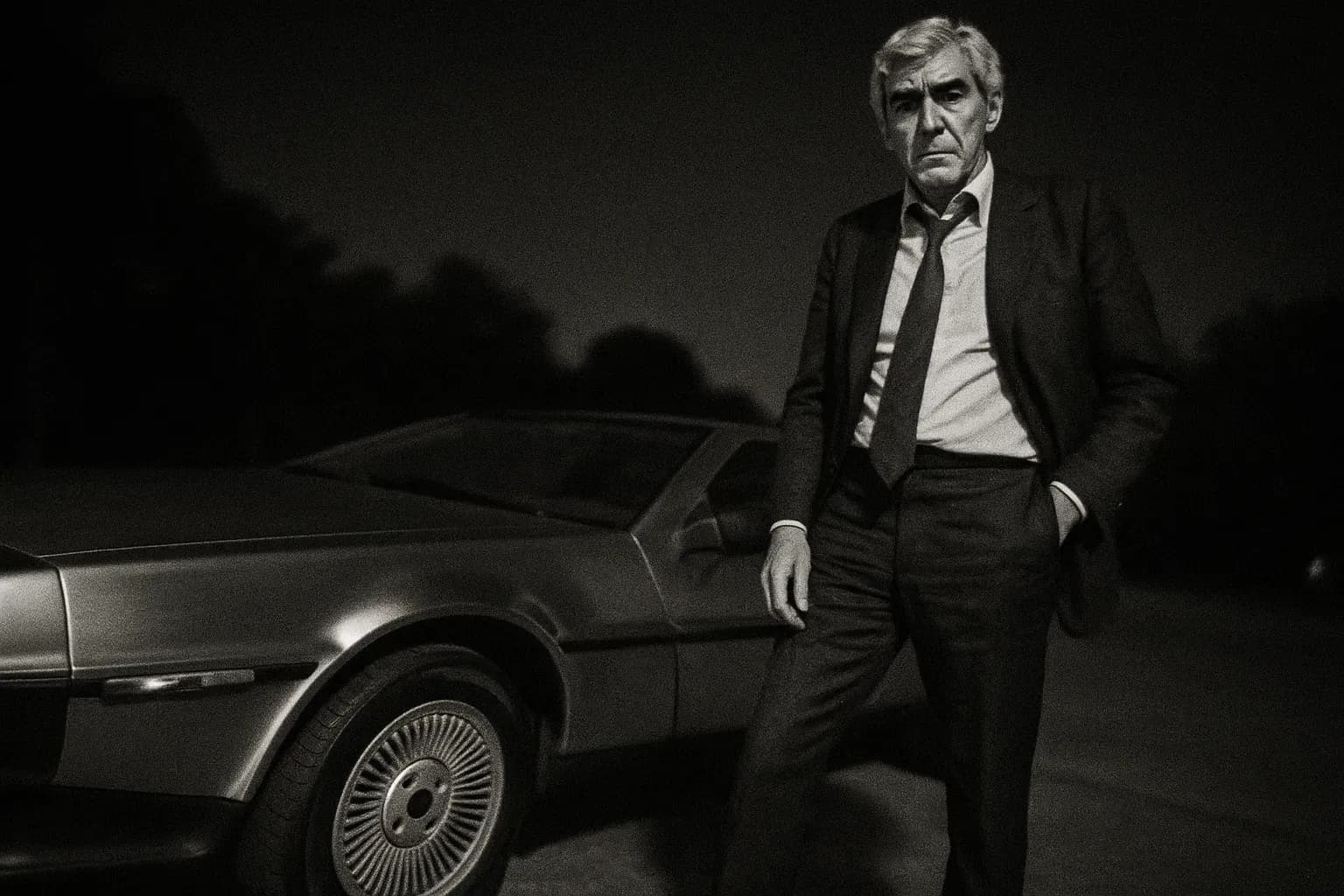
John Z. DeLorean, the visionary automobile designer and former General Motors executive, found himself in federal courtrooms twice within two years—facing accusations that could have sent him to prison for nearly a century.
The first legal battle came in 1982, when prosecutors in Los Angeles charged DeLorean with drug trafficking. Federal authorities alleged that the 61-year-old automotive pioneer had attempted to orchestrate the smuggling of $24 million worth of cocaine into the country. According to prosecutors, DeLorean's motivation was desperate: he needed the cash to rescue his struggling DeLorean Motor Company, the firm behind the legendary DMC-12 sports car that had captured the public imagination.
After seven months of trial proceedings, a federal court jury acquitted DeLorean of all drug trafficking charges in 1984. The verdict suggested reasonable doubt had taken root in the jury box, but the legal troubles were far from over.
Timeline
DeLorean leaves General Motors
John DeLorean gives up his highly paid position at GM to found DeLorean Motor Company.
Financial crisis
The British government withdraws funding. DeLorean Motor Company goes bankrupt with 17 million dollars in debt.
Arrest in Los Angeles
John DeLorean is arrested during an FBI operation at a hotel near the airport in Los Angeles. Charge: cocaine trafficking.
Released on bail
DeLorean is released on bail of 5 million US dollars. He faces up to 67 years in prison.
Acquitted due to entrapment
The jury acquits DeLorean. They conclude that he was a victim of entrapment by the authorities.
Less than a year later, in 1985, DeLorean faced a second indictment—this time in federal court in Detroit. Prosecutors hit him with 15 counts of racketeering, fraud, and tax evasion. The government's case centered on an intricate embezzlement scheme allegedly involving Swiss and Dutch banks, coupled with shell corporations established in Panama and Liberia.
At the heart of this second case was a stunning accusation: that DeLorean had defrauded more than 140 investors of $8.5 million. Federal prosecutors claimed the money had been funneled through a Geneva-based company established in 1978, with funds ultimately diverted into DeLorean's personal accounts.
DeLorean's defense team presented a dramatically different narrative. They argued the funds in question were not proceeds of embezzlement at all, but rather a legitimate loan from Colin Chapman, the legendary British race car designer. This claim carried particular weight given Chapman's prominence in automotive circles—though notably, Chapman had died in 1982, leaving the assertion impossible to verify through direct testimony.
The potential consequences had DeLorean been convicted were staggering. Federal sentencing guidelines suggested he faced up to 87 years in jail and $82,000 in fines. Additionally, approximately $20 million in his assets had been frozen pending bankruptcy proceedings, reflecting the serious nature of the allegations.
On December 18, 1986, the Detroit federal court rendered its verdict: not guilty on all charges.
For the second time in as many years, a jury had found reasonable doubt sufficient to acquit DeLorean of the serious criminal allegations against him. The acquittal marked a dramatic turnaround for a man whose corporate vision had once seemed limitless but whose personal circumstances had spiraled into legal jeopardy.
The twin acquittals raised enduring questions about the strength of the government's cases and the circumstances surrounding DeLorean's legal troubles. Whether viewed as vindication or as a fortunate outcome dependent on jury persuasion, the verdicts ensured that DeLorean would not spend his final decades behind federal prison walls.
What remained clear was that the man who had once shaped automotive history was now inextricably linked to some of the most sensational criminal accusations of the 1980s.
**Sources**
https://www.latimes.com/archives/la-xpm-1986-12-18-mn-4064-story.html
https://www.upi.com/Archives/1986/12/18/John-Z-DeLorean-acquitted-of-embezzling-85-million-from/1235535266000/
Ask about this case
Answers from KrimiNyt's coverage onlyFollow this case
Get an email when a new documentary, podcast or book about DeLorean: From Auto Visionary to Cocaine Defendant appears, or when a verdict is reached.