21 Years to Justice: DNA Test Solves Göhrde Forest Murders
After two decades of mystery, advanced genetic screening identified a quiet village man responsible for four deaths
Published May 8, 2026
Quick Facts
Four Deaths in the Forest
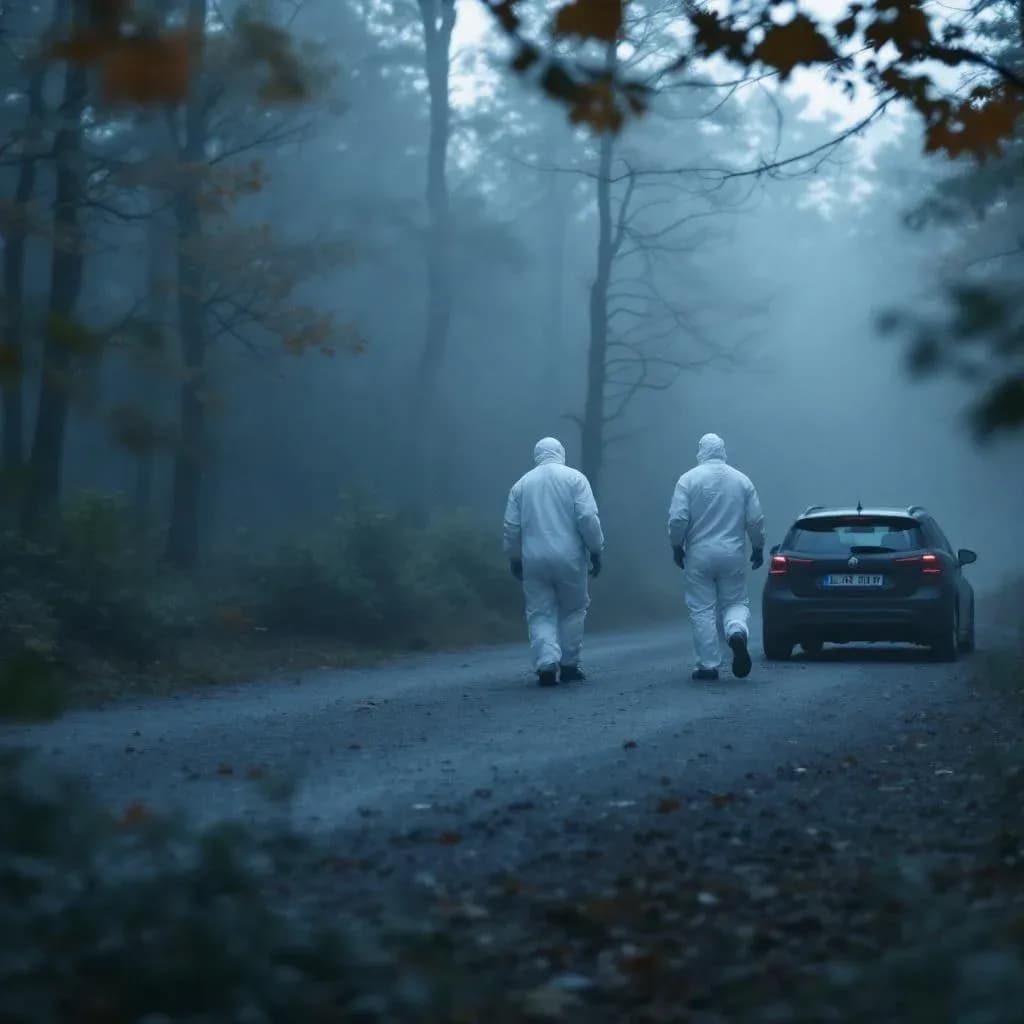
Four people were killed in Göhrde Forest in Lower Saxony under mysterious circumstances in 1997 and 1998. On October 4, 1997, forest rangers discovered the bodies of Dutch couple Franciscus L. (55) and Gertruida L. (53) at a remote forest parking area. Both had been shot dead. They had driven to the area to collect mushrooms and never returned.
Almost exactly one year later, on September 11, 1998, the nightmare scenario repeated itself. At another forest parking area in the same woods, German couple Dirk G. (29) and Sandra G. (26) were found—also shot dead, also on their way to gather mushrooms. The murder commission in Lüneburg was left with mystery upon mystery.
Two Decades Without Answers
The double murders became one of Lower Saxony's most stubborn cold cases. Over 21 years, police conducted more than 5,000 interviews, secured 1,200 crime scene traces, and analyzed thousands of DNA samples. Yet no suspect emerged. The cases seemed unsolvable.
Timeline
Ursula and Peter Reinold killed in the Göhrde forest
On 21 May 1989, married couple Ursula and Peter Reinold from Hamburg-Bergedorf are shot and left in the Göhrde state forest near Lüneburg.
Ingrid Warmbier and Bernd-Michael Köpping killed
On 12 July 1989, Ingrid Warmbier and Bernd-Michael Köpping are shot in the same forest. The similarities to the May killing sharpen police focus on a single crime scene.
Suspect Kurt-Werner Wichmann commits suicide in prison
In 1993, Kurt-Werner Wichmann, later named the probable perpetrator, commits suicide while serving a prison sentence in another case.
DNA analysis links Wichmann to the murders – 28 years on
In December 2017, German police announce that DNA found in a victim's vehicle points to Wichmann. A further DNA match subsequently strengthens the suspicion.
Investigators suspected early on a connection between the two crimes: the modus operandi was nearly identical, the crime scenes lay in the same forest area, and both times couples had been surprised while mushroom foraging. But without concrete evidence, even this realization led to no breakthrough. Case files accumulated, hope faded.
The DNA Breakthrough of 2018
In 2018, police launched one final, desperate offensive: a comprehensive DNA mass screening in the area around Klein-Göhrde. Over 1,000 male residents were asked to voluntarily provide saliva samples. Investigators bet on advanced DNA analysis technology that could also recognize familial matches.
The persistence paid off. DNA traces from sweat marks on the victims' clothing and objects at the crime scenes led to Klaus B., then 60, a village resident from Klein-Göhrde. The married father of two—a former warehouse worker—fit the profile perfectly. No one had ever suspected him.
Confession and Conviction
Following his arrest in 2019, Klaus B. confessed. He had shot the four people dead in armed robberies—the proceeds amounting to only around 200 deutsche marks. A shockingly banal motive for four murders. On December 7, 2020, trial began before Landgericht Lüneburg.
On January 14, 2021, Judge Jutta Schäfer announced the verdict: life imprisonment for four murders, with a minimum sentence of 15 years. "The crimes are of particular severity," she explained. "The defendant acted in cold blood without recognizable motive." Klaus B. did not appeal; the sentence became final.
Legal Consequences
The case sparked legal debate about DNA investigation methods. The Lüneburg prosecution described the case as proof of "the effectiveness of familial DNA analysis in cold cases." The success led to legal reform: since 2020, Section 81f StPO expanded the use of familial DNA testing in unsolved sexual assault and violent crime cases.
The law improving investigation methods came into force in 2021, facilitating nationwide use of modern genetic technology in criminal investigation. The Göhrde case became a paradigm example of how scientific advancement can solve crimes decades old.
For the victims' relatives, the conviction meant final closure after more than two decades. The question of "why" largely remained unanswered. Klaus B. himself could provide no comprehensible motive for his crimes—another haunting detail in this shocking German crime story.
Media coverage
TV series
- 21 Years Later: DNA Database Solved Göhrde Murders(2026)
Ask about this case
Answers from KrimiNyt's coverage onlyFollow this case
Get an email when a new documentary, podcast or book about 21 Years to Justice: DNA Test Solves Göhrde Forest Murders appears, or when a verdict is reached.