mass panic
Descriptive accident term for crowd crush, not an offence in Danish criminal law
Mass panic denotes a sudden, uncontrolled panic reaction in a large crowd, in which physical pressure, falls and compression can cause serious injury or death. The phenomenon typically arises when many people attempt to move in the same direction at once within a confined space, and individual control over one's own movements is lost as a result of pressure from surrounding people.
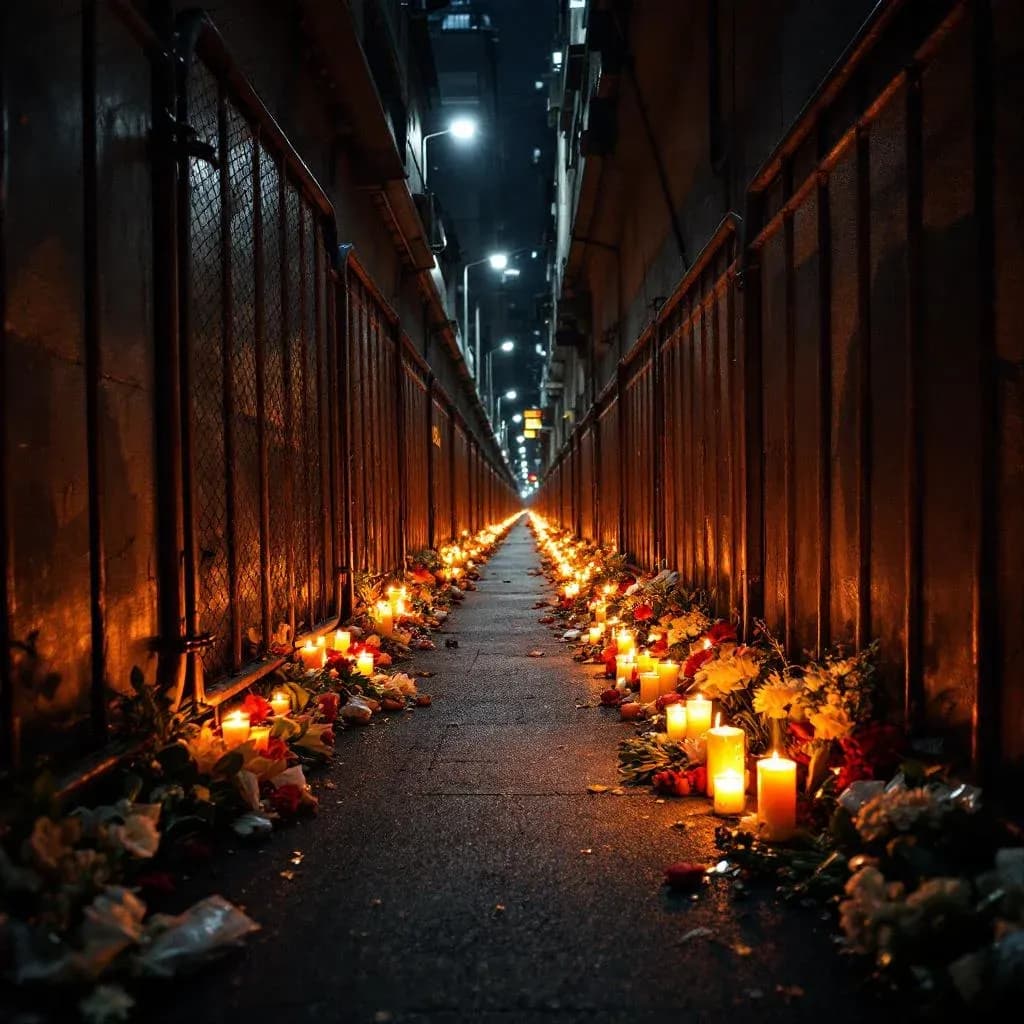
In connection with the Love Parade disaster in Duisburg on 24 July 2010, the term is used for the fatal crowd crush that developed at the entrance ramp to the festival grounds. Several hundred thousand people had gathered for the event, and when the crowd was pressed into a narrow tunnel passage, an uncontrolled crush occurred. 21 people lost their lives and at least 652 were injured.
From an accident and investigative perspective, it is important to distinguish between actual panic — where individuals act irrationally and chaotically — and the phenomenon researchers often describe as compressive crowding. In the latter case, the victims are not necessarily panicking, but die as a result of the mechanical pressure from surrounding bodies, without being able either to fall or to leave the location.
Under Danish law, mass panic is not an independent criminal-law term and does not appear as a defined offence type in the Danish Penal Code (straffeloven). The concept instead functions as a descriptive accident designation, used in criminological, safety-professional and journalistic contexts to describe the course of events at large gatherings that end in disaster. Questions of liability in cases of mass accidents of this type are usually assessed within the framework of negligence rules and rules on organisers' responsibility for safety measures, rather than under a specific mass-panic doctrine.