137 Shots
Netflix documentary (2021) covering the fatal 2012 Cleveland police shooting of Timothy Russell and Malissa Williams
Quick facts
What Is the Documentary About?
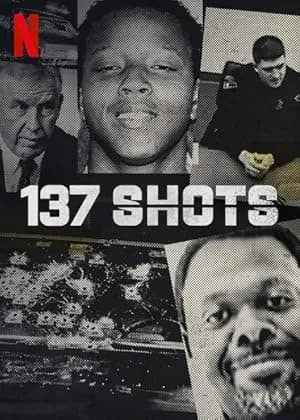
137 Shots is a Netflix documentary film directed by Michael Milano that examines the November 29, 2012, fatal police shooting of Timothy Russell and Malissa Williams in Cleveland and East Cleveland, Ohio. Released on December 15, 2021, and running 1 hour and 44 minutes, the film takes its title from the staggering number of rounds fired at the victims' vehicle — 137 shots discharged by 13 Cleveland police officers at the end of a high-speed chase. The documentary does not limit itself to the single incident: it situates the shooting within a broader indictment of systemic racism and use-of-force culture inside the Cleveland Police Department, drawing connections to other cases of police violence that would follow in the years after 2012, including the killing of 12-year-old Tamir Rice.
The Case
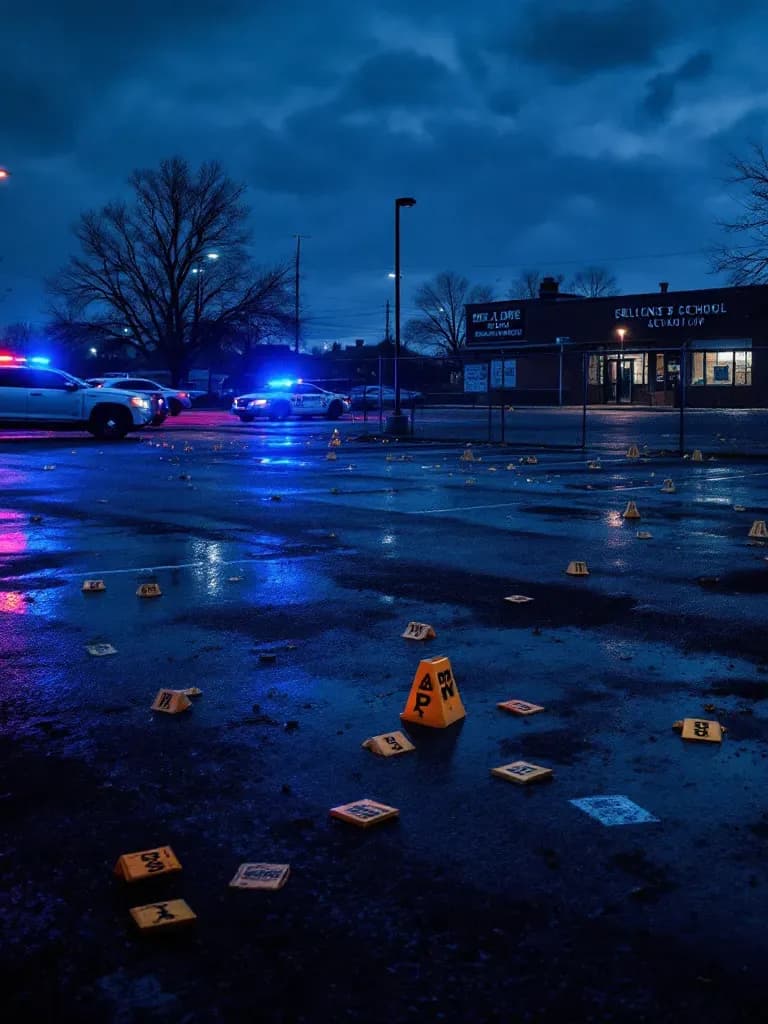
On the night of November 29, 2012, a vehicle driven by Timothy Russell, 43, with passenger Malissa Williams, 30, backfired near Cleveland Police headquarters. Officers believed they had been shot at and initiated a pursuit. What followed was a 22-minute, 23-mile chase through the streets of Cleveland and into East Cleveland, involving dozens of police vehicles. The pursuit ended in the parking lot of Heritage Middle School (later renamed W.H. Kirk Middle School) in East Cleveland.
There, 13 Cleveland police officers opened fire, collectively discharging 137 rounds into the vehicle. Russell and Williams were both killed. Critically, the investigation that followed found no gun and no shell casings inside the car — meaning the two victims were entirely unarmed and the original premise for the pursuit was unfounded.
The case drew immediate scrutiny from civil rights advocates, local activists, and national media. Among the 13 officers who fired, Michael Brelo became the central figure of the criminal proceedings. Brelo fired 49 of the 137 shots — including, prosecutors argued, rounds he fired while standing on the hood of the vehicle after it had already stopped — and was charged in 2014 with two counts of voluntary manslaughter.
The trial unfolded in Cuyahoga County in 2015. On May 23, 2015, a judge acquitted Brelo on both counts, ruling that the state had not proven beyond a reasonable doubt that Brelo's specific shots — as opposed to the collective volley from all officers — caused the deaths. The verdict sparked protests in Cleveland. Beyond the criminal case, Brelo and five other officers were fired from the Cleveland Police Department in 2014 as part of the department's internal disciplinary process; the other dismissed officers were subsequently reinstated. No officer was ever imprisoned in connection with the deaths of Timothy Russell and Malissa Williams.
Production
Director Michael Milano crafted 137 Shots with an explicit reform mandate. According to local Cleveland coverage, the film was created specifically to spur police reform and to force renewed public scrutiny of the Cleveland Police Department's conduct — not merely to document what happened on November 29, 2012. Milano's film incorporates the disciplinary and legal aftermath of the shooting, the Brelo manslaughter trial, and the activist organizing that emerged in Cleveland in the years that followed. The documentary also draws explicit lines between the Russell-Williams shooting and the November 2014 killing of Tamir Rice, framing both as symptoms of the same institutional dysfunction. The film carries an IMDb title ID of tt16379224.
Reception
137 Shots holds an IMDb rating of 6.5/10 based on user scores at time of publication. Critical responses characterized the film as emotionally powerful and unflinching in its treatment of police violence and systemic racism in Cleveland. Reviewers praised its willingness to connect individual incidents to structural patterns within American policing, while some noted that the documentary's advocacy posture occasionally overtook its journalistic neutrality. Audience discussion on social platforms focused heavily on the Brelo acquittal, the question of collective versus individual criminal responsibility, and the significance of the film's timing — arriving nearly a decade after the shooting but at a moment of intensified national debate over police accountability following the murder of George Floyd in 2020.
The core controversy the film engages is not manufactured for dramatic effect: it is the documented reality that 13 armed officers fired 137 rounds at two unarmed Black civilians whose only confirmed offense was a vehicle backfire mistaken for gunfire — and that not one of those officers was criminally convicted.
The Case Today
As of the film's 2021 release and beyond, no criminal conviction has ever been secured against any officer involved in the deaths of Timothy Russell and Malissa Williams. Michael Brelo's acquittal in 2015 remains the definitive legal outcome of the case. The city of Cleveland reached a civil settlement with the families of the victims, and the Department of Justice had already entered into a consent decree with the Cleveland Division of Police in 2015 — partly informed by the Russell-Williams shooting and other incidents — mandating reforms to use-of-force policies, training, and oversight. Whether those reforms have produced lasting change remains a live and contested question in Cleveland civic life, and one that 137 Shots implicitly poses to its viewers.