The First 48
A&E/Roku Channel, 2004 — real homicide investigations across the United States
Quick facts
What Is The First 48?
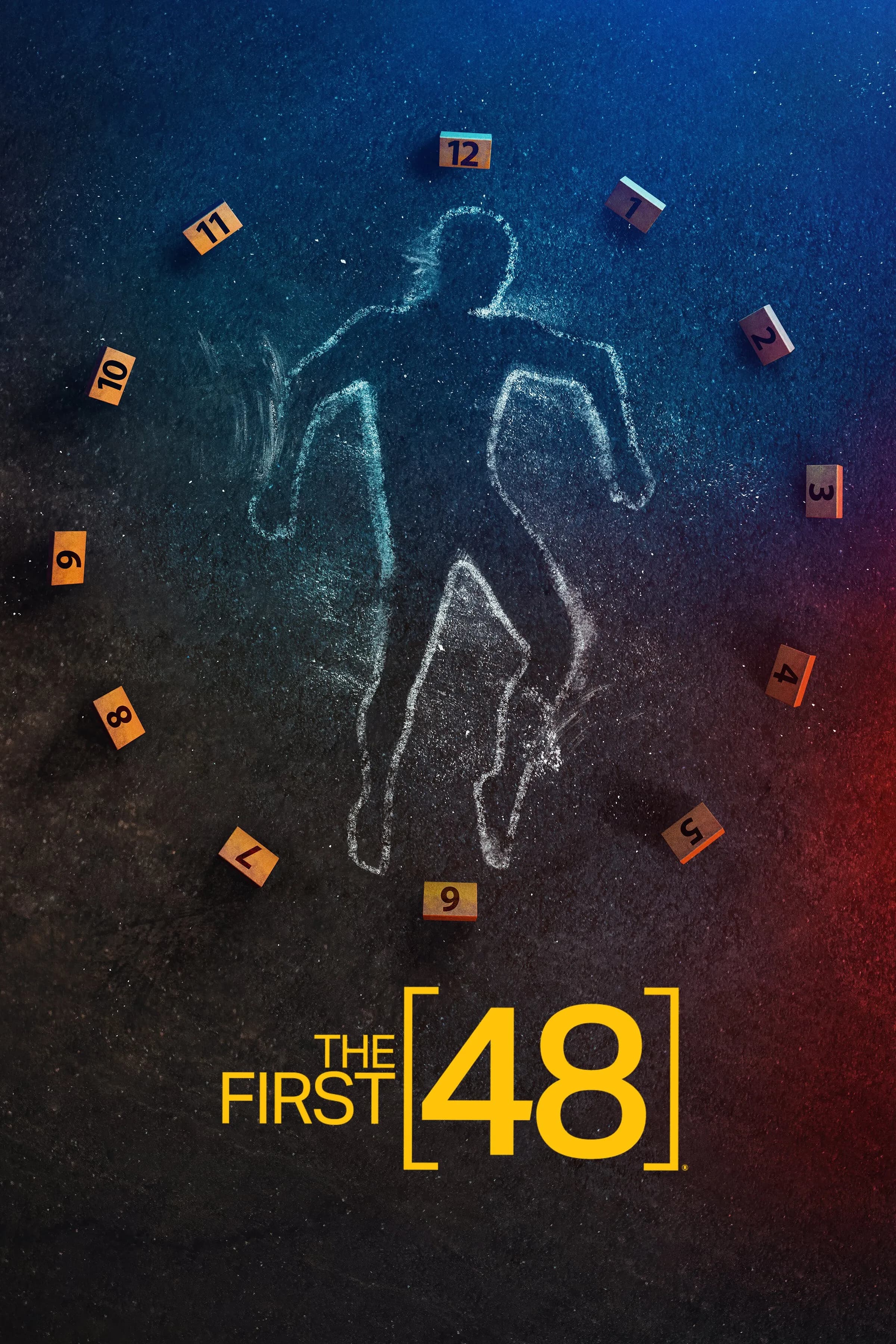
The First 48 is a documentary series produced by A&E Networks that chronicles hundreds of real-life homicide investigations across the United States, focusing on the critical first 48 hours after a murder is reported — the window detectives consider most vital to solving a case. Originally premiering on A&E in 2004, the series ran for 29 seasons and 402 episodes, making it one of the longest-running and most-watched true crime franchises in American television history. Today, it streams for free on The Roku Channel, Samsung TV Plus, LG Channels, and Plex.
Unlike single-subject true crime documentaries, The First 48 is a multi-case anthology. Each episode drops viewers directly into the chaos of a fresh homicide investigation, following real detectives — not actors, not reconstructions — as they process crime scenes, interview witnesses, pursue suspects, and attempt to build prosecutable cases before evidence goes cold and witnesses disappear.
---
The Cases: Hundreds of Real Homicides
Because The First 48 covers a vast number of distinct cases, there is no single perpetrator or victim at its center. The series documents hundreds of homicide investigations set in major American cities including Los Angeles, New York, Chicago, and Atlanta, with crimes spanning from the early 1990s through the 2020s.
Notable cases featured across the series include:
- Lori Hocking (age 34) — One of the series' earlier documented cases, Hocking's murder investigation was featured in a Season 1-era episode and illustrated the methodical, often agonizing pace of urban homicide work.
- Scott Dyleski — "Killer in the Family" — A high-profile case in which a teenage suspect was investigated for murder, generating some of the series' most-watched early content and drawing mainstream media attention.
- The Murder of Maya (age 19) — Featured across various seasons, this case resonated with audiences for the youth of the victim and the emotional toll it visibly took on investigating officers.
- Charles Key — A convicted murderer whose episode became a reference point for discussions about interrogation technique and the series' editorial approach to suspect interviews.
In each case, the show's cameras capture the full arc: the crime scene, the canvass for witnesses, the interrogation room, and — where available — courtroom footage showing verdicts and sentencing. The result is an unusually complete picture of how American homicide investigations actually function, stripped of the procedural gloss common to fictional crime drama.
---
Production and Format
The series is produced by A&E Networks, with direction and field production handled by rotating crews embedded with homicide units in participating police departments. The access granted to A&E's production teams is remarkable by any standard: cameras are present during active crime scene processing, live suspect interrogations, and the emotionally raw moments when detectives notify families of a victim's death.
The show's core editorial premise is built around a well-documented statistical reality: according to law enforcement research cited throughout the series, detectives who solve a homicide within the first 48 hours are significantly more likely to secure a conviction than those who do not. Leads go cold. Witnesses move or recant. Physical evidence degrades. This ticking-clock framework gives every episode a genuine urgency that scripted procedurals can only approximate.
You can explore the full episode catalog and production background on the official A&E page for The First 48, which also hosts supplementary material on featured cases.
The series later spawned a companion program, After the First 48, which revisits cases from the original series to document what happened after arrest — through trial, sentencing, and beyond — providing a more complete legal narrative for cases that resonated most strongly with audiences.
---
Reception and Controversies
The First 48 holds an IMDb rating of 8.2/10, reflecting strong and sustained audience approval across its two-decade run. Viewers and critics have consistently praised the series for its authenticity, its refusal to dramatize or reconstruct events, and its genuine emotional weight. The detectives featured are not performing for cameras — they are doing their jobs, and the pressure is palpable in every scene.
The series has been widely recognized as a benchmark in the true crime documentary genre, influencing a generation of crime programming that followed in its wake. Its combination of intimate access and longitudinal storytelling — following cases from the first call to eventual verdict — set a standard that few competitors have matched.
However, the show has not been without criticism. Some observers and media critics have raised concerns about the ethics of filming grieving families in the immediate aftermath of violent loss, arguing that the cameras can compound trauma at the most vulnerable moments. Others have questioned whether the series' format — which inherently favors cases that result in dramatic interrogations and clear resolutions — creates a skewed picture of how often homicide investigations actually succeed.
Additionally, questions have been raised over the years about racial disparities in coverage, with critics noting that the show's focus on urban homicides in cities like Atlanta and Memphis means victims and suspects are disproportionately Black Americans, raising discussions about whether the framing adequately contextualizes the systemic conditions that produce urban violence.
None of these controversies has significantly dented the show's viewership or critical standing, but they form an important part of the ongoing conversation about responsible true crime journalism.
---
Streaming Availability
Since its completion as an A&E original series, The First 48 has become one of the most-distributed titles on free ad-supported streaming television (FAST). It is currently available as a dedicated 24/7 channel on Samsung TV Plus (Channel 1832), as confirmed by the show's official Samsung TV Plus announcement, as well as on The Roku Channel, LG Channels, and Plex — all at no cost to viewers.
The transition to FAST platforms has introduced the series to an entirely new generation of true crime viewers who may have missed its original A&E run, and ratings data from FAST distributors consistently rank it among the most-watched true crime titles in the streaming-free tier.
---
The Cases Today
Given the breadth of the series — 402 episodes spanning nearly three decades — the post-broadcast status of featured cases varies enormously. Many of the convicted individuals documented across the series' run remain incarcerated. Some cases featured in early seasons have seen subsequent legal developments: appeals, sentence modifications, and in rare cases, exonerations or retrials.
For viewers who want to follow up on specific cases, After the First 48 remains an excellent companion resource, revisiting outcomes in greater legal detail. The A&E website also maintains case updates for select episodes.
What remains constant across all of these cases is the human core of the series: families shattered by sudden violence, detectives carrying the weight of their caseloads with exhausted professionalism, and a justice system working — imperfectly, incrementally — toward accountability. The First 48 has, for over two decades, made that process visible in a way that no other series has matched.