See No Evil
Investigation Discovery / Roku / Plex, 2014 — real murders solved by CCTV footage
Quick facts
What Is See No Evil?
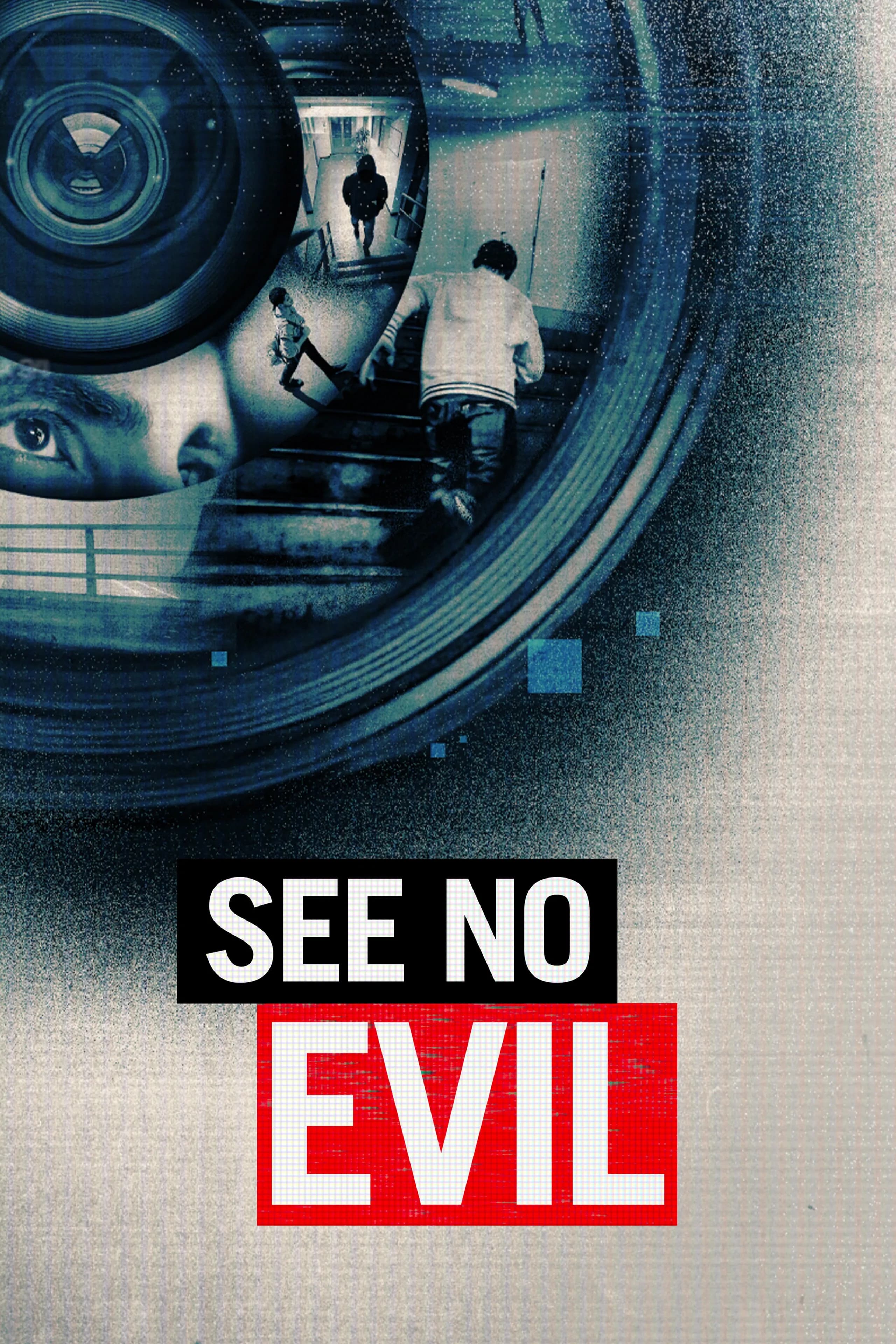
See No Evil is a ground-breaking episodic true crime documentary series that examines how real murders across the United States were solved — not by traditional detective work alone, but by the unblinking eye of surveillance cameras. Each episode presents a different case, a different victim, a different perpetrator, and a different story of how CCTV footage provided the critical breakthrough that investigators needed. The series has been running since 2014, with new episodes continuing through at least 2025, making it one of the longest-running true crime franchises on Investigation Discovery.
The title See No Evil is a deliberate inversion of the classic "see no evil, hear no evil" proverb. In this series, the cameras see everything — the violence that perpetrators believed went unwitnessed, the movements that killers thought vanished into the crowd, and the split-second moments that ultimately proved fatal for both victim and suspect. The cameras, it turns out, saw all of it.
The Format and Cases
Because See No Evil is an anthology series, there is no single perpetrator, no single victim, and no single crime at its center. Instead, each episode functions as a self-contained investigation into one specific murder case. The unifying thread across every episode is the role that surveillance camera footage played in cracking the case open — whether that footage came from a supermarket camera, an ATM machine, a parking garage, a convenience store, or a street-corner CCTV unit.
Detectives and investigators appear on camera to walk viewers through how they obtained the footage, how they analyzed it frame by frame, and how the images ultimately led them to identify and apprehend a suspect. Alongside law enforcement testimony, the series incorporates interviews with family members of victims and, in some cases, survivors, giving the human cost of each crime an emotional weight that goes beyond the procedural.
Episode titles within the series — such as "Remember Me?" and others catalogued on the show's IMDb page — hint at the specific cases they document, often referencing a chilling detail from the footage or the crime itself. Viewers seeking the particulars of any individual case — perpetrator name, victim identity, crime date, and verdict — are best served by consulting the episode listing directly on IMDb (tt4189570), where each episode's details are catalogued.
This anthology approach sets See No Evil apart from single-case documentary series. Rather than spending multiple episodes on one story, the show delivers a complete investigative narrative — crime, investigation, footage analysis, arrest, and resolution — within a single episode. It is a format that has proven remarkably durable over more than a decade of production.
Production
The series was produced with involvement from Canadian and UK production companies, lending it an international production sensibility even though its cases are drawn predominantly from the United States. No single director is credited across the series as a whole; given the episodic, ongoing nature of the production, individual episodes are likely helmed by different directors working within the established format.
The production's access to real surveillance footage — the kind that law enforcement agencies do not always release publicly — is central to the series' identity. Investigators appear to have cooperated extensively with production teams, sharing footage, case files, and their own on-camera recollections. This level of access gives the show an authenticity that scripted procedurals cannot replicate. The footage is real. The crimes are real. The resolution, for better or worse, is real.
The series premiered in the United States on Investigation Discovery on February 17, 2015, and has since expanded its availability significantly. It is now streamable for free on The Roku Channel and Plex, as well as having been noted by viewers as available on HBO Max, ensuring that its audience continues to grow well beyond its original cable home.
Reception
See No Evil has earned a strong and loyal viewership over its decade-plus run. On IMDb, the series holds a rating of 8.0 out of 10 based on approximately 1,600 votes — a notably high score for a long-running reality documentary series. Viewer commentary on platforms like Reddit has been consistently enthusiastic, with fans describing it as "one of the best shows" in the true crime genre and citing its reliance on real footage, genuine police interviews, and authentic family accounts as the qualities that distinguish it from competitors.
A thread on the TrueCrimeDiscussion subreddit praised the show for being "fascinating," with users noting that the surveillance footage element gives each episode a visceral immediacy that narrated reconstructions lack. Because viewers are watching the actual moments that investigators watched — pausing, rewinding, analyzing — there is a participatory quality to the experience that distinguishes See No Evil from more passive documentary formats.
No major controversies have been reported in connection with the series. Its focus on solved cases, combined with the cooperative participation of law enforcement, appears to have insulated it from the ethical criticisms that sometimes attach to true crime productions that revisit unsolved crimes or whose production methods are perceived as exploitative.
The Series Today
As of 2025, See No Evil remains an active series. Its availability on free, ad-supported streaming platforms like The Roku Channel and Plex means it continues to find new audiences who may never have encountered it during its Investigation Discovery broadcast run. The series' longevity — spanning from 2014 to 2025 at minimum — is a testament to the enduring appeal of its core premise: surveillance cameras are everywhere, and when a murder occurs, they are often the most reliable witness in the room.
For viewers interested in a specific episode, the IMDb episode guide for tt4189570 remains the most reliable resource for identifying individual cases, their victims, perpetrators, and outcomes. Each episode stands alone, but together they form a comprehensive portrait of how modern law enforcement has adapted to a world in which almost every public space is watched — and how killers, again and again, forget that fact.