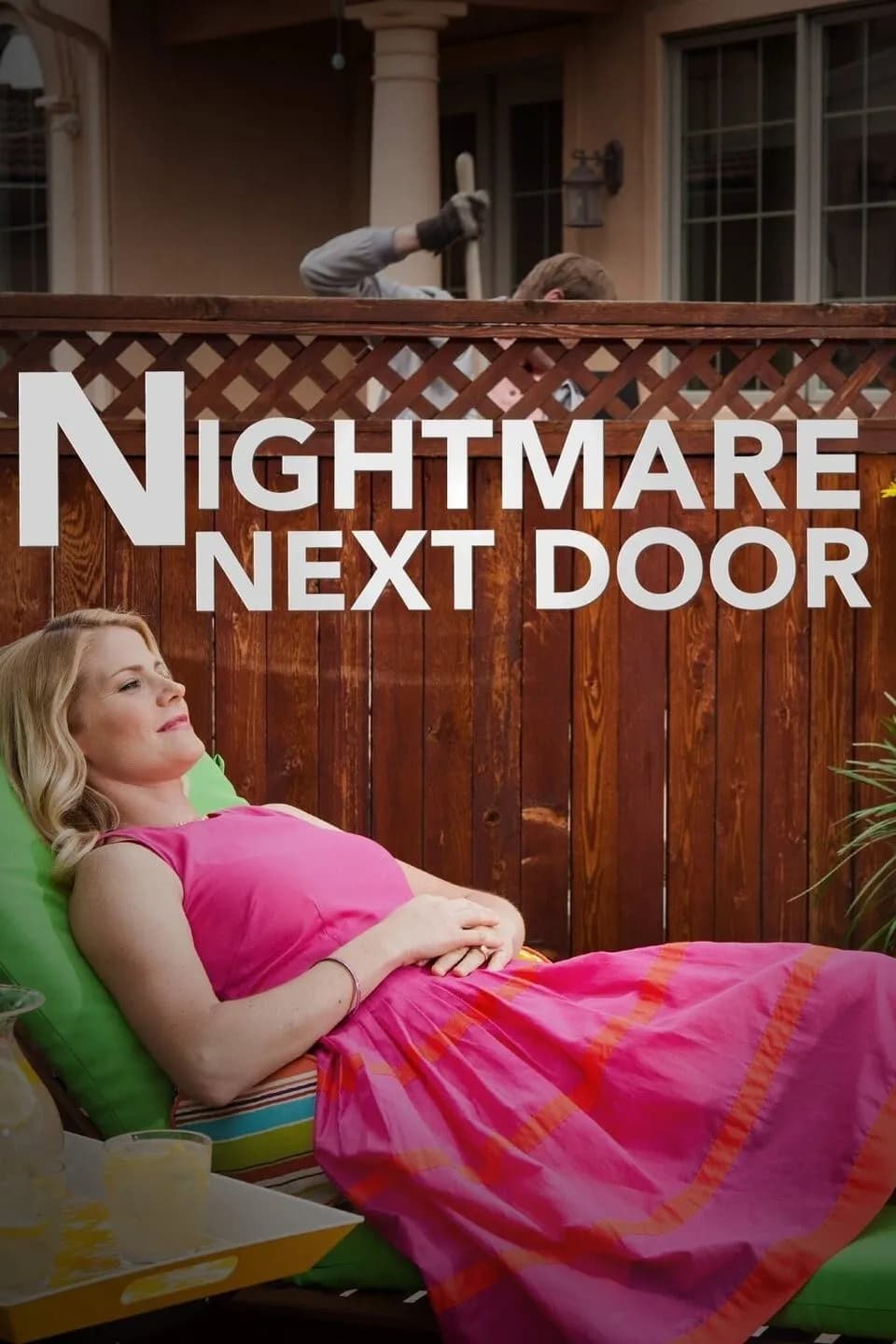
Nightmare Next Door
Tubi & Plex anthology series (2011) uncovering small-town American murders, episode by episode
Quick facts
What Is the Series About?
*Nightmare Next Door* is an American true crime anthology documentary series that premiered in 2011 and investigates a different murder case in each episode — all set in the quiet, often deceptively peaceful landscapes of small-town America. Rather than following a single perpetrator or victim across its run, the show peels back the surface of ordinary suburban and rural communities to reveal the violent crimes hidden beneath. With over 100 episodes across four seasons, it stands as one of the more prolific true crime anthology series in the genre, currently available to stream for free on Tubi and Plex.
Produced by ATVE (America's True Crime Entertainment) and originally broadcast on Investigation Discovery, the series follows a consistent format: each episode clocks in at approximately 43 minutes and combines dramatic reenactments with first-person testimonials from family members, investigators, neighbors, and prosecutors. The tone is deliberately intimate — these are not the headline-grabbing cases of major metropolitan centers, but the kind of crimes that shook a neighborhood, a school, or a congregation, and then were quietly absorbed into the fabric of a town's identity.
The Cases
Because Nightmare Next Door is an anthology, no single perpetrator or victim defines the series. Instead, it draws from a broad archive of American homicide cases, many of them cold cases that were eventually solved through advances in forensic science, persistent detective work, or an unlikely tip from within the community.
The Murder of Karin Strom (1980) is among the series' most striking featured cases. In 1980, Karin Strom, a 26-year-old woman, was found strangled to death in her home in Portsmouth, Virginia. With no immediate suspect and limited forensic tools available at the time, the case went cold. For 26 years, it remained unsolved — a wound in the community that never fully closed. Then, in 2006, a DNA breakthrough changed everything. Evidence collected at the original crime scene was re-examined using modern technology, and the results pointed to her own husband, John Strom. He was convicted of her murder, more than a quarter century after the crime. The Strom case exemplifies the central theme that runs through the series: the idea that the most dangerous person in a victim's life may be the one sleeping beside them.
The Lauren Giddings case (2011) is another episode featured in the series. Set in Portsmouth, Virginia, the case involves the murder of a young woman whose father discovered her body — a devastating sequence of events that the show treats with considerable emotional weight. First-person accounts from those closest to the victim give the episode an immediacy that sets it apart from more detached true crime presentations.
Other episodes in the series cover cases involving unlikely tipsters cracking long-dormant investigations, domestic murders concealed for years behind respectable facades, and suburban crimes that upended the assumptions of entire communities. The through-line across all episodes is the same: violence does not require a city. It finds its way into cul-de-sacs, church parking lots, and quiet country roads.
Production
Nightmare Next Door was produced by ATVE — America's True Crime Entertainment — and originally aired on Investigation Discovery, one of the cable network's flagship true crime anthology offerings. No single director is publicly credited for the series as a whole; the show operates with the kind of rotating production structure common to episodic documentary television, where individual episode directors and producers are rarely foregrounded in marketing materials.
The production style leans heavily on dramatic reenactments, a common technique in Investigation Discovery programming. These reconstructions are intercut with talking-head interviews featuring real investigators, surviving family members, and community witnesses. The result is a hybrid format that sits somewhere between documentary journalism and dramatized narrative — a style that has drawn both praise for its accessibility and mild criticism for occasionally blurring the line between confirmed fact and speculative reconstruction.
The series does not appear to have had exclusive access to court documents or law enforcement files in any widely reported capacity, suggesting that most episode narratives are built from public records, trial transcripts, and voluntary interviews with those involved.
Reception
On IMDb, Nightmare Next Door holds a rating of 7.0 out of 10 based on approximately 1,200 viewer ratings — a respectable score for a long-running cable anthology series. Viewer responses have been generally positive, with audiences citing the show's emotional storytelling and its willingness to center the perspectives of victims' families as distinguishing strengths. The first-person accounts, in particular, have been praised for lending the episodes a human texture that purely narrator-driven true crime programming sometimes lacks.
Critical coverage of the series has been limited, as is typical for Investigation Discovery programming, which tends to attract dedicated true crime audiences rather than mainstream television critics. Some observers have noted that the show's reliance on dramatic reenactments and speculative narration occasionally oversteps what the available evidence can support — a criticism leveled at many series in the genre. No major controversies have been publicly reported in connection with the show's production or its handling of specific cases.
The series' longevity — more than 100 episodes over four seasons — speaks to a sustained audience appetite for its format. Its continued availability on free streaming platforms like Tubi and Plex has introduced the series to new viewers well over a decade after its original premiere.
The Cases Today
For cases like the Karin Strom murder, the legal chapter has closed. John Strom was convicted in 2006 and remains incarcerated, though the specific facility has not been publicly disclosed. The case stands as a testament to the potential of DNA technology to reach back across decades and deliver accountability where the original investigation fell short.
For other cases featured in the series, outcomes vary. Some episodes cover cases where convictions are secure and perpetrators are serving long sentences. Others touch on investigations where questions remain. The anthology format means that Nightmare Next Door functions, in part, as a historical archive of American violent crime — a record of the damage done, the investigations that followed, and the communities left to reconstruct themselves in the aftermath.
As true crime continues to grow as a genre, Nightmare Next Door endures as one of the earlier examples of the long-form anthology format that would later become a staple of streaming platforms worldwide. Its focus on small-town America, and on the ordinary people who commit and survive extraordinary violence, remains as relevant now as it was when the series first aired in 2011.