Homicide Hunter: Lt. Joe Kenda
Pluto TV & Samsung TV Plus, 2011 — 356 real homicide cases solved by one Colorado detective
Quick facts
What Is the Series About?
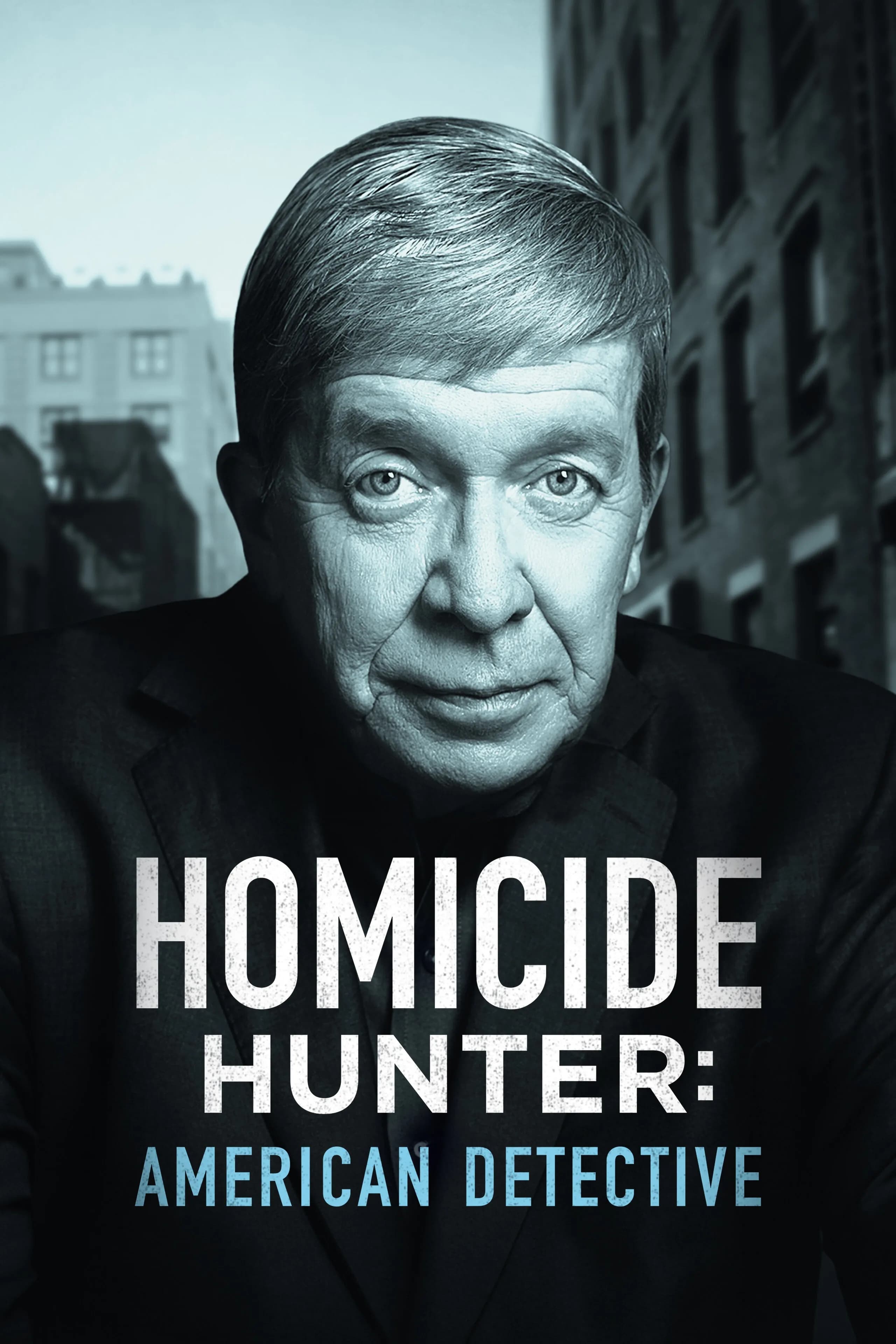
Homicide Hunter: Lt. Joe Kenda is a documentary true crime series that recounts 356 of the 387 homicide cases investigated by Lt. Joseph Patrick Kenda during his 23-year career with the Colorado Springs Police Department in Colorado. First aired in September 2011 on Investigation Discovery, the series is now widely available on Pluto TV, Samsung TV Plus, Crime+Investigation, and ID GO, making it one of the most accessible true crime series in the genre.
Unlike most documentary series that focus on a single case or criminal, Homicide Hunter is an anthology — each episode presents a self-contained murder investigation drawn directly from Kenda's personal case files. The format is driven almost entirely by Kenda himself, who sits before a camera and narrates each case with a dry, unflinching directness that has become the show's signature. Reconstructions and dramatizations accompany the narration, illustrating the crime scenes, interrogations, and investigative breakthroughs that defined each case.
With over 100 episodes across 8 seasons, the series spans cases from the 1970s through the 1990s, covering everything from domestic murders and gang violence to arson, rape, acid attacks, and mass killings.
---
The Cases
Because the series is an anthology, there is no single perpetrator, victim, or crime that defines Homicide Hunter as a whole. Each episode stands alone, presenting its own cast of victims, killers, and investigative challenges.
Among the most notable cases featured is the "Shopping Center Massacre", in which five people were murdered at a shopping center and the killer attempted to destroy physical evidence by setting a fire at the scene — a deliberate act of obstruction that complicated the investigation significantly. In another episode, the perpetrator is identified by name as Gilbert Eugenio Archebeck, one of many real killers whose cases Kenda recounts with forensic precision.
Crime types across the series are wide-ranging and include:
- Premeditated murder and crimes of passion
- Rape and sexual homicide
- Arson used to conceal evidence
- Acid attacks
- Mass killings involving multiple victims
All primary cases are set in and around Colorado Springs, Colorado, though the investigations occasionally extend to other jurisdictions. The time period covered runs from the early 1970s, when Kenda first joined the homicide division, through to his retirement in the mid-1990s.
Of the 387 homicide cases Kenda investigated over his career, he solved 356 — a closure rate of approximately 92%, a figure that is extraordinarily high by national standards and one that forms the backbone of the series' narrative authority. Kenda is not just a TV personality recounting stories — he is the detective who actually solved nearly every case he presents.
---
Lt. Joe Kenda: The Man Behind the Badge
Joseph Patrick Kenda was born on August 28, 1946, and spent the core of his professional life in law enforcement in Colorado Springs. His 23-year tenure with the Colorado Springs Police Department saw him rise through the ranks to become one of the department's most respected homicide investigators.
Kenda's approach to homicide work, as reflected throughout the series, was methodical, evidence-driven, and deeply personal. He has spoken in interviews about the psychological toll of working nearly 400 murder cases, and his candid reflections on death, justice, and the limits of the legal system are a defining feature of the show's tone. His famous recurring phrase — "My my my" — became instantly recognizable to fans of the genre.
After retiring from the police department, Kenda initially stayed out of the public eye before agreeing to the Homicide Hunter project, which has since made him one of the most recognizable faces in true crime television.
---
Production
Homicide Hunter: Lt. Joe Kenda was produced by ID Studios and True Vision Productions for Investigation Discovery, the cable network that has been a cornerstone of American true crime broadcasting. Individual episodes do not carry public directorial credits, which is common for episodic documentary series of this format.
The production style is deliberately restrained. Rather than leaning heavily on dramatic music or sensationalized re-enactments, the series allows Kenda's narration to carry the weight of each story. Dramatic reconstructions are used to illustrate the events he describes, but the camera always returns to Kenda, seated and speaking directly to the viewer, making the format feel closer to an oral history than a conventional TV documentary.
The series ran for 8 seasons and produced more than 100 episodes, covering 356 of the 387 cases from Kenda's career — an extraordinary volume of material that required Kenda to revisit decades of investigative memory with clarity and consistency.
---
Reception
Homicide Hunter: Lt. Joe Kenda holds an IMDb rating of 8.1/10 based on approximately 1,500 user ratings, placing it among the better-regarded entries in the true crime documentary genre.
Critical and audience reception has been consistently positive. Viewers frequently praise:
- Kenda's narration style — clear, direct, and free of melodrama
- The no-fluff storytelling — cases are presented without unnecessary padding or speculation
- The sheer volume of cases — the anthology format allows viewers to engage with the series at their own pace
- Kenda's personal authority — as the actual detective on every case, his narration carries a credibility that actor-hosted true crime shows cannot replicate
Some viewers and critics have noted that the series' graphic content — including descriptions of violent crimes, acid attacks, and sexual homicides — may be disturbing to some audiences. A minority of reviewers have also pointed out that the show offers little focus on the rehabilitation or social context of perpetrators, preferring instead to center the investigative and judicial process.
Minor criticism has been directed at occasional moments of sensationalism, but the series has not been subject to any major legal or ethical controversies. No victims' families have publicly objected to the portrayal of their cases, and Kenda himself has spoken about the care he takes in representing the people whose deaths he investigated.
---
The Series Today
Following the conclusion of its final season, Homicide Hunter: Lt. Joe Kenda has transitioned fully into the streaming era. The complete series is now available on Pluto TV and Samsung TV Plus as free, ad-supported content, alongside availability on ID GO, Crime+Investigation, and the True Crime Network, making it accessible to a global audience without a subscription.
Lt. Joe Kenda has remained active in the public eye since the series ended, continuing to engage with fans and discuss his career. His legacy within the true crime genre is substantial — he demonstrated that a single detective's career, narrated plainly and honestly, could sustain more than 100 episodes of compelling television.
For viewers new to the series, the breadth of Homicide Hunter is both its greatest strength and its most distinctive feature: this is not a show about one crime or one criminal. It is a portrait of a career spent in the presence of death — and a record of what it took, case by case, to deliver justice.