Inside Denmark's Criminal Underworld: Eight Decades of Organized Crime
New book traces evolution of Scandinavian organized crime from Nazi occupation to modern international networks
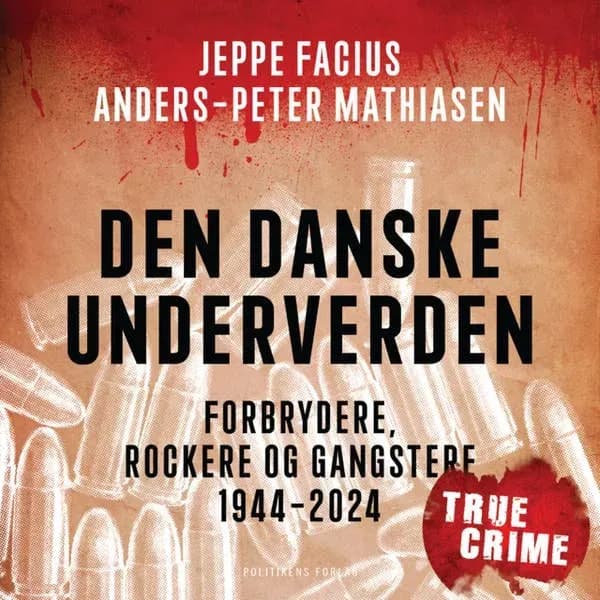
Two of Denmark's most decorated investigative journalists have released a sweeping historical account of organized crime in Scandinavia, spanning from the final year of Nazi occupation through 2024. 'The Danish Underworld: A Chronicle of Crime 1944-2024,' written by Anders-Peter Mathiasen and Jeppe Facius, both Cavling Prize recipients, documents how a small Nordic nation evolved into a nexus for international criminal enterprises.
Published by Politikens Forlag in 2024, the 312-page volume traces the emergence of Denmark's organized crime landscape across eight decades, beginning in 1944 as German forces withdrew from the country. Rather than presenting an isolated Scandinavian story, the book contextualizes how Denmark's geographic position between Northern Europe and the Baltic became strategically valuable for smuggling operations and criminal networks.
The authors document several pivotal criminal operations and figures that shaped the nation's underworld. Among the cases examined is the "Spider Affair" (Edderkoppeaffæren), a complex case illustrating the sophistication of Danish organized crime. The book also chronicles extensive cigarette and hashish smuggling networks that flourished throughout the post-war decades—operations that would have parallels in other European countries managing contraband trafficking through major ports.
A particularly striking narrative involves a man from Denmark's upper class who became a major criminal figure. He served the longest continuous prison sentence in Danish history—a record later surpassed only by a man convicted of killing four police officers. This trajectory illustrates how organized crime transcends social boundaries, a phenomenon observed in criminal justice systems across the globe.
Motorcycle gang warfare features prominently in the chronicle. Denmark, like many Scandinavian and European nations, experienced significant biker gang conflicts during the 1980s and 1990s, with criminal organizations like Loyal to Familia establishing footholds in the country. The book traces how these domestic gangs were gradually infiltrated and influenced by international criminal syndicates, transforming the nature of organized crime on Danish soil.
For international readers unfamiliar with the Danish context, understanding this evolution is relevant to broader European organized crime trends. Denmark's role as a gateway between Scandinavia, Germany, and the Baltic region made it vulnerable to the internationalization of crime. What began as localized smuggling and racketeering in the immediate post-war years evolved into participation in transnational drug trafficking, money laundering, and human trafficking networks.
The book's publication in multiple formats—hardcover, e-book, and audiobook—reflects contemporary publishing trends, though the text remains in Danish only, limiting its immediate accessibility to English-speaking readers. This presents a gap in English-language true crime literature on Nordic organized crime, an area that has received less international attention compared to Italian mafia histories or Eastern European crime organizations.
Mathiasen and Facius bring significant journalistic credentials to the project. Their work as Cavling Prize winners—Denmark's equivalent to major international journalism awards—suggests rigorous research standards and investigative depth. The authors draw on archival materials, court records, and journalistic accounts accumulated over decades to construct their narrative.
The comprehensive nature of this chronicle addresses a notable gap in English-language true crime publishing. While Scandinavian crime fiction dominates popular culture, factual accounts of how Nordic countries developed organized crime infrastructures remain relatively obscure internationally. This book positions Denmark not as an outlier, but as a case study in how post-war European nations faced the institutionalization of criminal enterprise.
For criminologists, law enforcement professionals, and true crime researchers, the work offers documented evidence of how international organized crime expanded into Nordic markets—a process that continues to shape European criminal networks today. The book's historical scope allows readers to understand not just what crimes occurred, but how criminal organizations adapted, evolved, and internationalized across an eight-decade period that transformed Europe itself.