True crime news logo
  • News

Sign up for our newsletter and get the latest stories

Never miss the latest true crime news, reviews and top lists — plus new podcasts, series, films and books.

You can unsubscribe with one click from any email.

True crime news logo

The international true crime destination. Cases, documentaries, podcasts and travel routes.

© 2026 truecrime.news. All rights reserved.

Tracking the killer: revolutionizing police drama with social realism

Prime Suspect: The British Drama That Redefined Police Television

Helen Mirren's groundbreaking role as DCI Jane Tennison challenged institutional sexism and set new standards for the procedural genre

Published
May 26, 2025 at 10:00 PM

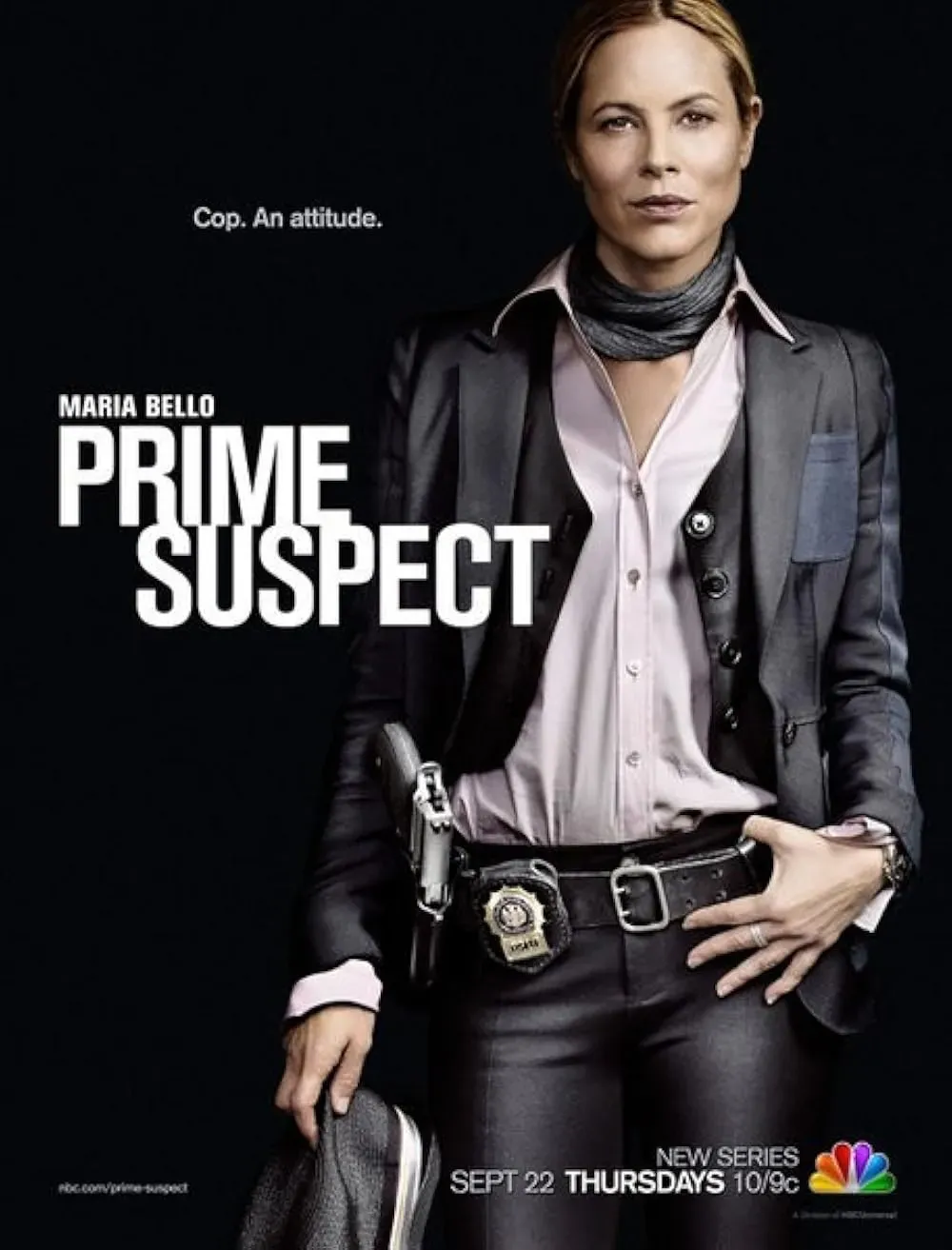
Prime Suspect premiered on ITV in 1991 as a watershed moment for British television drama. Created by writer Lynda La Plante, the series centered on Jane Tennison, a Detective Chief Inspector in the Metropolitan Police Service who would eventually rise to Detective Superintendent. The character, portrayed by Helen Mirren, became one of the most iconic roles in crime television, anchoring seven series across two decades.

What set Prime Suspect apart from its contemporaries was its unflinching examination of institutional sexism within law enforcement. Rather than treating gender dynamics as a subplot, La Plante made Tennison's battles against a male-dominated workplace central to the narrative. This thematic depth resonated with audiences and critics alike, establishing a template for police procedurals that prioritized character development and social commentary alongside crime investigation.

The series was initially set at the fictional Southampton Row police station in Greater London, providing a grounded, realistic backdrop for Tennison's investigations. Over its run, Prime Suspect evolved to explore increasingly complex themes, including racism, ethnic segregation, and gang violence—all handled with the same narrative sophistication that characterized the early episodes.

Production spanned from 1991 to 1996 for the initial run, with two additional seasons produced in 2003 and 2006. The final installment, Prime Suspect: The Final Act, aired in 2006, directed by Philip Martin and written by Frank Deasy. This seven-series arc allowed the show to develop its protagonist across a complete career arc, a luxury few police dramas receive.

The critical and industry recognition was extraordinary. Prime Suspect won multiple BAFTA Awards, including Best Drama Serial for both series one and three, with four additional nominations across other series. Helen Mirren herself received four individual BAFTA Awards for her performance as Tennison, cementing her status as one of television's greatest dramatic actors. The series also claimed three Primetime Emmy Awards for Outstanding Miniseries, with two additional nominations, and received a Peabody Award—recognition from American television's most prestigious honor.
Perhaps most tellingly, Prime Suspect was voted 68th in the British Film Institute's list of 100 Greatest British Television Programmes. In 2007, Time magazine recognized it as one of the "100 Best TV Shows of All TIME," placing it among programs that transcended the medium to become cultural touchstones. Such accolades from both British and international institutions underscore the series' lasting impact on television drama.

The success of Prime Suspect cannot be separated from Helen Mirren's performance. Her portrayal of Tennison—brilliant, flawed, determined, and perpetually fighting systems designed to exclude her—gave the character depth that could have easily remained one-dimensional. Mirren's nuanced performance demonstrated that a woman-centered police procedural could achieve both critical acclaim and popular success without compromising on either intelligence or drama.

Prime Suspect's legacy extends far beyond its broadcast run. The series helped establish the template for contemporary police dramas that center on compelling characters navigating both criminal investigations and institutional politics. Its focus on how systemic barriers affect individual officers influenced countless shows that followed, making it not merely a product of its era but a foundational text in television crime drama.

The seven-series run allowed Prime Suspect to tell a complete story while maintaining the procedural format audiences expected. This balance between character arc and episodic investigation became a hallmark of the series and influenced how subsequent crime dramas approached their narratives.

**Sources** - https://en.wikipedia.org/wiki/Prime_Suspect - https://sv.wikipedia.org/wiki/I_m%C3%B6rdarens_sp%C3%A5r - https://www.svenskfilmdatabas.se/sv/item/?type=film&itemid=39501

Read more

A helicopter hovers above a high-security prison in France, ropes dangling as part of an audacious escape plan.
Case

France's Master Escape Artist: The Rédoine Faïd Story

A figure resembling Sharon Tate stands in a 1960s Hollywood living room, visibly pregnant, surrounded by vintage décor, with a foreboding tension in the air.
Case

Sharon Tate: Hollywood's Rising Star Murdered by Manson Cult

My Favorite Murder: humorous revolution in true crime
Podcast

My Favorite Murder: When True Crime Became Comedy Gold

Related Content
A helicopter hovers above a high-security prison in France, ropes dangling as part of an audacious escape plan.

France's Master Escape Artist: The Rédoine Faïd Story

A figure resembling Sharon Tate stands in a 1960s Hollywood living room, visibly pregnant, surrounded by vintage décor, with a foreboding tension in the air.

Sharon Tate: Hollywood's Rising Star Murdered by Manson Cult

My Favorite Murder: humorous revolution in true crime

My Favorite Murder: When True Crime Became Comedy Gold

A figure resembling Oscar Pistorius is seated on a track starting block in an empty stadium, wearing his signature running blades, staring intently at the horizon as dusk falls.

The Fall of the Blade Runner: Oscar Pistorius Convicted of Murder

Advertisement
SS

Susanne Sperling

View all stories →
Share this post: