Video evidence
From crime scene to courtroom – a double-edged sword in investigations
Definition
Video evidence: The digital eyewitness in true crime. Learn about its sources, crucial role in investigations, and the complex challenges it brings.
From crime scene to courtroom – a double-edged sword in investigations
Video evidence's role in true crime
In true crime and criminal investigations, video evidence encompasses any form of video recording used to shed light on a sequence of events, identify involved parties, or corroborate and refute claims in a criminal case. As a central type of digital evidence, the immediate and often graphic nature of video evidence makes it an exceptionally powerful tool within the legal system. It provides a direct, visual window into crucial moments – for example, directly from a crime scene – which previously could primarily be reconstructed through witness testimony or other circumstantial evidence.
Video evidence: From street to courtroom
These video recordings can originate from a multitude of sources, including public and private video surveillance (such as CCTV systems), mobile phones belonging to witnesses or victims, police body cameras, dashcams in vehicles, or even clandestine recordings made by the perpetrators themselves. In an investigation, video evidence can be crucial for piecing together a complex sequence of events, establishing timelines, revealing a perpetrator's movements before and after a crime, or documenting the criminal act itself. For courts and juries in a trial, clear video evidence can often weigh heavily in the assessment of evidence and the determination of guilt, as the visual element can be more persuasive than abstract explanations. However, video evidence is not without complications; questions about the recording's authenticity, quality, potential manipulation, the broader context, and the legality of its acquisition are often central legal and technical points of contention. A thorough forensic analysis of video clips may be necessary to address these challenges. A video can show a segment of reality, but not necessarily the whole truth, and the interpretation of what is seen can still be subject to debate, underscoring the importance of proper contextualization during a trial.
Deepfakes and the future of video evidence
The advent of increasingly advanced video technology, including the ability to enhance poor-quality recordings through video analysis or the risk of sophisticated forgeries such as deepfakes, underscores the continued and dynamic role video evidence plays in solving crimes and in the pursuit of justice. Understanding both the strengths and weaknesses of video evidence is therefore essential for investigators, prosecutors, defense attorneys, and anyone following the complex reality of true crime cases and subsequent trials.
How has video evidence decided fates in the courtroom? See examples ranging from solving cases via CCTV to incidents of manipulated recordings. Read our shocking cases on the subject below.
Read more
The Vanishing of Brian Shaffer
On April 1, 2006, 27-year-old Brian Shaffer, an Ohio State University medical student, walked into the Ugly Tuna Saloona bar in Columbus for a night out with friends. Hours later, he vanished—never to be seen or heard from again, despite extensive surveillance footage and a thorough police investigation.
The Timmothy Pitzen Case: America's Enduring Child Disappearance Mystery
On May 11, 2011, six-year-old Timmothy James Pitzen was withdrawn from his Illinois school by his mother, Amy Fry-Pitzen, who claimed a family emergency. Three days later, Amy was found dead from suicide with a note stating the boy was safe but would never be found. More than a decade on, Timmothy remains missing.
The Vanishing of Lars Mittank at Varna Airport
On July 8, 2014, German tourist Lars Mittank fled Varna Airport in Bulgaria, abandoning his belongings and sprinting into nearby woods. The 28-year-old has never been seen since, leaving behind unanswered questions about what drove him to abandon his ticket home.
Related articles

America's Wrongful Conviction Crisis: A Warning for All Democracies
Since 1989, the U.S. justice system has formally exonerated nearly 3,500 people convicted of crimes they did not commit. Collectively, these innocent people spent almost 32,000 years in prison—a staggering indictment of how flawed eyewitness testimony, prosecutorial misconduct, and official negligence can dismantle the rule of law.

The Vanishing of Brian Shaffer
On April 1, 2006, 27-year-old Brian Shaffer, an Ohio State University medical student, walked into the Ugly Tuna Saloona bar in Columbus for a night out with friends. Hours later, he vanished—never to be seen or heard from again, despite extensive surveillance footage and a thorough police investigation.

The Timmothy Pitzen Case: America's Enduring Child Disappearance Mystery
On May 11, 2011, six-year-old Timmothy James Pitzen was withdrawn from his Illinois school by his mother, Amy Fry-Pitzen, who claimed a family emergency. Three days later, Amy was found dead from suicide with a note stating the boy was safe but would never be found. More than a decade on, Timmothy remains missing.

The Vanishing of Lars Mittank at Varna Airport
On July 8, 2014, German tourist Lars Mittank fled Varna Airport in Bulgaria, abandoning his belongings and sprinting into nearby woods. The 28-year-old has never been seen since, leaving behind unanswered questions about what drove him to abandon his ticket home.

The Dingo Case: 32 Years Fighting for Innocence
On August 17, 1980, nine-week-old Azaria Chamberlain disappeared from a family tent near Uluru in central Australia. Her mother, Lindy Chamberlain, would spend the next three decades fighting to prove what a dingo had taken her daughter—and to clear her own name from a murder conviction.
The New Year's Murder of Maria Møller Christensen
20-year-old Maria Møller Christensen disappeared on New Year's Eve 2022 in Herning, Denmark. She was later found brutally raped and strangled. A 48-year-old man, Jan Erik Henriksen, was convicted of the murder based on DNA evidence.

Michael Jackson Acquitted in 2005 Child Abuse Trial
Michael Jackson was acquitted in 2005 after a high-profile trial in Santa Maria, California, where he faced charges of molesting a 13-year-old boy named Gavin Arvizo. The case centered on allegations that Jackson used his Neverland Ranch to groom children, but the jury found him not guilty on all counts.
Man Sentenced to 31+ Years for Ordering Son to Kill Rapper PnB Rock
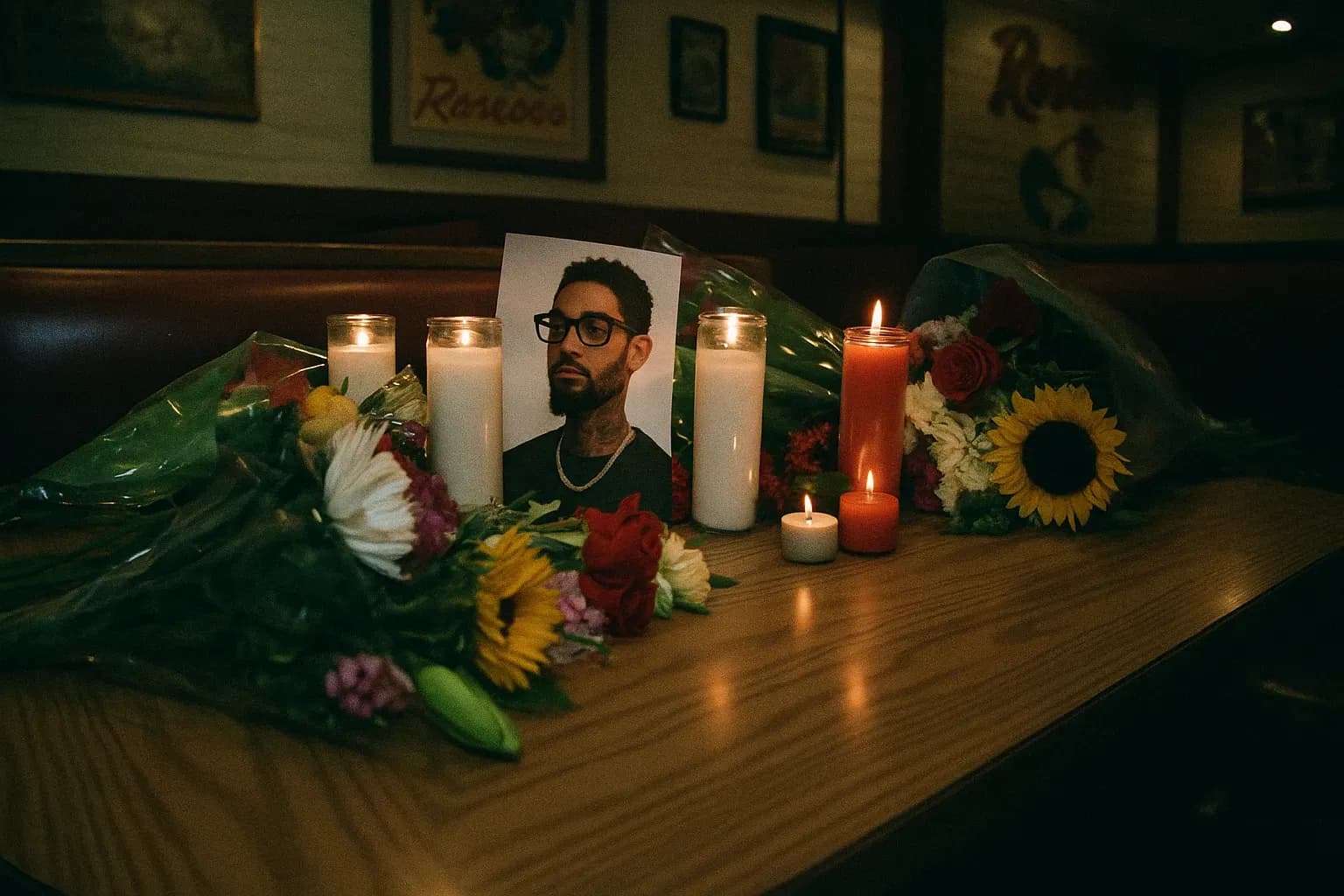
Freddie Lee Trone was sentenced to 31 years and 4 months to life in prison on September 23, 2024, after being convicted of orchestrating the murder of Philadelphia rapper PnB Rock. The killing occurred during a robbery at Roscoe's Chicken & Waffles in South Los Angeles on September 12, 2022, when Trone's 17-year-old son fatally shot the artist.

The Pilot Disappearance That Baffled the World
Australian pilot Frederick Valentich disappeared on October 21, 1978, while flying his Cessna 182L over Bass Strait. His final radio transmission contained the chilling words: 'It's not an aircraft.'

Twitch Breach Exposed Top Streamers' Million-Dollar Payouts
A hacker breached Twitch's internal systems in early October 2021, leaking source code, passwords, and payout data for thousands of streamers. The leaked information exposed two years of earnings data, revealing that top creators earned millions from subscriptions, ad revenue, and Bits donations.

Young Charlie: Wondery's Deep Dive Into Manson's Path to Evil
Wondery's podcast series Young Charlie traces Charles Manson's transformation from his troubled childhood to his role orchestrating the savage murders of actress Sharon Tate and four others in August 1969. Hosted by Tracy Pattin and narrated by Stephen Lang, the show examines the formative events and psychological unraveling that created one of America's most infamous cult leaders.

The Murder Boat: Unsolved Crime Aboard Viking Sally
In 1987, a West German couple died aboard the Viking Sally ferry under circumstances that would go unsolved for nearly three decades. The case only resurfaced in 2015 when a woman reported her ex-husband to Danish police, claiming he had bragged about committing murder.