Dismemberment
The ultimate desecration – motive, method, and the investigator's nightmare

Definition
Dismemberment: The brutal act to conceal a murder. Understand the motive, the methods, and why it's an investigator's worst nightmare in true crime cases.
The ultimate desecration – motive, method, and the investigator's nightmare
What is dismemberment and what it reveals about killers
In true crime, dismemberment refers to the macabre act of dividing a body into multiple parts after death. This typically occurs as an attempt by the perpetrator to dispose of forensic evidence, hinder victim identification, or make it easier to transport and conceal the body. Dismemberment is rarely the cause of death itself but rather a subsequent act that indicates an often desperate or cold-blooded decision to erase traces of a serious crime, frequently a murder.
Dismemberment cases: A true nightmare for investigators
The motives behind dismemberment can be varied, but they almost always center on evading detection and thereby complicating the police investigation. By dividing the body, the perpetrator may attempt to scatter the body parts over a wider geographical area, significantly increasing the police's challenges in finding and assembling the victim. This can involve searches at multiple potential crime scenes or disposal sites. It can also be an attempt to make the body unrecognizable or fit it into smaller containers for easier disposal, such as by burial, submersion in water, or incineration. The act itself often requires a degree of either cold-bloodedness, panic, or a disturbed mental state, and the manner in which the dismemberment is carried out can sometimes provide investigators with faint clues about the perpetrator's background, possible connections to specific environments, or any special skills, which is crucial for the further investigation of the crime.
The shock of dismemberment: Key to the perpetrator’s psyche
For investigators, cases involving dismemberment present a range of special and complex challenges, particularly for forensic medical and criminal technical work. Victim identification can become extremely difficult if key parts such as the head or hands are missing or severely damaged, complicating the process of establishing a secure identity. Determining the precise cause of death can also be complicated, as the dismemberment itself can destroy important forensic clues related to the original violence or the primary crime scene. The discovery of dismembered body parts typically triggers extensive and resource-intensive searches to locate the rest of the body and any crime scenes where both the crime itself and the dismemberment may have occurred. The technical investigation of the dismemberment process itself, including the analysis of tool marks, is central to solving the case. Furthermore, the psychological burden on the involved investigators and forensic pathologists is considerable, and such cases often create widespread public unease and disgust, underscoring the heinousness of this type of crime.
Dismemberment therefore stands as one of the most disturbing aspects of violent crime, not only due to the inherent brutality of the act but also because of the severe consequences it has for solving the underlying crime, often a murder, and the sense of justice that is violated. It underscores the extreme lengths some perpetrators are willing to go to in their attempts to escape justice, and it remains a profoundly shocking reality and a persistent challenge for the legal system and forensic science in the world of true crime.
Did this spark your interest? Delve into real-life cases of dismemberment, from cold-blooded murders to desperate attempts to hide the crime – find our fascinating cases below.
Read more
The Richard Cottingham Case — The Torso Killer
Richard Cottingham is an American serial killer who murdered at least several women across New York and New Jersey, dismembering some victims — earning him the nickname 'The Torso Killer.'
The Elize Matsunaga Case — Murder and Dismemberment in São Paulo
The Elize Matsunaga case is a Brazilian homicide in which Elize Matsunaga shot and dismembered her husband, Yoki executive Marcos Matsunaga, in their São Paulo apartment in May 2012.
The César Román Case — Murder and Dismemberment in Madrid
The César Román case is a Spanish homicide in which businessman César Román murdered and dismembered his 25-year-old partner Heidi Paz Bulnes in Madrid in August 2018.
Related articles

Parteringsdrabet i Thy: Inside Danske Drabssager's Podcast Episode
The podcast episode dives into Parteringsdrabet i Thy, one of Denmark's most shocking criminal cases, in which a woman was dismembered and hidden.
The Richard Cottingham Case — The Torso Killer
Richard Cottingham is an American serial killer who murdered at least several women across New York and New Jersey, dismembering some victims — earning him the nickname 'The Torso Killer.'
The Elize Matsunaga Case — Murder and Dismemberment in São Paulo
The Elize Matsunaga case is a Brazilian homicide in which Elize Matsunaga shot and dismembered her husband, Yoki executive Marcos Matsunaga, in their São Paulo apartment in May 2012.
The César Román Case — Murder and Dismemberment in Madrid
The César Román case is a Spanish homicide in which businessman César Román murdered and dismembered his 25-year-old partner Heidi Paz Bulnes in Madrid in August 2018.

The Edwin Arrieta Case — Murder and Dismemberment in Thailand
Spanish chef Daniel Sancho Bronchalo murdered and dismembered Colombian plastic surgeon Dr. Edwin Arrieta on a Thai island in August 2023, receiving a life sentence in 2024.
Sagen Genåbnet: Peter Lundin: 'Vicious and delicious'
Podcast-episoden gennemgår Peter Lundin-sagen, hvor den dansk-amerikanske morder i 2000 dræbte og parterede sin kæreste Marianne Pedersen og hendes to sønner i Rødovre.
Danske Drabssager: Den Parterede Rocker
This episode of Danske Drabssager dives into the macabre case known as Den Parterede Rocker, in which a dismembered body was discovered scattered across multiple locations.
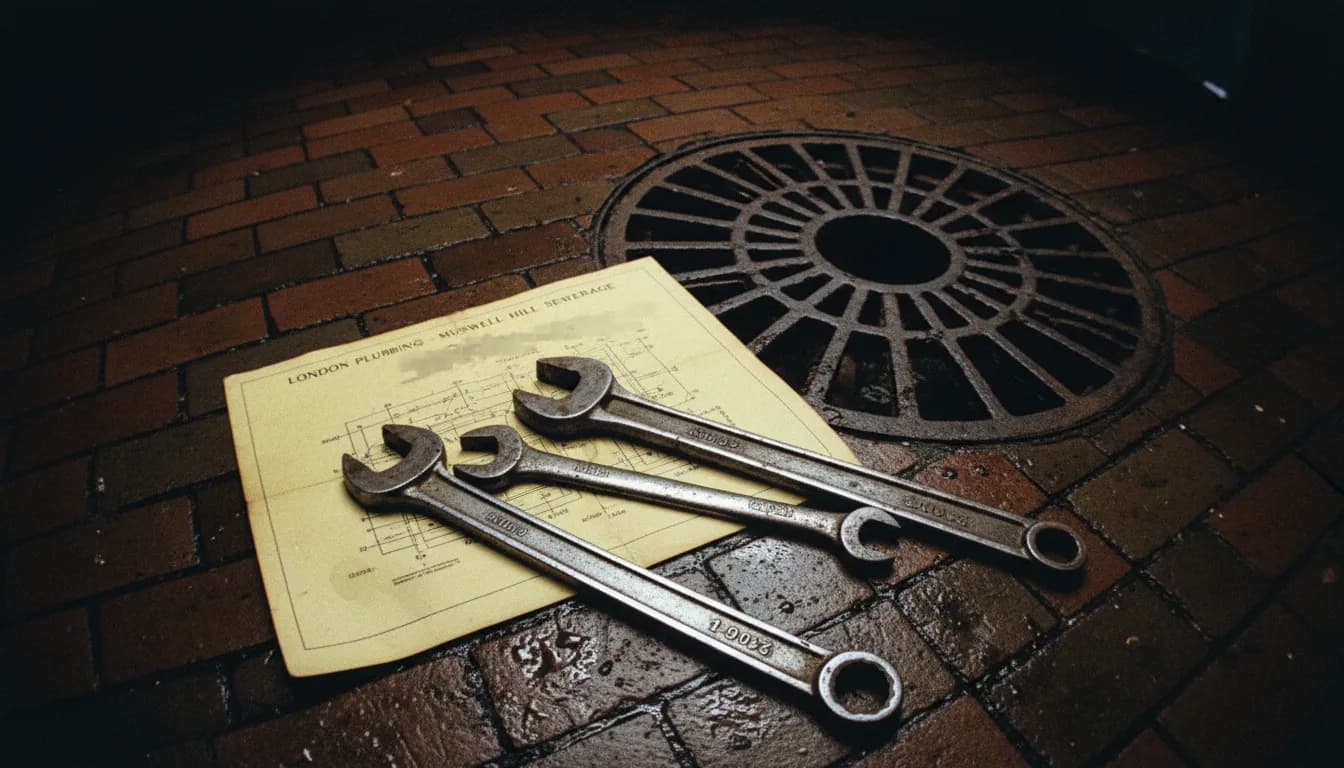
London Sewers: How a Plumber's Discovery Exposed Britain's Deadliest Killer
On February 8, 1983, a routine plumbing job in North London uncovered human remains that would lead to one of Britain's most disturbing serial murder cases. The discovery of Dennis Nilsen — and his confessed 15 victims — revealed critical gaps in how European police tracked predatory killers operating within urban anonymity.

Albert Fish: The Gray Man Who Hunted Children
Albert Fish, born in 1870, murdered at least three children between 1924 and 1928, including 11-year-old Grace Budd, whose dismembered remains he cannibalized. Arrested in 1930 and convicted in 1936, Fish claimed to have killed over 100 children across America before his execution.

Edmund Kemper: From Troubled Child to Serial Killer
Edmund Kemper murdered his grandparents at age 15 in 1964, then spent fewer than five years in detention before being released. A decade later, he would kill seven college students, his mother, and her friend in one of California's most disturbing serial killing sprees.

Denmark's Most Violent Biker Gang: Inside Comanches MC
Max's 8-episode documentary 'Brutalt Broderskab: Comanches' aired in Denmark from August to September 2024, offering an unprecedented look inside Comanches MC, the country's largest and most violent biker organization. The series traces the club's evolution from a street gang and its role in Denmark's escalating gang conflicts.