Children
Understanding their vulnerable roles as victims, witnesses, and perpetrators in true crime cases
Definition
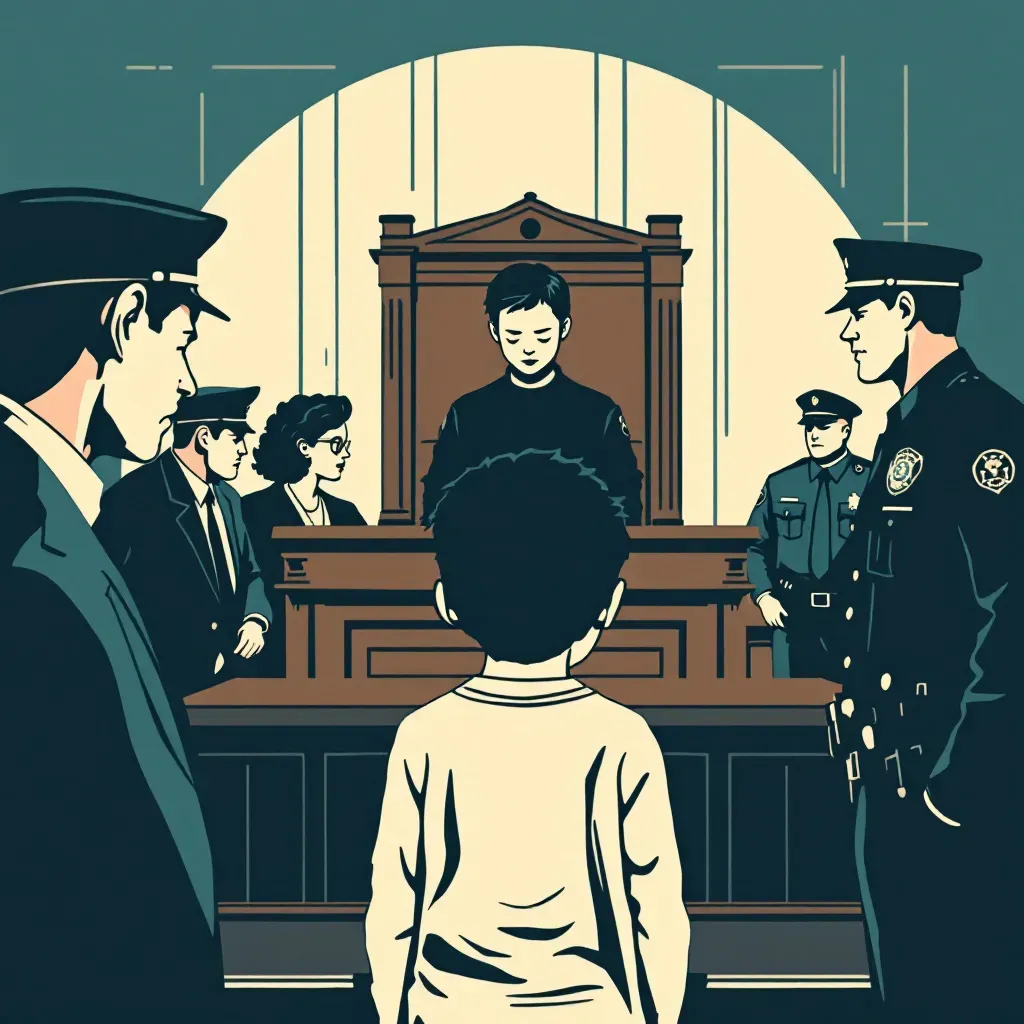
Children are the most vulnerable in true crime – as victims, witnesses, and, rarely, perpetrators. Understand their complex roles and the cases that shake us.
Understanding their vulnerable roles as victims, witnesses, and perpetrators in true crime cases
Why are kids vulnerable in true crime – ethical dilemmas
Children in true crime contexts often constitute a particularly vulnerable group, whether as victims of serious crimes such as violence or abuse, or as witnesses whose observations can be crucial for solving a case. The involvement of children in criminal cases, regardless of their role, evokes strong emotional reactions and raises complex ethical and legal questions for society, thereby underscoring the gravity of these matters.
Child victims and witnesses: Cases with children in mind
When children are victims, the cases cover a broad spectrum – from physical and psychological violence in the home, sexual abuse, and severe neglect to kidnapping and, in the most tragic instances, homicide, including cases classifiable as familicide. Investigating cases involving child victims is often complex. It demands special consideration of the child's age and maturity, alongside the use of specialized interviewing techniques to obtain reliable information without causing further trauma to the child. As child witnesses, children's memories can be suggestible or fragmented. This places significant demands on the ability of the police and the judiciary to correctly assess and utilize their testimony, where the child's well-being and protection always have the highest priority.
From victim to perpetrator: Understand children's roles
In rarer, yet deeply unsettling, cases, children and adolescents can also be perpetrators of criminal acts. This prompts difficult discussions about guilt, appropriate punishment, and the prospects for rehabilitating young offenders within a justice system primarily designed for adults. This touches upon aspects of juvenile delinquency and the need for specialized interventions. Whether children are victims, witnesses, or perpetrators, their presence in true crime cases underscores the need for specialized knowledge, comprehensive child protection, and a profound understanding of the long-term psychological consequences such experiences can entail. Understanding children's roles in these often heartbreaking cases is therefore essential for anyone involved with true crime, as it illuminates some of the most complex aspects of the nature of crime and its far-reaching effects on the children involved.
Do you want to understand the role of children in serious crimes? Explore real cases involving children, from victims of violence to young perpetrators. Find our cases below.
Read more
Megan's Law: The Child Murder That Created Sex Offender Registries
Seven-year-old Megan Kanka was murdered by her neighbor Jesse Timmendequas on July 29, 1994, in Hamilton Township, New Jersey. He was a twice-convicted sex offender. The Kanka family didn't know. Their campaign created sex offender registries across America.
Albert Fish: The Gray Man Who Hunted Children
Albert Fish, born in 1870, murdered at least three children between 1924 and 1928, including 11-year-old Grace Budd, whose dismembered remains he cannibalized. Arrested in 1930 and convicted in 1936, Fish claimed to have killed over 100 children across America before his execution.
The Disappearance of Etan Patz — The Case That Changed America
On May 25, 1979, six-year-old Etan Kalil Patz disappeared in the SoHo neighborhood of Manhattan. Pedro Hernandez was convicted of the murder and kidnapping in 2017 following two trials.
Related articles

Without a Trace: Searching for the Beaumont Children
A YouTube documentary examines Australia's 1966 Beaumont case, in which three siblings vanished without a trace from a beach in Adelaide.

Megan's Law: The Child Murder That Created Sex Offender Registries
Seven-year-old Megan Kanka was murdered by her neighbor Jesse Timmendequas on July 29, 1994, in Hamilton Township, New Jersey. He was a twice-convicted sex offender. The Kanka family didn't know. Their campaign created sex offender registries across America.

Albert Fish: The Gray Man Who Hunted Children
Albert Fish, born in 1870, murdered at least three children between 1924 and 1928, including 11-year-old Grace Budd, whose dismembered remains he cannibalized. Arrested in 1930 and convicted in 1936, Fish claimed to have killed over 100 children across America before his execution.

The Disappearance of Etan Patz — The Case That Changed America
On May 25, 1979, six-year-old Etan Kalil Patz disappeared in the SoHo neighborhood of Manhattan. Pedro Hernandez was convicted of the murder and kidnapping in 2017 following two trials.

The Beaumont Children: Australia's Enduring Mystery
On Australia Day 1966, Jane, Arnna, and Grant Beaumont—aged 9, 7, and 4—left their home in Adelaide to swim at Glenelg Beach. They were never seen again. Nearly six decades later, the disappearance remains one of Australia's most haunting cold cases.

Pedro López: The Monster of the Andes' Reign of Terror
Pedro Alonso López, a Colombian serial killer known as the Monster of the Andes, murdered at least 110 confirmed victims—mostly young girls aged 8 to 13—across Ecuador, Colombia, and Peru during the late 1970s and early 1980s. Arrested in 1980 and convicted in 1983, López was released from prison in 1998 and disappeared in 1999, his current whereabouts unknown.
Crime Story delves into justice's shadows
The podcast Crime Story reveals the dark depths of legal history with empathy and precision. Discover the fates society prefers to ignore.

Inside Denmark's Dark Crimes: The Nordjyske Podcast
Bag om Forbrydelsen, a weekly true crime podcast from Danish media outlet Nordjyske, investigates major crimes across North Jutland. Hosted by crime reporter Jesper Ramsing and Carsten Nymann, the show covers everything from historical murders to current gang conflicts that have gripped Denmark's northern region.

Once Upon A Crime: Psychology-Driven True Crime at Its Best
Esther Ludlow created Once Upon A Crime as a carefully researched true crime podcast that prioritizes psychology and social context over sensationalism. Available across major platforms since its launch, the show examines cases ranging from Ted Bundy to the Chowchilla kidnapping, each episode standing alone within thematic series.

Inside the Dark Web Child Abuse Ring That Led to Four Arrests
In November 2018, federal prosecutors secured convictions against four men who operated some of the darkest corners of the dark web, running multiple child abuse sites with tens of thousands of users. The case exposed a sprawling criminal enterprise that had evaded detection for years—until journalists and investigators began pulling at the threads.

Bad People: BBC's Deep Dive Into Criminal Psychology
Bad People, a BBC Studios Audio production now hosted by criminal psychologist Dr Julia Shaw and journalist Amber Haque, returns with a 20-part series exploring some of Britain's most complex criminal cases. Released weekly on Thursdays across multiple platforms, the podcast combines forensic analysis with intimate victim interviews.

Swedish Public Radio's Documentary Podcast Examines Nordic Justice Systems
Since 2004, Sveriges Radio's P3 Dokumentär has become Scandinavia's leading documentary podcast investigating critical moments in Swedish contemporary history. The program combines archival research with firsthand accounts to examine how institutional systems have failed citizens.