Wells Fargo's 3.5 Million Fake Accounts Scandal
How aggressive sales targets led employees to defraud millions of customers
Published June 6, 2025
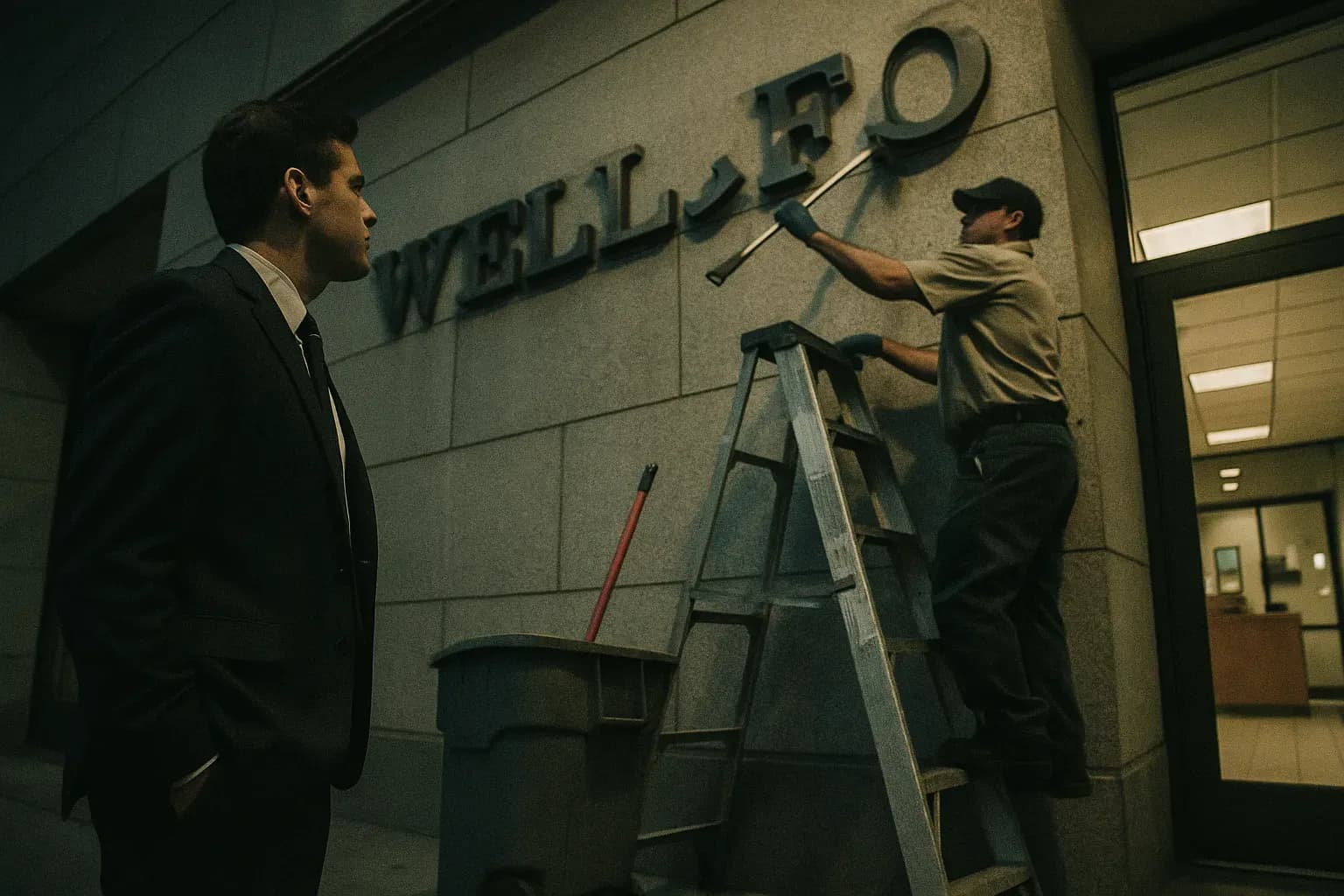
Case Details
Quick Facts
Wells Fargo, one of America's largest banks, systematically defrauded 3.5 million customers by opening fake accounts in their names between 2002 and 2016—a corporate malfeasance that shattered public trust and triggered the largest financial penalties ever imposed on the institution.
The scandal became public in September 2016 when Wells Fargo first acknowledged that employees had opened approximately 2.1 million potentially unauthorized accounts. Driven by relentless sales targets and the pressure to meet aggressive quotas, bank workers created fake checking and savings accounts, issued unauthorized credit cards, and forged customer signatures without consent.
By August 2017, the bank's own expanded review revealed the true scope of the fraud: 3.5 million accounts opened without authorization. Of these, 190,000 customers were charged fees on accounts they never knew existed. An additional 528,000 customers were enrolled in online bill pay services without permission, prompting Wells Fargo to issue $910,000 in refunds. The misconduct included tactics such as "pinning"—generating unauthorized personal identification numbers—"simulated funding" (transferring customer money between accounts), altering contact information, and bundling products without consent.
Timeline
Public enforcement action
The U.S. Department of Justice announces that Wells Fargo has agreed to settle and pay $3 billion to resolve criminal and civil investigations into the bank's sales practices.
Expanded disclosure of scope
Wells Fargo states that the number of affected customers has risen to 3.5 million following an expanded internal review of the unauthorized accounts.
The fraudulent accounts spanned deposit products, credit cards, and other financial instruments. The primary window of discovery covered 2011–2015, though the expanded investigation traced misconduct back to 2009. In some cases, the consequences for victims were devastating. Customer David McKee discovered that three bogus accounts had been opened in his name and had drained his savings before Wells Fargo contacted him in 2017.
The internal workforce bore the mark of accountability: approximately 5,300 employees and managers were fired between January 2011 and March 2016 for their involvement in the scheme. Yet no individual criminal prosecutions resulted from the investigation, according to available sources.
At the corporate level, however, penalties were severe. John Stumpf, who served as CEO at the time of the initial disclosure, resigned in 2016 as the scandal dominated headlines. Between 2016 and 2017, Wells Fargo faced $185 million in fines from regulators and agreed to a $142 million class-action settlement with affected customers.
The reckoning intensified in February 2020, when Wells Fargo agreed to pay $3 billion to resolve criminal and civil investigations into its sales practices. The settlement included $500 million to the Securities and Exchange Commission and $2.5 billion to the U.S. Treasury under a deferred prosecution agreement—a framework that suspended criminal charges contingent on the bank's compliance with remedial conditions, including cooperation with authorities. The bank was also charged under the Financial Institutions Reform, Recovery and Enforcement Act (FIRREA) for maintaining false records.
Additional regulatory action followed. In 2018, the Consumer Financial Protection Bureau (CFPB) imposed a $1 billion fine related to unrelated misconduct involving unauthorized auto insurance and mortgage products, though the violations were rooted in the same broader sales culture.
In response to the crisis, Wells Fargo undertook a massive remediation effort. An external firm reviewed 165 million customer accounts spanning 2009–2016. The bank contacted tens of millions of customers to verify account legitimacy, overhauled sales practices to eliminate aggressive quotas, and replaced senior executives. Yet the reputational damage persisted, cementing the scandal as a cautionary tale about unchecked corporate pressure and the human cost of prioritizing profits over integrity.
Sources - https://www.cbsnews.com/sacramento/news/wells-fargo-scandal-grows/ - https://www.justice.gov/archives/opa/pr/wells-fargo-agrees-pay-3-billion-resolve-criminal-and-civil-investigations-sales-practices - http://web.nacva.com/JFIA/Issues/JFIA-2022-No2-11.pdf - https://harbert.auburn.edu/binaries/documents/center-for-ethical-organizational-cultures/cases/wells-fargo.pdf
Ask about this case
Answers from KrimiNyt's coverage onlyFollow this case
Get an email when a new documentary, podcast or book about Wells Fargo's 3.5 Million Fake Accounts Scandal appears, or when a verdict is reached.