The Ruby McCollum Case — Racially Charged Florida Murder Trial
Live Oak, Florida, 1952 — solved homicide with overturned conviction
Published June 7, 2026
The Case
The Ruby McCollum case is a racially charged 1952 homicide from Live Oak, Florida, in which Ruby Myrtle McCollum, a wealthy Black woman, shot and killed Dr. Clifford LeRoy Adams Jr., a prominent white physician and politician. The case became a national sensation during the Jim Crow era, exposing forbidden interracial relationships, alleged sexual coercion, and the systemic racism embedded in the Southern justice system. McCollum was convicted by an all-white jury and sentenced to death, but her conviction was later overturned on appeal due to procedural errors. The case remains historically significant as a symbol of racial injustice and the silenced voices of Black women in mid-20th century America.
Ruby McCollum was born in 1909 and became one of the wealthiest Black residents in Suwannee County through her marriage to Sam McCollum, a successful businessman involved in the illegal numbers racket. Despite the couple's prosperity in the segregated South, Ruby lived under the constant threat of white supremacy and the unwritten rules that governed Black life in Florida. Her fatal encounter with Dr. Adams on August 3, 1952, would transform her from a respected community member into the center of one of the era's most controversial criminal trials.
The Crime
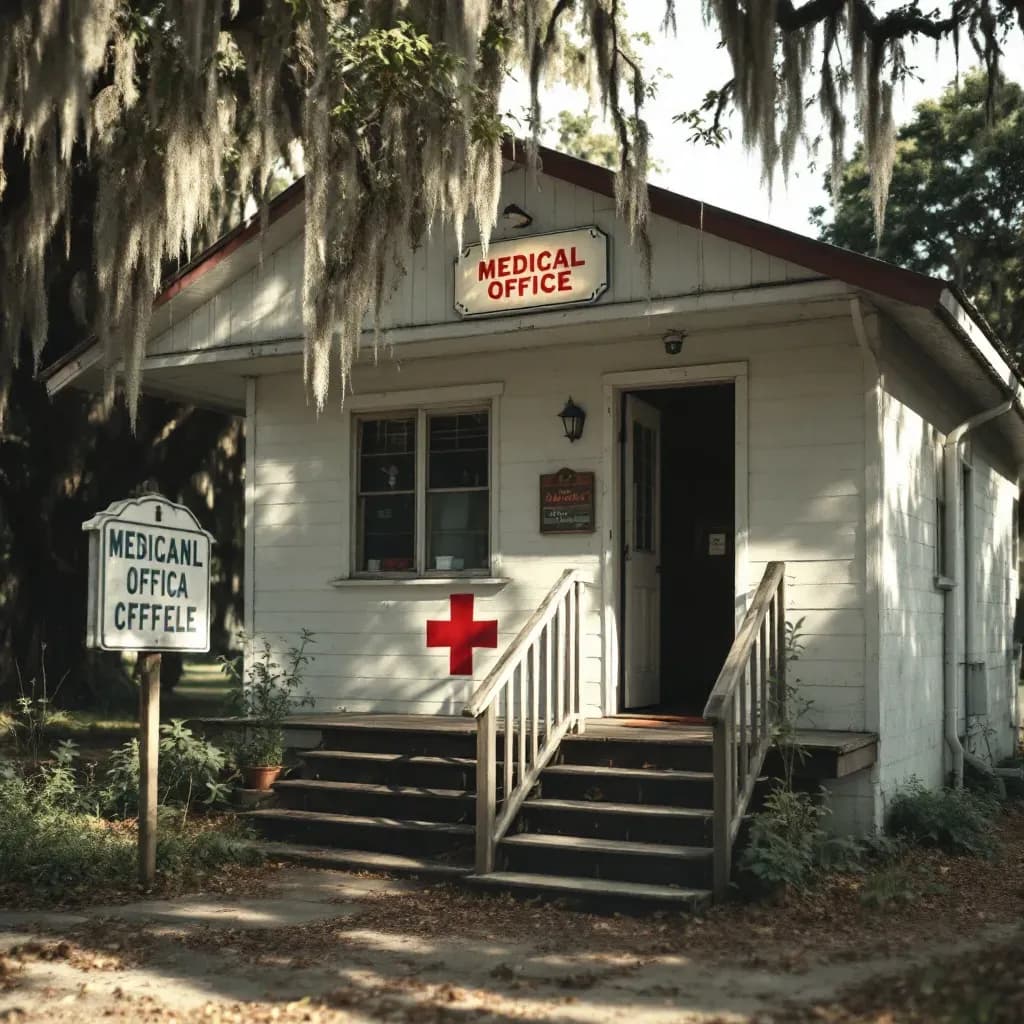
On the morning of Sunday, August 3, 1952, Ruby McCollum entered Dr. Adams's office in Live Oak in Suwannee County, Florida. According to trial testimony, she had gone to see the 44-year-old physician for medical treatment. What transpired next became the subject of intense legal and public scrutiny. McCollum fired four bullets from a revolver, fatally wounding Dr. Adams in his own office.
Timeline
Ruby McCollum shoots Dr. C. Leroy Adams in Live Oak
On August 3, 1952, Ruby McCollum shoots Dr. C. Leroy Adams – a white doctor and newly elected Florida senator – several times at his clinic in Live Oak. Adams dies.
All-white jury finds McCollum guilty – sentenced to death
On December 20, 1952, an all-white jury delivers its verdict: Ruby McCollum is found guilty of first-degree murder and sentenced to death by electric chair at a Florida state court.
Florida Supreme Court overturns verdict and death sentence
On July 20, 1954, the Florida Supreme Court overturns the verdict on procedural grounds: the judge was absent during the jury's inspection of the crime scene.
McCollum declared mentally incompetent and committed
Following a forensic psychiatric evaluation, Ruby McCollum is declared mentally incompetent. She is committed to a state psychiatric hospital in Florida and is not retried.
Ruby McCollum released from psychiatric institution
In 1974, Ruby McCollum is released from the state psychiatric institution, more than two decades after the incident in Live Oak in August 1952.
The immediate aftermath saw McCollum taken into custody without incident. Contemporary accounts from TIME magazine and other publications noted the sensational nature of the crime: a Black woman killing a prominent white doctor in the Deep South during the height of Jim Crow segregation. The shooting occurred in a period when interracial relationships were not only taboo but criminally punishable under Florida law, and when Black defendants rarely received fair trials in cases involving white victims.
McCollum's defense team would later argue that she acted in self-defense after Dr. Adams became violent during a confrontation. She testified that Adams had coerced her into a long-term sexual relationship and had fathered one of her children. The prosecution, however, portrayed the killing as premeditated murder stemming from a dispute over an unpaid medical bill. The true nature of their relationship and the events leading to the shooting became central to understanding the case, though much testimony was suppressed during the trial.
The Victim
Dr. Clifford LeRoy Adams Jr., known locally as Dr. C. Leroy Adams, was a well-established white physician in Live Oak, Florida. At 44 years old, he had built a successful medical practice and had become involved in local politics. Adams represented the white establishment in a rigidly segregated Southern town, where his social position afforded him considerable power and influence over both white and Black residents.
Adams maintained a medical practice that served both white and Black patients, though in segregated conditions as was customary in 1950s Florida. His position as a healthcare provider gave him access to Black women patients in situations where they were particularly vulnerable. According to defense testimony that emerged during and after the trial, Adams had used his position of authority to exploit Ruby McCollum, forcing her into a sexual relationship that lasted for years and resulted in the birth of a child.
The physician's death sent shockwaves through the white community in Live Oak, where many residents initially viewed the case simply as a Black woman murdering a respected white doctor. The possibility that Adams had abused his position and engaged in an interracial relationship was deeply threatening to the social order of the Jim Crow South, and efforts were made throughout the trial to suppress evidence of any intimate relationship between Adams and McCollum.
Investigation
The investigation into Dr. Adams's death was swift, as Ruby McCollum was immediately identified as the shooter and taken into custody at the scene. Unlike many criminal investigations, there was no mystery about who had fired the fatal shots. The legal questions centered instead on McCollum's motive and whether her actions constituted self-defense or premeditated murder.
The all-white investigative and prosecutorial apparatus in Suwannee County moved quickly to bring charges against McCollum. The case attracted national attention almost immediately, drawing journalists and civil rights observers to the small Florida town. Among those who covered the trial was celebrated author Zora Neale Hurston, who wrote extensively about the case for a Black newspaper. Hurston's reporting provided crucial documentation of the proceedings and highlighted the racial dynamics that mainstream white newspapers often ignored or misrepresented.
Key evidence in the case included McCollum's own admission that she had shot Dr. Adams, witness testimony about the confrontation in the doctor's office, and disputed accounts of whether there had been an argument over a medical bill. The defense's claim of self-defense and abuse was largely suppressed during the trial, with the judge frequently ruling against the admission of testimony about the nature of McCollum's relationship with Adams. This exclusion of evidence would later become central to understanding the case's significance as an example of how the legal system silenced Black women's voices.
Trial and Verdict
Ruby McCollum's trial took place in late 1952 before an all-white, all-male jury in the Suwannee County courthouse. The composition of the jury reflected the systematic exclusion of Black citizens from jury service in the Jim Crow South, ensuring that McCollum would be judged exclusively by members of the white community whose racial interests were directly opposed to hers.
During the trial, McCollum testified that she had acted in self-defense after Dr. Adams attacked her during an argument. She attempted to introduce evidence of the coercive sexual relationship and Adams's violence toward her, but the trial judge repeatedly blocked this testimony, ruling it irrelevant to the question of whether she had committed murder. The prosecution presented the case as a simple matter of murder, possibly motivated by a dispute over money.
On December 20, 1952, the jury convicted Ruby McCollum of first-degree murder, and the judge sentenced her to death in the electric chair. The verdict shocked civil rights advocates and drew national attention to the case as an example of racial injustice. The trial had lasted only a few days, and the defense had been prevented from presenting much of its case regarding the context of Adams's abuse and exploitation.
The case took a dramatic turn on July 20, 1954, when the Florida Supreme Court overturned McCollum's conviction on procedural grounds. The appellate court found that the jury had improperly visited the crime scene without the presence of the judge or the defendant, violating McCollum's right to be present at all critical stages of her trial. This technicality saved McCollum from execution, though it did not address the broader questions of justice and racial bias that permeated the case.
Today
Following the reversal of her conviction, Ruby McCollum was not retried for murder. Instead, she was committed to a state mental hospital in Florida, where she remained for nearly twenty years before finally being released. This disposition allowed the state to maintain control over McCollum while avoiding a second trial that might have further exposed the racial and sexual dynamics that the first trial had worked to suppress.
Ruby McCollum lived in relative obscurity after her release from the mental institution, eventually dying in 1992 at the age of 82. Her case, however, has continued to attract scholarly and popular attention as an important chapter in the history of racial injustice in America. The case has been the subject of books, including William Bradford Huie's "Ruby McCollum: Woman in the Suwannee Jail," and has been featured in documentaries and podcasts examining miscarriages of justice in the Jim Crow South.
Archival materials related to the case, including Zora Neale Hurston's extensive notes and correspondence, are preserved at the University of Florida and other institutions, providing researchers with detailed documentation of the trial and its aftermath. These materials have helped historians understand how the case exemplified the intersection of racism, sexism, and class in mid-20th century America.
The Ruby McCollum case remains a powerful reminder of how the legal system was used to silence Black women who attempted to testify about sexual exploitation by white men in positions of power. While the case is technically solved in that the shooter and victim are known, the full truth about the relationship between McCollum and Adams and the circumstances that led to the fatal shooting were never fully aired in a court of law. The case continues to raise important questions about justice, race, and the treatment of Black women in the American legal system.
Media coverage
TV series
- You Belong to Me: Sex, Race and Murder in the South(2026)
Ask about this case
Answers from KrimiNyt's coverage onlyFollow this case
Get an email when a new documentary, podcast or book about The Ruby McCollum Case — Racially Charged Florida Murder Trial appears, or when a verdict is reached.