The Byron Griffy Murder — Colorado Mortician Killing
Florence, Colorado homicide case largely solved, with lingering questions about motive and accomplices
Published June 2, 2026
The Case
The Byron Griffy murder is a Colorado homicide case centered on the death of an elderly mortician in the small city of Florence, Colorado. Although the matter is sometimes informally referenced as the "Byron Griffy murder," Griffy himself was the victim, and the story is more widely known in true-crime media as the Rocky Mountain Mortician Murder. The case has been described as largely solved, with at least one conviction, but commentators have called it "sort of solved but also kind of unresolved at the same time," reflecting lingering questions about motive, accomplices and the full sequence of events.
The Crime
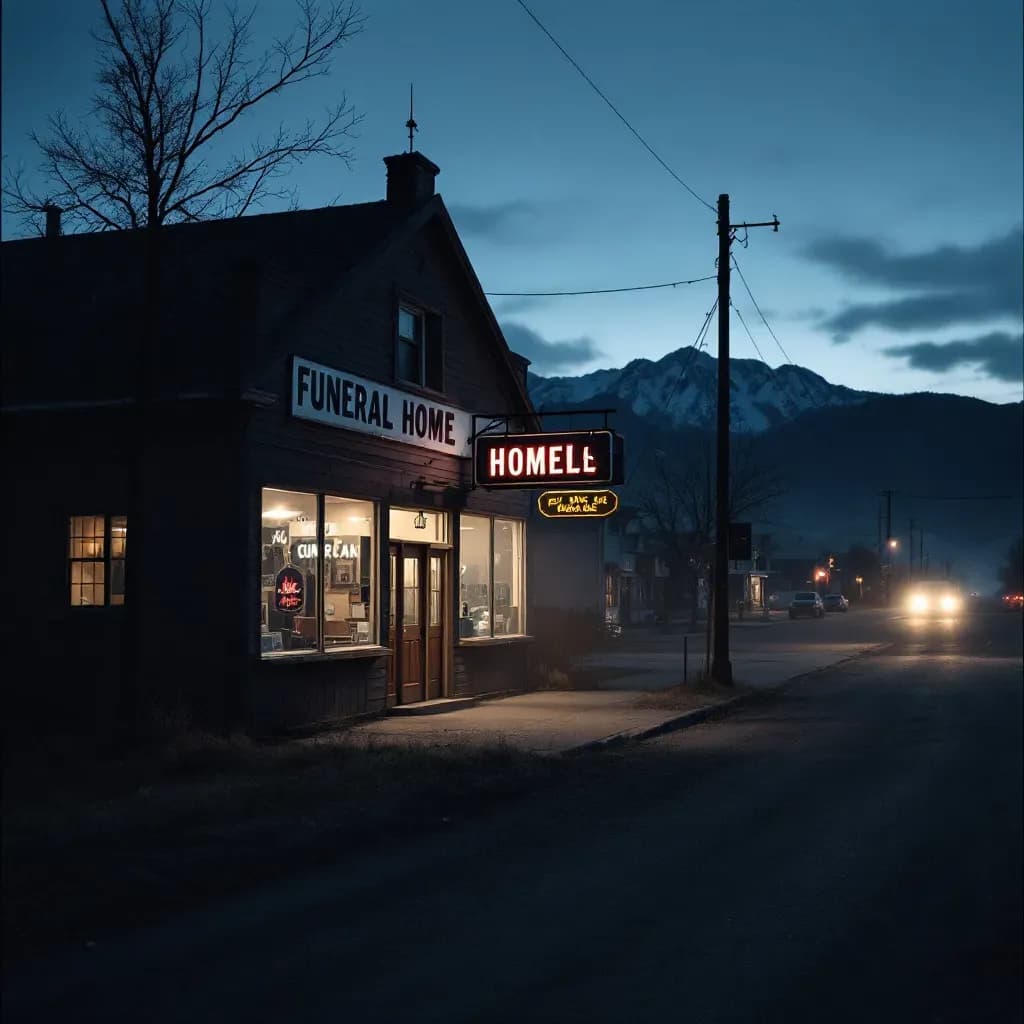
Byron Griffy worked as a mortician in Florence, a small community in Fremont County, Colorado, where his role placed him at the intersection of grief, trust and access to vulnerable families. He was eventually found dead under circumstances that investigators considered suspicious enough to treat as a possible homicide rather than a natural or accidental death. True-crime coverage of the case, including a widely viewed YouTube examination of the Colorado mortician murder, emphasizes a backdrop of alleged lies, deceit and manipulation surrounding Griffy and the people in his orbit.
The exact date of the killing, the precise cause of death and the crime-scene details are not fully recoverable from the limited public sources currently available. What is consistently described is that the death was unusual enough to galvanize local attention and to drive a sustained investigation in a town where violent crime of this nature is rare.
Timeline
Byron Paul Griffy found dead in Fowler, Colorado
The 76-year-old funeral director Byron Paul Griffy was found shot dead on October 12, 2012, in his home in Fowler, Colorado. The cause of death was a gunshot wound to the back of the head.
Anthony Wright charged with first-degree murder
In August 2013, prosecutors charged Anthony Wright with first-degree murder in connection with the killing of Byron Griffy.
Charles Giebler dies before trial
Charles Giebler, whom prosecutors had also implicated in the case, died in 2013 and was never brought to trial.
Wright's first trial ends in mistrial
Anthony Wright's 2015 trial in a Colorado state court ended in a mistrial after the jury failed to reach a unanimous verdict.
Wright pleads guilty – sentenced to 10 years probation
In January 2017, Anthony Wright entered a guilty plea to complicity in first-degree murder and was sentenced to 10 years of probation in a Colorado state court.
The Victims
Byron Griffy is described as an elderly mortician based in Florence, Colorado. As a funeral professional, he occupied a position of considerable community trust, handling the dead and supporting grieving families across the region. That public role stands in sharp contrast to the allegations that would later swirl around him.
In 2011, accusations involving sexual assault allegations against Byron Griffy surfaced, complicating the public image of the longtime mortician and forming part of the broader context investigators and journalists would later examine. Those allegations are referenced in the available coverage but are not adjudicated in the accessible material, and they should be understood as accusations rather than proven facts.
Investigation
The investigation into Griffy's death became a major local mystery. Authorities and later true-crime researchers focused on whether his death was the result of a deliberate act, and on the network of personal and professional relationships around him. Two names recur as central figures in the case: Charles Giebler and Anthony Wright. Both are identified in the available coverage as connected to the events surrounding the mortician's death, although the publicly accessible sources do not independently verify who was ultimately convicted, their full backgrounds, or their exact ages.
Investigators reportedly examined patterns of alleged deception around Griffy and the people who interacted with him, looking at financial, personal and possibly sexual dimensions of the relationships involved. The case is portrayed in coverage such as the Rocky Mountain Mortician Murder series listing as one with layered motives rather than a simple, single-suspect narrative.
Trial and Verdict
According to the available material, one person was ultimately found guilty in connection with Byron Griffy's death. However, the accessible sources do not specify the court, the exact charge, the date of the verdict or the sentence imposed. Because of these gaps, the case is best described from current public evidence as largely solved, while leaving important procedural details unconfirmed in open coverage.
The limited transparency in the public record is one reason the case continues to attract true-crime interest, with creators and viewers seeking a clearer account of how the prosecution unfolded and which of the named figures bore ultimate legal responsibility.
Today
The Byron Griffy case continues to circulate in true-crime video coverage of the Colorado mortician killing, where it is presented as a shocking small-town homicide that left investigators grappling with a tangled web of allegations. Streaming listings such as the "Rocky Mountain Mortician Murder" page keep the story visible to new audiences interested in cases that blend professional trust, alleged abuse and violent death.
For now, the Byron Griffy murder stands as a Colorado case that is officially closed enough to be called solved, yet open enough — in terms of public detail and narrative clarity — to remain a subject of ongoing fascination and renewed scrutiny.
Media coverage
TV series
- The Rocky Mountain Mortician Murder(2026)
Ask about this case
Answers from KrimiNyt's coverage onlyFollow this case
Get an email when a new documentary, podcast or book about The Byron Griffy Murder — Colorado Mortician Killing appears, or when a verdict is reached.