First Date Turned Fatal: The Sade Robinson Case
A Wisconsin murder investigation reveals the dangers lurking behind digital romance
Published January 23, 2026
Classification:
On April 1, 2024, Sade Robinson, 19, met Maxwell Anderson, 33, at a Hooters restaurant in Milwaukee, Wisconsin. What should have been a casual first date—a social ritual increasingly mediated through dating apps and digital messaging—instead became a case that would draw national attention to the intersection of modern romance and violent crime.
Robinson vanished that evening. Her digital presence, previously active with hopeful messages to friends, went silent. By daybreak, her family had begun the agonizing process of reporting her missing. Within days, the nightmare took a macabre turn.
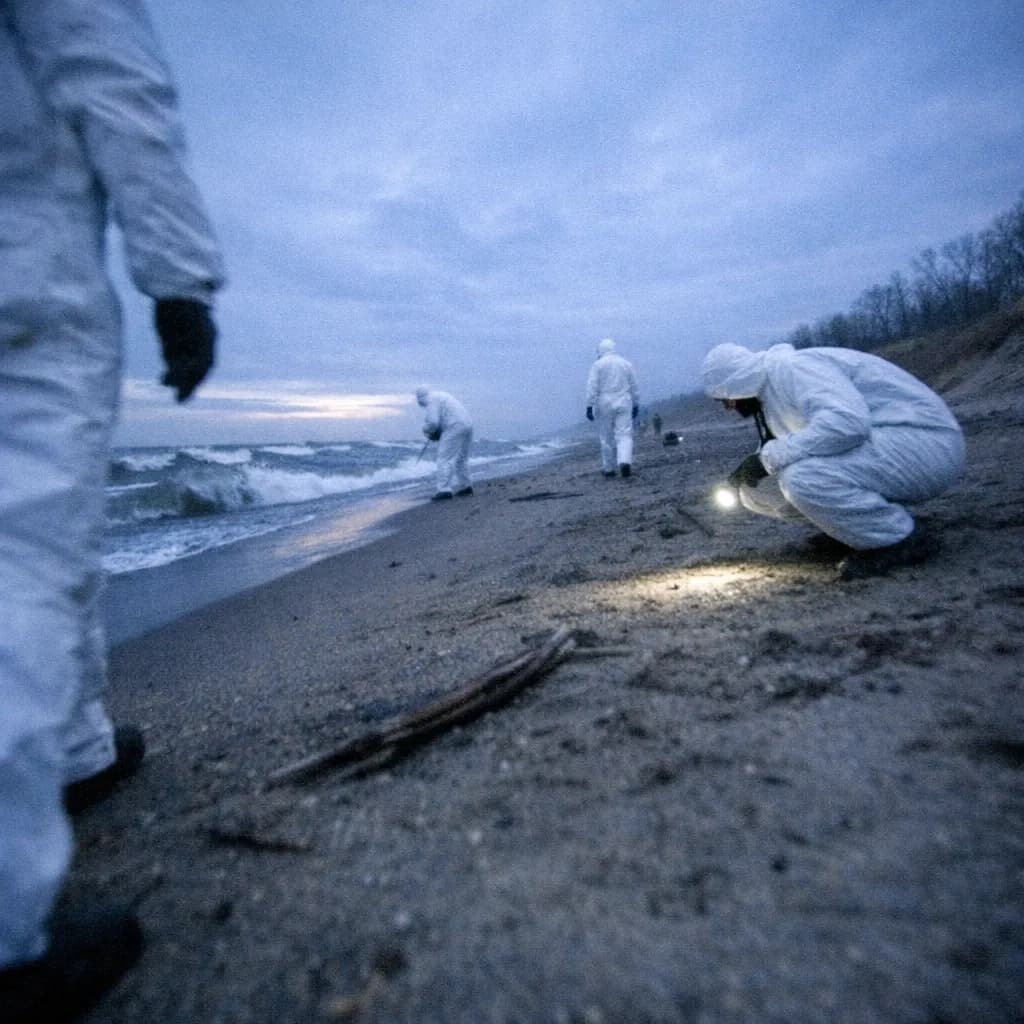
On April 5, 2024, human remains washed ashore at McKinley Beach along Lake Michigan. DNA testing confirmed the discovery belonged to Robinson. Over the following two days, additional remains surfaced at North Beach and near Sheraton areas. What emerged from the water was a fragmented body, systematically dismembered in an apparent attempt to destroy evidence. Each discovery along the shoreline added another layer of horror to an unfolding tragedy that would captivate and traumatize an entire region.
Timeline
First and only date between Robinson and Anderson
On April 1, 2024, Sade Carleena Robinson and Maxwell Steven Anderson met for the couple's first date in Milwaukee, Wisconsin.
Robinson reported missing
On April 2, 2024, Robinson's close relatives reported her missing to police. A search was launched in the Milwaukee area.
Body remains found near Lake Michigan and in Milwaukee County
In the days after Robinson was reported missing, investigators found body remains scattered along Lake Michigan's shoreline and at several locations in Milwaukee County.
Anderson formally indicted on three counts
On April 12, 2024, following DNA identification of the remains as Robinson's, Maxwell Steven Anderson was formally indicted for homicide, mutilation, and arson.
Jury finds Anderson guilty on all counts
On June 6, 2025, the jury at Milwaukee County Circuit Court found Maxwell Steven Anderson guilty of first-degree intentional homicide, mutilation/hiding a corpse, and arson.
Anderson sentenced to life without parole
On August 1, 2025, Milwaukee County Circuit Court handed down its sentence: life in prison without the possibility of parole. Anderson subsequently announced he would appeal the verdict.
Maxwell Anderson was arrested on April 4, 2024. Prosecutors charged him with first-degree intentional homicide, abuse of a corpse, and disrespecting the deceased. The evidence prosecutors presented painted a portrait of calculated violence. Police reported finding biological traces and DNA on cutting implements in Anderson's residence. Blood evidence allegedly recovered from his home and vehicle. Snapchat videos and phone location data placed Robinson at his address. What had once been a routine dating scenario had become a crime scene investigation that authorities described as methodical and deliberate.
For international observers, the case illuminates distinctly American vulnerabilities. Unlike some Nordic countries with stronger data privacy protections and digital identity verification systems, American dating platforms operate with minimal friction and few verification mechanisms. A teenager in Milwaukee could meet a stranger with limited background checking—a disparity that contrasts sharply with stricter European regulatory frameworks for dating apps.
The Wisconsin legal system's response reflects American homicide prosecution standards. First-degree intentional homicide charges in the United States require prosecutors to prove premeditation and deliberation—a higher bar than some international jurisdictions. The abuse of corpse charge addresses the systematic dismemberment, though such charges remain largely an American legal category. Notably, Wisconsin abolished capital punishment in 1853, making it one of only 23 jurisdictions worldwide without executions. Anderson faces life imprisonment rather than death sentences.
The case has triggered broader conversations about digital safety protocols. Victims' rights advocates have questioned whether dating platforms bear responsibility for connecting users without robust verification systems. In response, major platforms have introduced panic buttons, live location sharing, and ID verification features—technologies already standard in some Asian and European apps.
For the Robinson family and Milwaukee community, the investigation represented both closure and perpetual anguish. The discovery of remains along a beloved recreational waterway transformed Lake Michigan's shoreline into a crime scene. Residents accustomed to viewing the lake as a source of summer leisure were confronted with evidence of violence and disposal.
As the case proceeded through Wisconsin's court system, it became a cautionary tale about the asymmetry between digital convenience and physical vulnerability. A swipe, a message, an agreement to meet—actions that take seconds in the virtual world—can have irreversible consequences in physical space. The Sade Robinson case represents not merely a criminal prosecution, but a stark reminder of the stakes underlying contemporary dating culture and the persistent gap between online connection and real-world safety.
Ask about this case
Answers from KrimiNyt's coverage onlyFollow this case
Get an email when a new documentary, podcast or book about First Date Turned Fatal: The Sade Robinson Case appears, or when a verdict is reached.