The FBI Mole: How Robert Hanssen Betrayed America for 22 Years
An FBI counterintelligence expert handed Soviet and Russian intelligence approximately 6,000 pages of classified secrets—until an undercover operation brought him down.
Published June 6, 2025
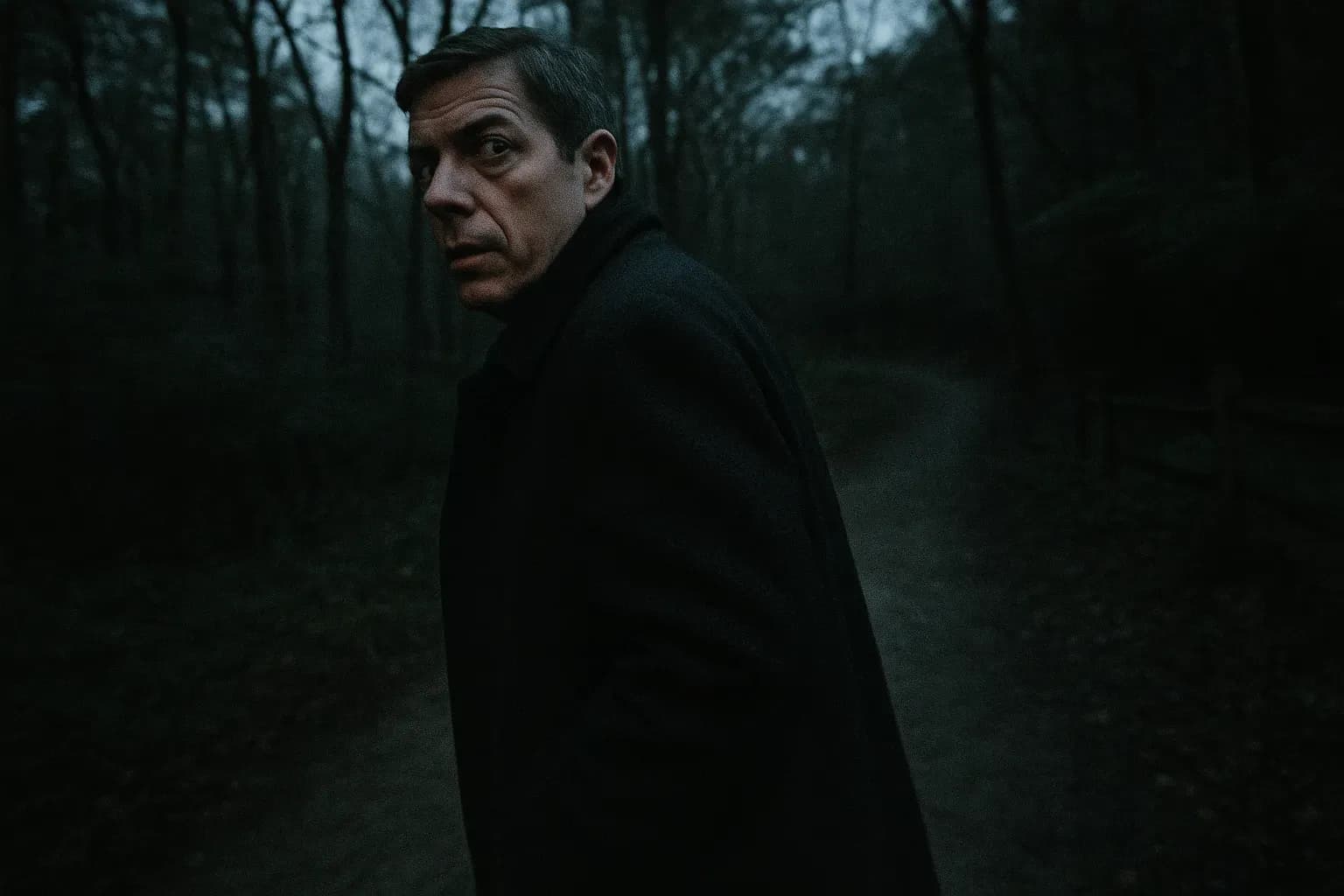
Case Details
Quick Facts
Classification:
Quick facts
Robert Philip Hanssen, an FBI agent who should have been protecting American secrets, spent over two decades selling them to the Soviet Union and Russia. Between 1979 and 2001, Hanssen handed over approximately 6,000 pages of classified documents—a betrayal so comprehensive that U.S. Department of Justice officials would later call it "possibly the worst intelligence disaster in U.S. history."
Hanssen's espionage began in 1979 when he made direct contact with a GRU officer at the Soviet embassy parking garage in Washington, D.C. Using the code name "Ramon Garcia," the FBI agent introduced himself as a disaffected operative willing to provide intelligence to Moscow. The move was brazen and calculated. Hanssen knew exactly what he had access to: his FBI role involved building national databases designed to track and identify Soviet operatives—the very people he would soon betray to their homeland.
The consequences of his treachery were measured in blood. Hanssen revealed the identities of American-recruited Soviet spies working as double agents for U.S. intelligence. Valery Martynov and Sergei Motorin, both recruited around 1980, were exposed by Hanssen and subsequently arrested and executed by Soviet authorities. CIA informant Dmitri Polyakov, a Soviet Army general, was similarly compromised. After being exposed in 1985—marking Hanssen's second betrayal of this asset following an earlier disclosure by spy Aldrich Ames—Polyakov was arrested in 1986 and executed two years later.
Timeline
Start of espionage activity
Robert Hanssen begins spying for the Soviet KGB and selling secret FBI documents.
Disclosure of FBI surveillance tunnel
Hanssen reveals to the Soviets the existence of a multimillion-dollar FBI surveillance tunnel beneath the Soviet embassy.
Execution of American agents
Several American double agents within the KGB are exposed and executed because of Hanssen's information.
FBI buys secret file
The FBI pays 7 million dollars to a KGB agent for a file on the unknown mole.
Arrest
Robert Hanssen is identified as the wanted spy through fingerprint and voice analysis and is arrested.
Confession
Hanssen pleads guilty to 15 counts of espionage to avoid the death penalty.
Sentenced to life
The court sentences Robert Hanssen to life in prison without the possibility of parole.
Death in prison
Robert Hanssen dies at the age of 79 in a high-security prison.
The damage extended far beyond individual lives. Hanssen disclosed the location and details of a multimillion-dollar FBI eavesdropping tunnel operated beneath the Soviet Embassy. He provided detailed U.S. assessments of Soviet missile capabilities. He exposed three additional KGB agents working for America, two of whom were executed. In 1985 alone, Hanssen's disclosures triggered a cascade of arrests and deaths that decimated American intelligence networks in Moscow.
After an eight-year hiatus, Hanssen resumed contact with Russian intelligence in autumn 1999, reestablishing his relationship with what had become the SVR following the Soviet Union's collapse. Even as he continued spying, he obsessively searched FBI databases for his own name, trying to determine whether the Bureau suspected him.
Hanssen's motivations were complex. Money drove his initial cooperation, and the thrill of espionage sustained it. But according to FBI undercover agent Eric O'Neill, who would become central to Hanssen's capture, the spy was ultimately motivated by something deeper: the desire to be "the best" and to achieve a twisted form of immortality through his crimes.
The breakthrough in catching Hanssen came from an unexpected quarter. After Aldrich Ames' arrest in 1994, the FBI remained convinced another mole operated within its ranks. Unsolved intelligence breaches persisted, and the search intensified. Around 2000, the FBI paid $7 million to a KGB agent for a file on an anonymous mole. Fingerprint and voice analysis identified the spy: Robert Hanssen.
Operation Gray Suit was launched to gather evidence. Eric O'Neill, code-named "Werewolf," worked undercover alongside Hanssen in the Information Assurance Section, using a cybersecurity pretext to get close to the spy. By early 2001, the FBI had positioned itself for the final move. On a Sunday morning in February 2001, Hanssen was arrested during a planned dead drop—caught in the act of passing secrets.
Hanssen pleaded guilty to 15 counts of espionage in March 2002, avoiding the death penalty in exchange for cooperation. He received a life sentence and remained imprisoned until his death on June 5, 2023.
Sources: https://www.youtube.com/watch?v=zP9ftISlsWI https://en.wikipedia.org/wiki/Robert_Hanssen https://spyscape.com/article/true-spies-how-fbi-agent-werewolf-took-down-kgb-spy-robert-hanssen
Ask about this case
Answers from KrimiNyt's coverage onlyFollow this case
Get an email when a new documentary, podcast or book about The FBI Mole: How Robert Hanssen Betrayed America for 22 Years appears, or when a verdict is reached.