Pulse Nightclub Shooting — Deadliest Attack on LGBTQ Community
Orlando, Florida, 2016 — Mass shooting, shooter killed at scene
Published June 5, 2026
Case Details
Quick Facts
Classification:
The Case
The Pulse nightclub shooting was a mass shooting and terrorist attack that occurred in the early morning hours of June 12, 2016, at Pulse, an LGBTQ nightclub in Orlando, Florida. The attack resulted in 49 deaths and 58 wounded victims, making it the deadliest mass shooting in United States history at that time and the deadliest attack on LGBTQ people in American history. The shooter, Omar Mir Seddique Mateen, a 29-year-old U.S. citizen working as a security guard, pledged allegiance to the Islamic State of Iraq and Syria (ISIS) during the assault before being killed in a shootout with law enforcement.
The attack unfolded over approximately three hours, beginning as a shooting spree inside the crowded nightclub and evolving into a hostage situation before ending in a police confrontation. The incident raised urgent questions about domestic terrorism, hate crimes targeting LGBTQ communities, gun violence, and law enforcement's handling of individuals previously flagged for extremist behavior.
The Crime
On the night of June 11, 2016, Pulse nightclub was hosting its weekly "Latin Night" event, drawing a large crowd of predominantly LGBTQ patrons to the Orlando venue. Shortly after 2:00 a.m. on June 12, Omar Mir Seddique Mateen entered the nightclub armed with a Sig Sauer MCX semi-automatic rifle and a Glock 17 semi-automatic pistol. He immediately began firing into the crowd of approximately 320 people, creating immediate chaos and terror.
Timeline
Attack begins at Pulse nightclub
Omar Mateen enters the Pulse nightclub during Latin Night and opens fire with an AR-style rifle and handguns, killing 49 people and wounding 58 others.
Mateen pledges allegiance to ISIS
During the attack, Mateen calls 911 and pledges allegiance to ISIS while barricaded inside the nightclub with hostages.
Gunman killed by police
After a three-hour siege, Mateen is killed in a shootout with police at the scene, ending what was then the deadliest mass shooting in U.S. history.
FBI reveals prior investigations
Federal authorities state that Mateen had previously been investigated by the FBI for making violent and extremist statements, but was not under active surveillance at the time of the attack.
Civil lawsuit dismissed
A federal judge dismisses a civil lawsuit against G4S, Mateen's security employer, ruling that the company was not liable because Mateen was off duty during the attack.
As club-goers attempted to flee or find cover, Mateen continued his assault, moving through the venue and firing repeatedly. Many victims were trapped inside, some hiding in bathrooms and storage areas. During the attack, Mateen called 911 and pledged allegiance to ISIS leader Abu Bakr al-Baghdadi, claiming the shooting was in response to American military action in Iraq and Syria.
The initial police response was swift, with Orlando Police Department officers arriving within minutes. However, the situation quickly evolved into a hostage crisis as Mateen barricaded himself inside a bathroom with several hostages. Over the next three hours, law enforcement negotiators attempted to communicate with Mateen while SWAT teams prepared for tactical intervention.
Around 5:00 a.m., police made the decision to breach the building using an armored vehicle and explosive charges. In the ensuing confrontation, officers engaged Mateen in a shootout that resulted in his death. By the time the shooting ended, 49 innocent people had been killed and dozens more suffered gunshot wounds, making it one of the deadliest single incidents of violence in modern American history.
The Victims
The 49 people killed in the Pulse nightclub shooting represented a diverse cross-section of Orlando's LGBTQ community and the broader Latin community celebrating at the club that night. Victims ranged in age from 18 to 50 years old, with many in their twenties and thirties. The victims included students, professionals, parents, and young people just beginning their adult lives.
Many victims were of Puerto Rican, Dominican, and other Latin American heritage, reflecting both the Latin Night theme of the event and Orlando's substantial Hispanic population. The attack devastated families across Central Florida and beyond, with many victims' relatives traveling from Puerto Rico and other locations to Orlando in the aftermath.
The 58 people who survived gunshot wounds faced extensive medical treatment and long-term physical and psychological recovery. Many underwent multiple surgeries and months of rehabilitation. Survivors reported lasting trauma from the experience, with the sounds, sights, and terror of that night leaving permanent emotional scars.
The attack's impact extended far beyond the immediate victims and their families, traumatizing Orlando's entire LGBTQ community and sending shockwaves through LGBTQ communities nationwide. The shooting occurred during Pride Month, a time traditionally associated with celebration and visibility for LGBTQ people, amplifying the sense of violation and loss.
Investigation
The investigation into the Pulse nightclub shooting revealed a complex picture of the perpetrator and raised troubling questions about warning signs that may have been missed. Omar Mateen was a 29-year-old U.S. citizen born in New Hyde Park, New York, to Afghan immigrant parents. He was raised Muslim and lived in Fort Pierce, Florida, approximately two hours from Orlando.
Mateen worked as a security guard for G4S, a global security firm, and held a firearms license as part of his employment. Critically, federal investigators revealed that Mateen had been the subject of two separate FBI investigations in 2013 and 2014. In the first instance, coworkers reported that Mateen had made violent and extremist statements. The second investigation concerned potential connections to Moner Mohammad Abusalha, an American who became a suicide bomber in Syria.
Both FBI investigations were closed without charges after agents concluded there was insufficient evidence that Mateen posed an immediate threat or was planning violence. He was not under active investigation or surveillance at the time of the June 2016 attack. This revelation sparked intense debate about FBI investigative protocols and the challenge of identifying genuine threats among thousands of individuals who express extremist views.
Investigators determined that Mateen had legally purchased the firearms used in the attack in the days before the shooting. His 911 calls during the assault, in which he pledged allegiance to ISIS and referenced the Boston Marathon bombers, initially suggested a clear terrorism motive. However, subsequent investigation revealed a more complicated picture. Some evidence, including cell phone records and internet search history, suggested Mateen may have chosen Pulse based on perceived lack of security rather than specifically targeting an LGBTQ venue, though this interpretation remains disputed.
Witnesses also reported that Mateen had visited Pulse on previous occasions and used gay dating apps, leading to speculation about his own sexual identity and possible internalized homophobia as a contributing motive alongside or instead of radicalization.
Trial and Verdict
Because Omar Mateen was killed during the police confrontation at Pulse nightclub, there was no criminal trial. His death at the scene meant that many questions about his precise motivations, planning, and whether he had assistance would never be fully answered through courtroom proceedings.
However, Mateen's widow, Noor Salman, was arrested in January 2017 and charged with aiding and abetting and obstruction of justice. Prosecutors alleged she knew about Mateen's plans and helped him prepare for the attack. In March 2018, a federal jury in Orlando acquitted Salman on all charges, concluding that prosecutors had not proven beyond reasonable doubt that she had prior knowledge of the attack or intentionally misled investigators.
A separate civil lawsuit was filed by victims' families against G4S, Mateen's employer, alleging the company failed to properly screen and monitor an employee despite his documented history of concerning behavior. In April 2019, a federal judge dismissed the lawsuit, ruling that G4S could not be held civilly liable because Mateen was off duty and acting outside the scope of his employment when he carried out the attack.
The FBI's handling of its prior investigations into Mateen also came under scrutiny from congressional oversight committees, though no individual agents were disciplined or charged with misconduct. The case contributed to ongoing policy debates about the resources and legal authorities needed to prevent attacks by individuals who express extremist views but do not take concrete steps toward violence that would justify arrest.
Today
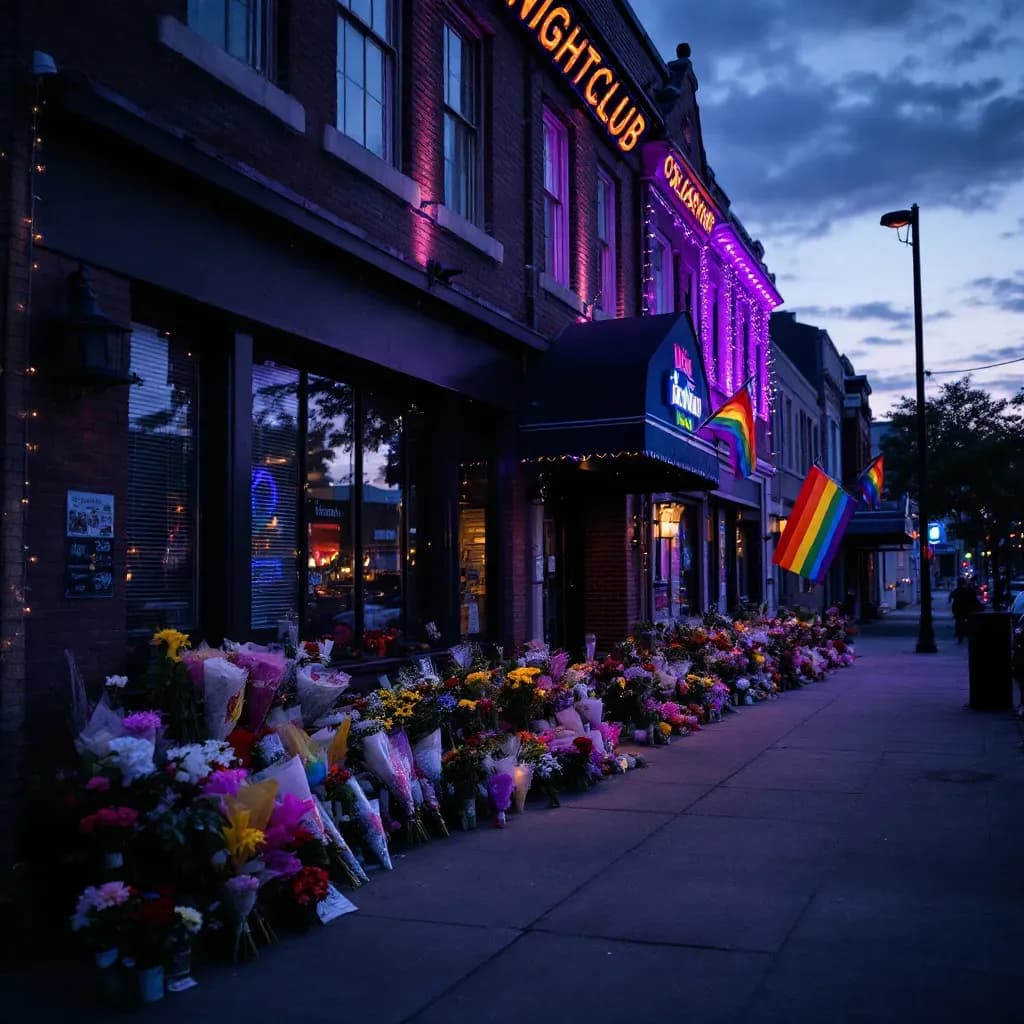
The Pulse nightclub site has become a memorial and place of pilgrimage for LGBTQ people and others honoring the victims. The onePULSE Foundation was established to create a permanent memorial and museum dedicated to the victims and survivors. Plans for the memorial complex continue to develop, with fundraising and design work ongoing to create a space that honors those lost while promoting messages of love, acceptance, and community resilience.
The shooting prompted renewed national debates about gun control, terrorism prevention, and protection of LGBTQ communities from violence. In the years since, it has been studied extensively by researchers examining hate crimes, radicalization, and mass casualty response. The attack's classification as both terrorism and a hate crime reflects its complex nature and the intersection of religious extremism and anti-LGBTQ violence.
For Orlando's LGBTQ community, the Pulse shooting remains a defining trauma. Annual remembrance ceremonies draw thousands of participants, and the date June 12 has become a day of mourning and reflection. Many survivors continue to advocate for gun violence prevention and LGBTQ rights, transforming their trauma into activism.
The case status remains solved, with Mateen definitively identified as the sole shooter. However, questions about whether more could have been done to prevent the attack, given his prior FBI investigations and documented behavioral concerns, continue to generate discussion among law enforcement professionals, policymakers, and the public. The Pulse nightclub shooting stands as a stark reminder of the ongoing threats faced by LGBTQ communities and the devastating human cost of mass violence.
Media coverage
TV series
- 49 Pulses(2026)
Ask about this case
Answers from KrimiNyt's coverage onlyFollow this case
Get an email when a new documentary, podcast or book about Pulse Nightclub Shooting — Deadliest Attack on LGBTQ Community appears, or when a verdict is reached.