Pol Pot: The Architect of Cambodia's Genocide
How the Khmer Rouge leader evaded justice until his death in 1998
Published June 6, 2025
Quick Facts
Pol Pot, born Saloth Sar, led one of the twentieth century's most catastrophic regimes. On April 17, 1975, his Khmer Rouge seized power in Cambodia, initiating a four-year campaign of systematic extermination that would claim the lives of approximately 1.5 to 3 million people—roughly 25 percent of the nation's population.
The Khmer Rouge renamed the country Democratic Kampuchea and imposed a radical agrarian ideology that targeted anyone deemed a threat to their vision of a purified society. Intellectuals, government officials, religious minorities—particularly Cham Muslims—ethnic groups, and anyone perceived as contaminated by outside influence became victims of state-sponsored terror.
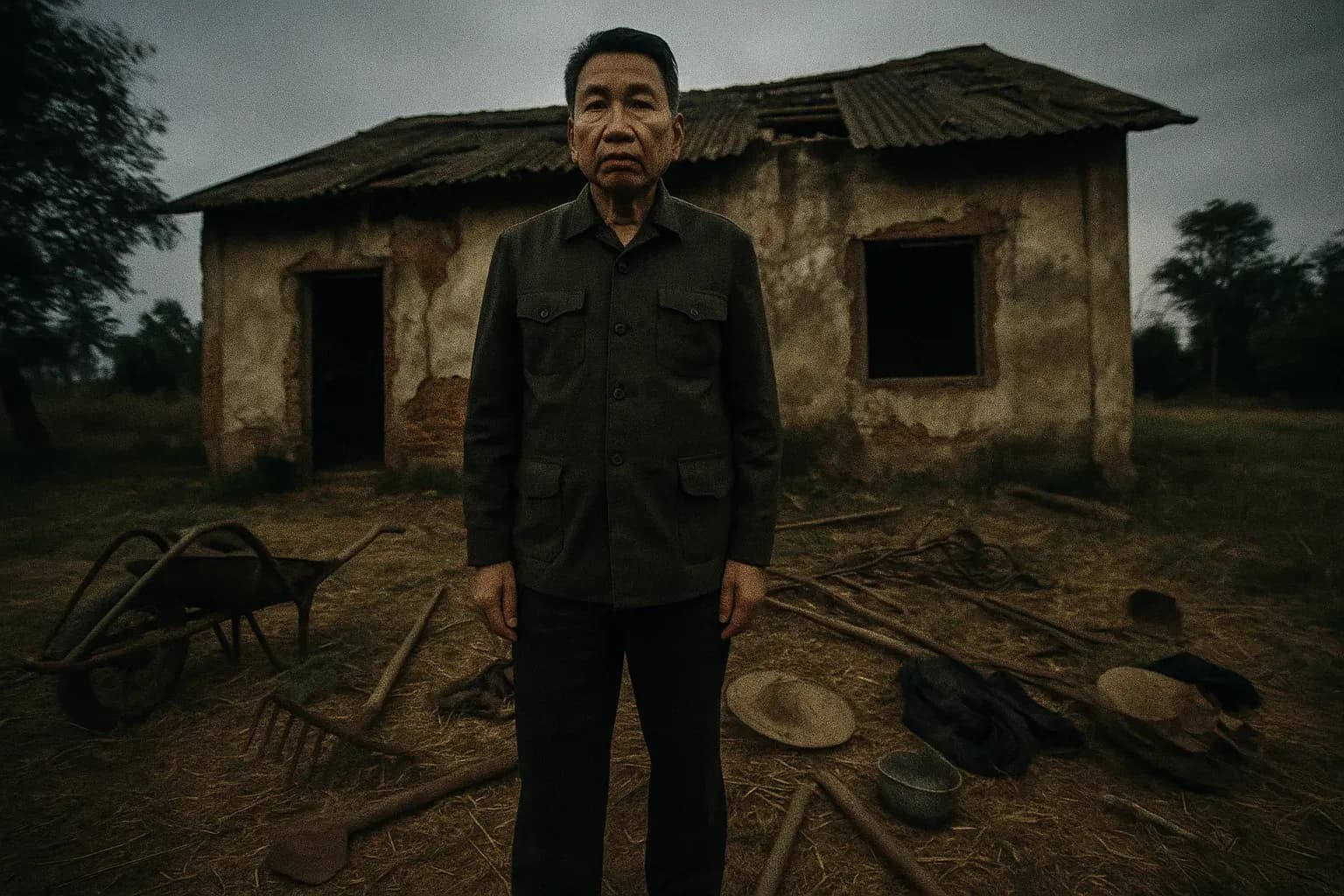
The machinery of death operated through multiple channels. Executions took place in the infamous "killing fields," where victims were murdered using crude farm tools. The regime established 196 security prisons throughout the country, each serving as centers of torture and interrogation. The most notorious was Tuol Sleng, also known as S-21, where approximately 20,000 people were detained. Of those imprisoned there, only 12 survived.
Timeline
Khmer Rouge seizes power in Phnom Penh
On April 17, 1975, Khmer Rouge forces marched into Cambodia's capital and began the rule of Democratic Kampuchea under Pol Pot's leadership.
Forced evacuation of the urban population begins
Immediately after the takeover in April 1975, the regime began forcibly evacuating the population of the cities to labor camps in the countryside under inhumane conditions.
Vietnamese forces overthrow the regime
In January 1979, Vietnamese forces invaded Cambodia and drove the Khmer Rouge from power, ending four years of genocide.
Pol Pot dies under house arrest in Anlong Veng
On April 15, 1998, Pol Pot died in the Anlong Veng area near the border with Thailand while under house arrest by the Khmer Rouge. Official cause: cardiac arrest. No autopsy was performed.
Pol Pot personally directed this devastation as General Secretary of the Khmer Rouge. He orchestrated mass killings with ruthless efficiency, creating a system where death resulted from executions, forced labor, starvation, disease, and medical experiments. The scale of suffering was almost incomprehensible—entire families were eliminated, villages were emptied, and Cambodia's intellectual and cultural heritage was systematically destroyed.
Despite the enormity of these crimes, Pol Pot never answered for them in court. He died in 1998, avoiding the justice system that eventually pursued other perpetrators of genocide. Though he was tried in absentia for his crimes, he remained unrepentant to the end, never acknowledging the magnitude of human suffering his regime inflicted.
Pol Pot's escape from justice stands as one of history's most glaring examples of impunity for mass atrocity. While other genocidal leaders have faced international tribunals, Pol Pot died a free man, never forced to confront survivors or accept responsibility for the devastation he unleashed.
The Cambodian genocide remains a stark reminder of how ideology, unchecked power, and dehumanization can transform a nation into a killing machine. Pol Pot's legacy is one of horror—measured not in years of imprisonment, but in millions of lost lives and a scarred nation struggling to rebuild.
Sources: https://en.wikipedia.org/wiki/Cambodian_genocide https://genocideeducation.org/resources/genocides/the-killing-fields-the-cambodian-genocide/ https://cla.umn.edu/chgs/holocaust-genocide-education/resource-guides/cambodia https://www.ilholocaustmuseum.org/wp-content/uploads/2021/05/The-Cambodian-Genocide.pdf https://www.britannica.com/event/Cambodian-genocide
Ask about this case
Answers from KrimiNyt's coverage onlyFollow this case
Get an email when a new documentary, podcast or book about Pol Pot: The Architect of Cambodia's Genocide appears, or when a verdict is reached.