Oklahoma Girl Scout Murders — 1977 Camp Scott Killings
Mayes County, Oklahoma, 1977: three girls raped and murdered; case officially unsolved despite DNA pointing to Gene Leroy Hart
Published June 2, 2026
Case Details
Quick Facts
Classification:
The Case
The Oklahoma Girl Scout Murders are a 1977 triple homicide case from Camp Scott in Mayes County, Oklahoma, in which three young Girl Scouts were raped and killed during their first night at summer camp. The only person ever charged, Cherokee man and jail escapee Gene Leroy Hart, was acquitted by a unanimous jury in 1979, and the case remains officially unsolved even though later DNA testing has strongly pointed back to Hart.
The Crime
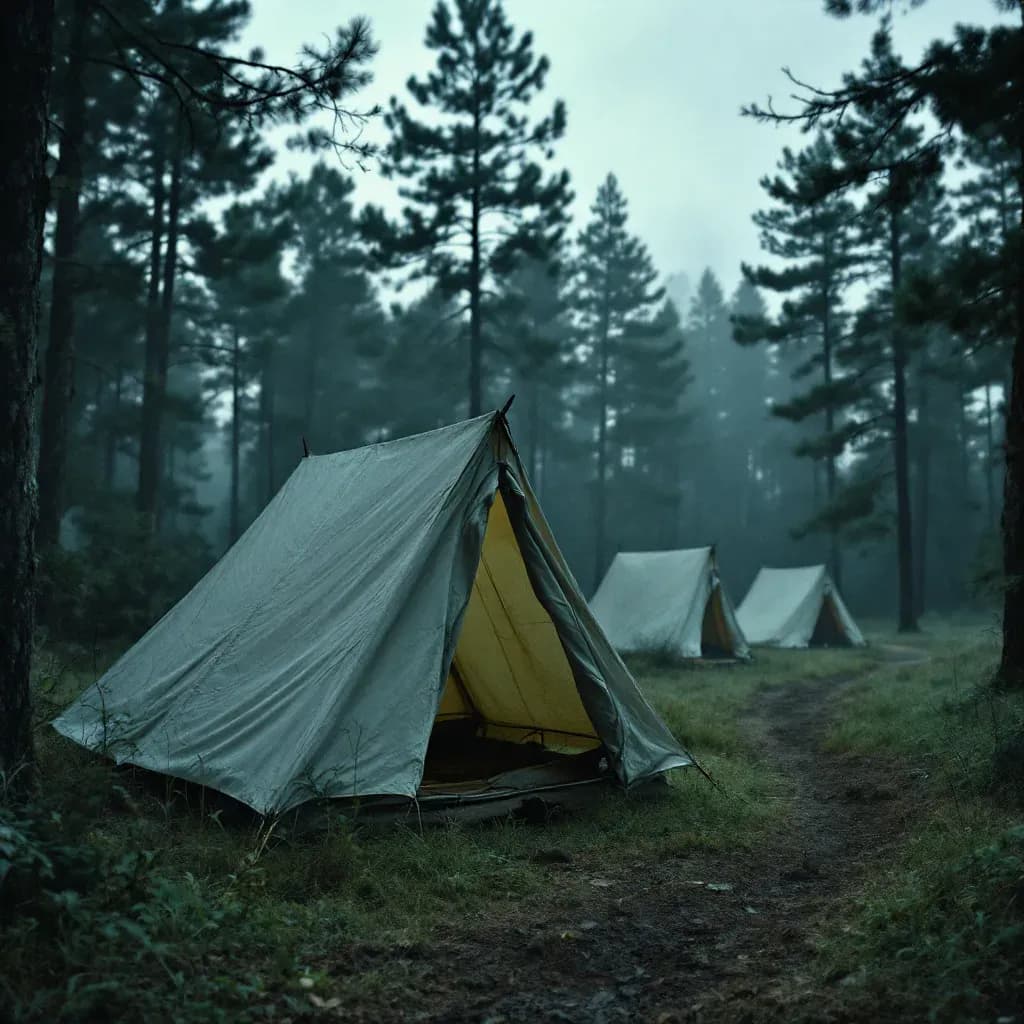
On the morning of June 13, 1977, counselors at Camp Scott discovered the bodies of three girls on a trail leading toward the campsite showers, roughly 150 yards from the tent where they had been sleeping. All three had been bludgeoned and strangled, and all three had been sexually assaulted. The attack happened during the camp's opening session, with hundreds of other girls and staff present on the wooded grounds in northeastern Oklahoma. The camp was closed immediately and never reopened for Girl Scout use.
The brutality of the crime — three small children attacked in the middle of what should have been a safe rural retreat — turned the case into one of the most shocking unsolved murders in Oklahoma history.
Timeline
Hart escapes Mayes County Jail
Gene Leroy Hart, with prior convictions for kidnapping and raping two pregnant women and four counts of first-degree burglary, escapes from the Mayes County Jail.
Three girls murdered at Camp Scott
On the morning of June 13, 1977, Lori Lee Farmer, Doris Denise Milner and Michele Heather Guse are found bludgeoned, strangled and sexually assaulted on a trail about 150 yards from their tent.
Hart acquitted at trial
After being arrested and prosecuted as the prime suspect, Gene Leroy Hart is found not guilty by a unanimous jury in March 1979.
Gene Leroy Hart dies
Hart, returned to prison on his earlier convictions after the acquittal, dies on June 4, 1979.
First DNA test inconclusive
An initial DNA test in 1989 is inconclusive but links Hart to part of the physical evidence.
Newer DNA testing implicates Hart
Advanced DNA testing in 2017 more strongly suggests Hart's involvement in the killings.
Authorities reiterate Hart as suspect
Investigators publicly state that the evidence strongly points to Hart, though the case remains officially unsolved.
Cherokee Nation reopens review after McGirt
Following the McGirt v. Oklahoma jurisdictional ruling, Cherokee Nation law enforcement opens a fresh look at the case; the FBI considers it inactive but not closed.
The Victims
The three victims were Lori Lee Farmer, Doris Denise Milner, and Michele Heather Guse, all aged between 8 and 10. They were sharing a tent in the Kiowa unit of Camp Scott. A 2023 episode of People Magazine Investigates revisited their stories and the impact on their families, and the National Center for Missing & Exploited Children highlighted the documentary coverage of the girls' lives and deaths.
Investigation
Suspicion quickly fell on Gene Leroy Hart, born November 27, 1943, a Cherokee man who had escaped the Mayes County Jail in 1973. Hart already had a violent criminal record, including convictions for the kidnapping and rape of two pregnant women and four counts of first-degree burglary. He was believed to be hiding in the rugged country around the camp at the time of the killings.
After a months-long manhunt, Hart was arrested and charged with the murders. Investigators built their case on physical evidence collected from the scene and the tent, along with circumstantial links tying him to the area. The science of the time, however, could not deliver a definitive forensic match. Decades later, a 1989 DNA test produced inconclusive results that nevertheless linked Hart to part of the evidence, and more advanced testing in 2017 more strongly suggested Hart's involvement, a position authorities reiterated publicly in 2022.
Trial and Verdict
Hart was tried in March 1979 for the Camp Scott killings. The defense argued that the prosecution's case was built on weak forensic evidence and on Hart's reputation rather than proof beyond reasonable doubt. After deliberation, the jury returned a unanimous not-guilty verdict, and Hart walked away from the murder charges. Because of the acquittal, no murder sentence was ever imposed in this case, although Hart was returned to prison to continue serving time on his earlier convictions. He died on June 4, 1979, only months after the acquittal.
The verdict was deeply controversial. Investigators, prosecutors and many in the local community continued to believe Hart was the killer, a view explored in attorney Gary Pitchlynn's book *The Usual Suspect*, which revisits the prosecution and the doubts surrounding Hart's defense.
Today
More than four decades on, the Oklahoma Girl Scout Murders remain officially unsolved. The FBI has reportedly not closed the file, although it has been described as inactive. After the U.S. Supreme Court's 2020 McGirt v. Oklahoma ruling reshaped tribal jurisdiction over crimes in eastern Oklahoma, Cherokee Nation law enforcement opened a fresh review of the case, given that the camp sits within historic Cherokee territory and Hart himself was Cherokee.
The killings have continued to draw national media attention, including a 2023 episode of People Magazine Investigates on Investigation Discovery and a dedicated ABC 20/20 investigation. For the families of Lori, Denise and Michele, the legal record still shows no convicted killer — even as modern DNA evidence has narrowed the circle back to the man a jury once set free.
Media coverage
TV series
- Keeper of the Ashes: The Oklahoma Girl Scout Murders(2026)
Ask about this case
Answers from KrimiNyt's coverage onlyFollow this case
Get an email when a new documentary, podcast or book about Oklahoma Girl Scout Murders — 1977 Camp Scott Killings appears, or when a verdict is reached.