10 Rillington Place: Britain's Most Notorious Serial Killer
How John Christie murdered at least eight people in his London flat—and framed an innocent man for his crimes
Published June 6, 2025
Quick Facts
John Reginald Halliday Christie moved into the ground-floor flat at 10 Rillington Place in 1938, a modest terraced house in Notting Hill that would become synonymous with one of Britain's most horrific serial killing sprees. For the next fifteen years or so, the unremarkable, soft-spoken man would strangle at least eight people within its walls—and orchestrate the execution of an innocent man in the process.
Christie's murders began in August 1943, when he killed Ruth Fuerst, a 21-year-old prostitute. He would claim later that it happened in a moment of passion during an argument, but the methodical nature of his subsequent crimes suggested far darker impulses. Thirteen months later, he murdered Muriel Eady, a 32-year-old work colleague, using the same method: strangulation.
For years, Christie's crimes went undetected. His position as a special constable during World War II—a War Reserve Police volunteer—gave him an air of respectability that deflected suspicion. Neighbors saw only a quiet, middle-aged man. They did not see the bodies he was carefully concealing.
Timeline
Ruth Fuerst murdered – first documented killing
On 24 August 1943, Christie murders Ruth Fuerst at 10 Rillington Place. It is the first known murder in the series.
Muriel Eady murdered in October 1944
Christie murders Muriel Eady in October 1944. The exact date within the month is not stated in the verified sources.
Beryl and Geraldine Evans murdered in November 1949
Christie murders fellow resident Beryl Evans and her infant daughter Geraldine in November 1949. Timothy Evans is later executed for these murders.
Timothy Evans executed for murders Christie likely committed
Timothy Evans is executed at Pentonville Prison in March 1950, convicted of the murder of his wife and daughter – killings later linked to Christie.
Ethel Christie murdered in December 1952
Christie murders his own wife Ethel in December 1952. It is this murder he is formally charged with and convicted of in 1953.
Rita Nelson murdered in January 1953
Rita Nelson is murdered by Christie in January 1953 at Rillington Place. The body is hidden in the property.
Kathleen Maloney murdered in February 1953
Kathleen Maloney is murdered by Christie in February 1953. The body is likewise hidden in the flat at Rillington Place.
Hectorina MacLennan murdered – the final killing
On 6 March 1953, Christie murders Hectorina MacLennan. It is the series' eighth and last known murder.
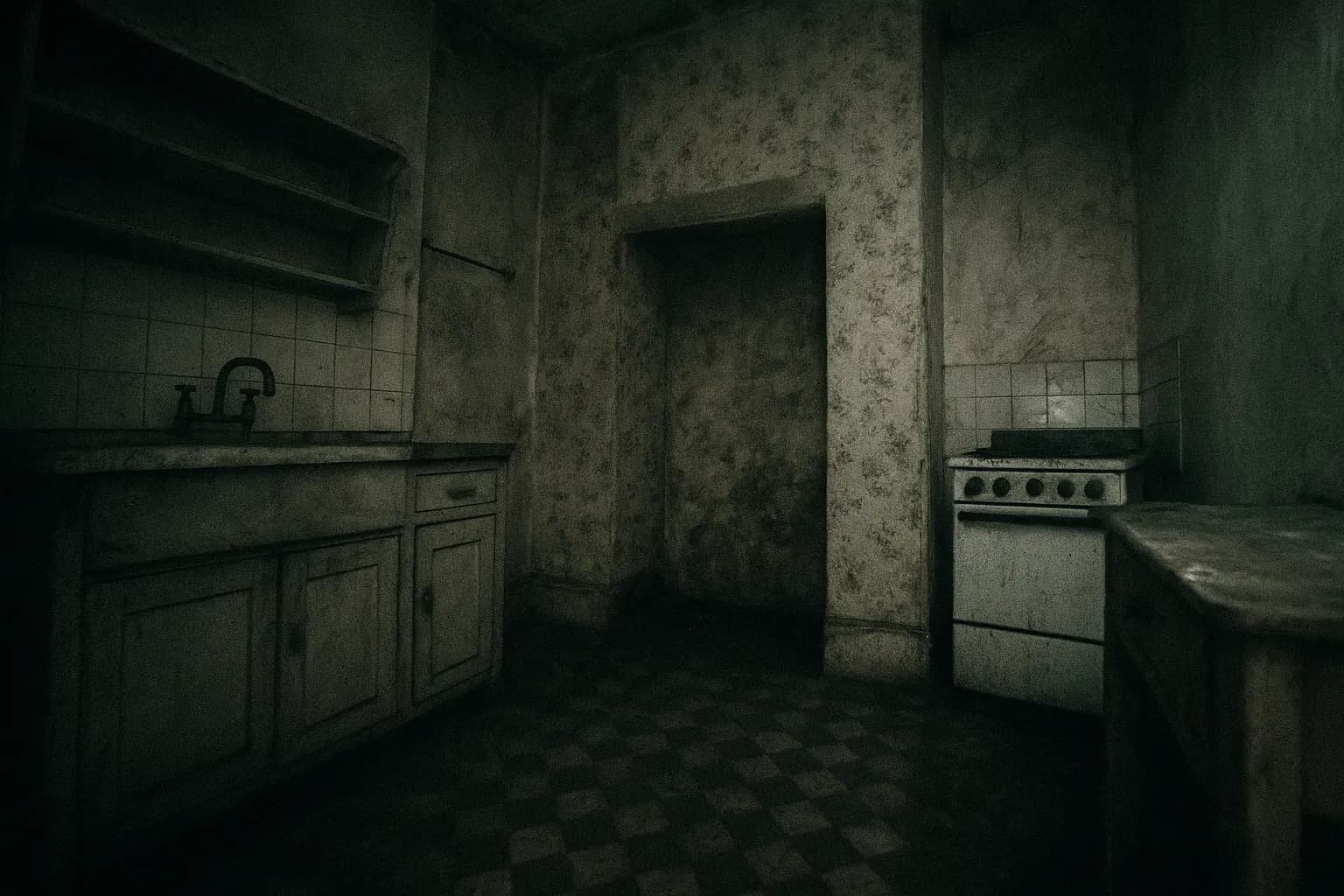
Bodies discovered behind wallpapered panel in kitchen
A new tenant at Rillington Place discovers hidden bodies behind a section of panel in the kitchen. Police are called and the investigation begins.
Christie arrested at Putney Bridge
On 31 March 1953, Christie is recognized by a police officer at Putney Bridge in London and arrested. He had been at large since the discoveries at Rillington Place.
## The Evans Family Tragedy
In 1948, Timothy Evans and his young family moved into the upstairs flat. By November 1949, both Evans's wife Beryl and their baby daughter Geraldine were dead—murdered by Christie. But when their bodies were discovered, it was Evans who was charged with the crimes. At trial, Christie appeared as the prosecution's star witness, testifying against the man whose wife and child he had actually killed. Evans was convicted of his daughter's murder and hanged in March 1950.
The injustice was compounded by Christie's testimony. He portrayed himself as a concerned neighbor, seemingly helpful to investigators, while the real murderer remained free to kill again.
## Discovery and Confession
Christie's downfall came through his own carelessness. In March 1953, he fraudulently sub-let his flat and moved out. On 24 March, the new tenant, Beresford Brown, made a grim discovery: three female bodies hidden behind wallpapered alcoves in the kitchen. The victims were identified as prostitutes—Maloney, Nelson, and MacLennan. Further searches revealed two more bodies buried in the garden. Beneath the floorboards of the front room, investigators found Ethel Christie, his wife.
Arrested on 26 June 1953, Christie confessed to murdering his wife and the other victims. Remarkably, he never confessed to killing baby Geraldine Evans—a detail that haunted the case and later helped establish Evans's innocence posthumously. Christie's confession was methodical and detailed, revealing a man who had lived among the everyday rhythms of London while committing unspeakable acts.
Christie was convicted of the murder of his wife, Ethel, and sentenced to death. On 15 July 1953, just three years after Timothy Evans's wrongful execution, John Christie was hanged at Pentonville Prison.
## Legacy
The Christie case became a watershed moment in British criminal justice. The execution of Timothy Evans for murders he did not commit—while the actual killer walked free and even testified at trial—sparked a profound national debate about capital punishment. Evans was eventually granted a posthumous pardon in 1966, and the case became central to arguments against the death penalty in the United Kingdom.
Christie's decade-long reign of terror at 10 Rillington Place stands as a chilling reminder of how evil can hide in plain sight, protected by respectability and enabled by the failures of those meant to protect the public.
## Sources
https://en.wikipedia.org/wiki/John_Christie_(serial_killer) https://allthatsinteresting.com/john-christie https://www.crimeandinvestigation.co.uk/crime-files/john-christie https://maamodt.asp.radford.edu/psyc%20405/serial%20killers/Christie,%20Jon%20_2008,%20spring_.pdf https://www.ebsco.com/research-starters/history/john-reginald-halliday-christie
Ask about this case
Answers from KrimiNyt's coverage onlyFollow this case
Get an email when a new documentary, podcast or book about 10 Rillington Place: Britain's Most Notorious Serial Killer appears, or when a verdict is reached.