The Caravaggio That Vanished Into the Mafia
Fifty years after a masterpiece was stolen from a Palermo church, investigators still chase shadows—and mafia turncoats' tales
Published June 6, 2025
Case Details
Quick Facts
Classification:
Quick facts
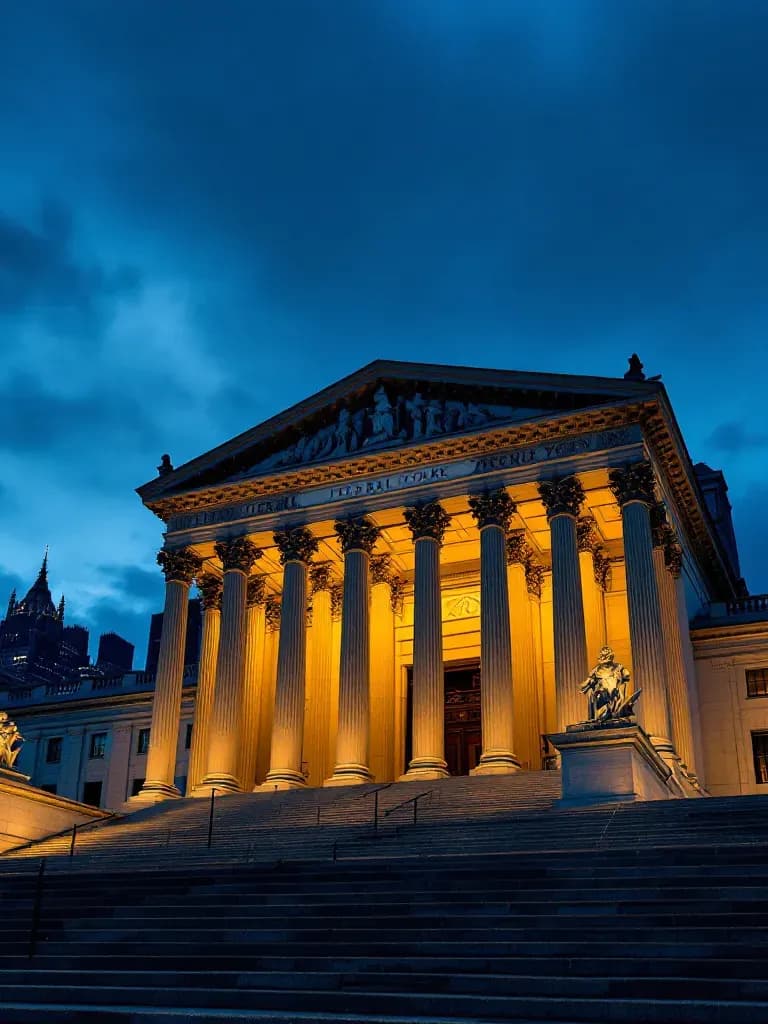
On a dark and stormy October night in 1969, two low-level criminals broke into the Oratory of San Lorenzo in Palermo's historic center. Using a razor or knife, they cut *Nativity with St. Francis and St. Lawrence*—a masterpiece painted by Michelangelo Merisi da Caravaggio in 1609—from its frame above the altar. They rolled the canvas, loaded it into a Piaggio Ape vehicle, and fled along Via Immacolatella. Within hours, one of Europe's most recognizable religious paintings had vanished.
More than fifty years later, no one has found it. And the closer investigators have looked, the stranger the story has become.
## From Common Crime to Cosa Nostra
Timeline
Caravaggio painted 'Nativity with St. Francis and St. Lawrence'
Michelangelo Merisi da Caravaggio creates the masterpiece for the oratory of San Lorenzo in Palermo. The painting hangs above the church's altar.
The painting is stolen
During the night between October 17 and 18, Caravaggio's masterpiece disappears from the church in Palermo. The Sicilian mafia is considered the main suspect.
Mafioso admits involvement
Mafia informant Francesco Marino Mannoia admits to having been involved in the theft, but cannot say what happened to the painting.
Informant claims: painting destroyed
Gaspare Spatuzza testifies that the work was damaged by animals in a barn in the 1980s and subsequently burned.
Replica is made
A copy of the painting is created and installed in the oratory of San Lorenzo to fill the empty space above the altar.
New theory: sold to Switzerland
Informant Gaetano Grado claims that mafia boss Gaetano Badalamenti sold the painting to a Swiss dealer.
Initially, police treated the theft as straightforward—amateurs stealing for quick money. But in the 1980s and 1990s, as Sicilian mafia turncoats began cooperating with authorities, a darker picture emerged. According to Marino Mannoia, a pentito (mafia informant), the painting had been stolen to order. The buyer, Mannoia claimed, rejected it because it was damaged, then ordered the thieves to cut it up and burn it. Mannoia hinted at involvement reaching as high as former Italian Prime Minister Giulio Andreotti—accusations that added political intrigue to an already murky case.
Other pentiti told conflicting stories. Gaspare Spatuzza, another mafia informant, said the canvas ended up in a barn or outbuilding where it was eaten by rodents and pigs, then burned. He claimed to have heard this from Filippo Graviano, a Mafia boss, while they shared a prison cell in 1999. The painting, Spatuzza suggested, had been connected to the Pullara family of the Santa Maria di Gesù clan.
## The Badalamenti Connection
One name recurs across multiple testimonies: Gaetano Badalamenti, a ruthless Sicilian mafia boss based in Carini, near Palermo. In the 1970s, according to unnamed informants, Badalamenti allegedly possessed the Caravaggio. It was stored in a farmhouse, possibly damaged, before passing between Palermo mafia families. The painting eventually surfaced, according to some accounts, in the possession of Gerlando Alberti—allegedly buried in an iron chest alongside heroin and cash, a grim metaphor for its value in the criminal underworld.
Badalamenti himself was a titan of organized crime, linked to a $1.65 billion heroin trade funneling drugs to the United States. Rumors circulated that he kept the painting in his home, even displayed it as a doormat—though such stories often say more about the mythology surrounding the theft than about verifiable fact.
## Leads and Red Herrings
One early lead surfaced in 1970, when a priest in Carini reported seeing the painting after he had asked the local mafia to recover his own stolen artwork. The mafia, obligingly, showed him two paintings—one of which was allegedly Caravaggio's *Nativity*. It was a tantalizing glimpse, but it led nowhere.
In recent years, Italian authorities, including Rome's Anti-Mafia Commission, have reopened investigations, pursuing leads involving Swiss collectors and black-market art dealers. Yet conflicting testimonies from pentiti—some of whom may have exaggerated or fabricated details to secure leniency—have muddied the waters. No arrests have been made. No verdicts handed down. No painting recovered.
## A Digital Shadow
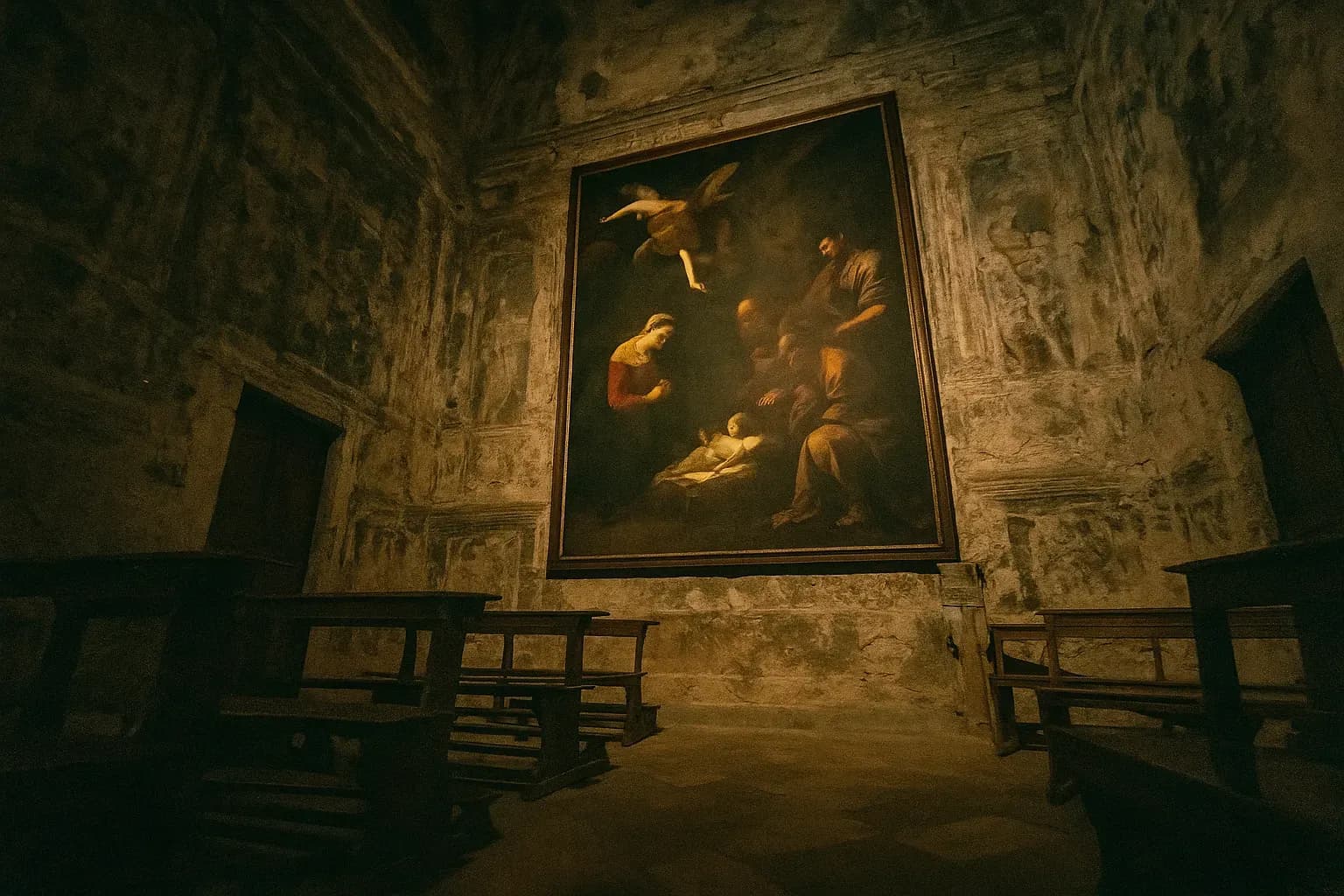
Today, visitors to the Oratory of San Lorenzo see a digital replica created by Factum Arte in 2015, reconstructed from an old black-and-white photograph. It hangs in the same spot above the altar where Caravaggio's original once inspired prayer.
The real *Nativity* exists now only in memory, in pentiti testimony, and in the criminal underground's vast shadow. Whether it was burned in a farmyard, buried in an iron chest, or sold to a Swiss collector remains unknown. What is certain is this: for over fifty years, one of history's greatest painters' greatest works has remained hostage to a crime that no investigation has solved.
## Sources
- https://www.theartnewspaper.com/2019/10/08/its-50-years-since-caravaggios-nativity-was-stolen-in-palermo-have-the-police-been-chasing-red-herrings-all-this-time - https://apollo-magazine.com/the-murky-mystery-of-caravaggios-stolen-palermo-nativity/ - https://www.obscurearthistory.com/the-lost-caravaggio-nativity-with-st-francis-and-st-lawrence/ - https://pricelessblog.squarespace.com/articles/caravaggios-nativity-theft - https://kateludlow.wordpress.com/2010/12/22/caravaggio%E2%80%99s-nativity-and-the-mystery-of-its-disappearance-a-metaphor-for-the-city-%E2%80%A6/
Ask about this case
Answers from KrimiNyt's coverage onlyFollow this case
Get an email when a new documentary, podcast or book about The Caravaggio That Vanished Into the Mafia appears, or when a verdict is reached.