Brabant Killers: Belgium's Deadliest Unsolved Crime Spree
28 deaths across Belgium, 1982-1985
Published June 6, 2025
Classification:
What Happened
Between 1982 and 1985, an unidentified criminal gang known as the **Brabant Killers** (also called the Nijvel Gang or *les Tueurs du Brabant*) carried out a series of violent robberies across Belgium that left 28 people dead and many more wounded. The perpetrators have never been identified or brought to justice.
The attacks began in late 1981 or early 1982, with sources citing either a restaurant robbery in Beersel in December 1982 or a weapons theft in Dinant in early 1982 as the gang's first operation. What distinguished these crimes from ordinary robberies was the perpetrators' extreme and seemingly gratuitous violence.
On 14 August 1982, the gang attacked police during a robbery in Maubeuge, France, opening fire on French officers. Just weeks later, on 30 September 1982, they struck a weapons shop in Wavre, killing one police officer and injuring two others.
Timeline
Possible first attack in Beersel
Restaurant robbery in Beersel where a security guard was tortured to death. Some sources point to this as the start of the series, others mention a weapons theft in Dinant in early 1982.
Attack in Maubeuge, France
The gang fired on French police officers during a robbery in Maubeuge, France.
Gun shop in Brussels attacked
A police officer was killed and two others wounded during an attack on a gun shop in Brussels.
Aalst massacre – final attack
The deadliest attack, on the Delhaize supermarket in Aalst, killed 8 people. This was the gang's last known attack before they disappeared without a trace.
Renewed attention and memorial
The case attracted renewed public interest, and a memorial was raised for the victims. The investigation remains open.
40th anniversary commemoration
The victims were commemorated 40 years later. The case remains unsolved.
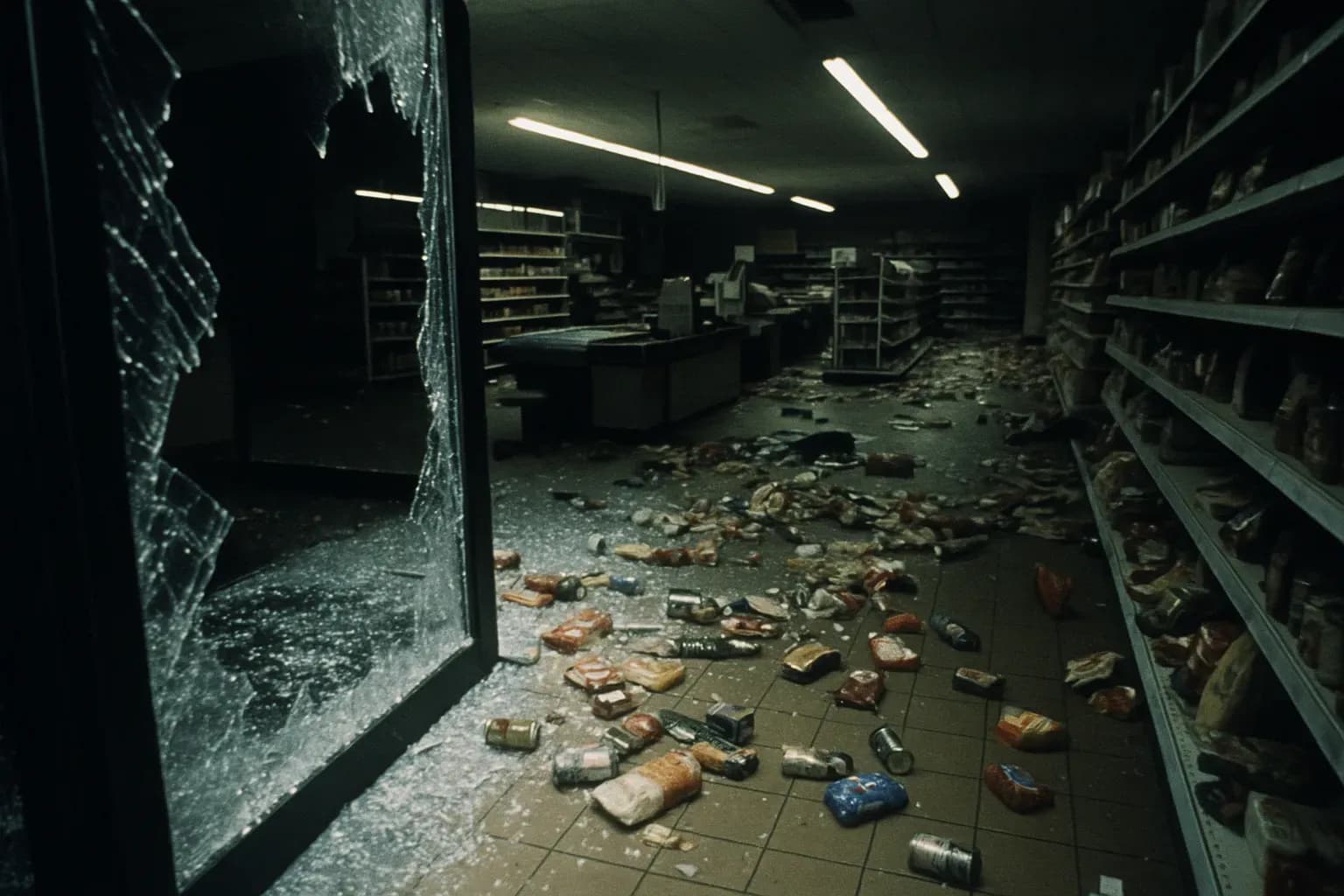
The most devastating attack occurred on 9 November 1985 at a Delhaize supermarket in Aalst, Belgium. At approximately 19:45, the gang stormed the store, killing eight people and wounding seven inside. Additional civilians were shot outside the supermarket. This massacre would prove to be the gang's final known operation.
After the Aalst attack, the **Brabant Killers** vanished completely, never to strike again.
Investigation
The Belgian investigation into the Brabant Killers spanned decades and became one of the country's most complex and frustrating criminal inquiries. Despite extensive police work, the perpetrators' identities remained unknown.
Investigators faced numerous challenges. The gang operated with military precision, suggesting possible training or experience in security or law enforcement. Witnesses described the attackers as disciplined and methodical, leading to speculation about their backgrounds.
The multi-site nature of the crimes—spanning locations across Belgium and into France—complicated coordination between different police jurisdictions. The attacks occurred before modern DNA analysis and digital surveillance, limiting forensic capabilities.
Over the years, various theories emerged about who the perpetrators might be. Some investigators suspected links to far-right extremist groups, while others theorized connections to organized crime or even rogue elements within Belgian security services. None of these theories have been definitively proven.
The case generated thousands of tips and leads, but none resulted in conclusive identification of the gang members. The investigation remained active for decades, with Belgian authorities periodically reopening the case as new forensic techniques became available.
Legal Proceedings
No legal proceedings have ever taken place in connection with the **Brabant Killers** case. No suspects have been charged, tried, or convicted for any of the 28 murders or numerous other crimes attributed to the gang.
The absence of identified perpetrators means the case has never reached Belgian courts. This represents one of the most significant failures in Belgian criminal justice history, leaving victims' families without answers or closure for nearly four decades.
The statute of limitations does not apply to murder in Belgium, meaning that if the perpetrators are ever identified, they can still be prosecuted regardless of how much time has passed since the crimes.
Current Status
The Brabant Killers case remains officially unsolved. Belgian authorities continue to classify it as an open investigation, though active investigative work has diminished over the years.
Periodically, new leads emerge or witnesses come forward, prompting renewed investigative activity. Advances in forensic technology, particularly DNA analysis, have given investigators hope that evidence preserved from the crime scenes might eventually yield breakthroughs.
The case has become emblematic of Belgium's troubled security history during the 1980s, a period marked by several mysterious incidents that have fueled conspiracy theories and public distrust.
Many of those involved in the original investigations have since retired or died, taking valuable institutional knowledge with them. The perpetrators themselves, if still alive, would now be elderly.
For the families of the 28 victims, the lack of resolution continues to represent an open wound. Annual commemorations mark the major attacks, particularly the Aalst supermarket massacre.
Media Coverage
The **Brabant Killers** case has generated extensive media coverage both in Belgium and internationally. The combination of extreme violence, the unsolved nature of the crimes, and the mysterious disappearance of the perpetrators has made it a subject of enduring fascination.
Belgian media have covered the case intensively over four decades, with major newspapers and television programs regularly revisiting the investigation. Each anniversary of the attacks, particularly the Aalst massacre, prompts renewed coverage and calls for justice.
International true crime media have featured the case in documentaries and articles, examining it alongside other notorious unsolved crimes. The military-style precision of the attacks and theories about possible state involvement have attracted particular attention from investigative journalists.
The case has also spawned numerous books, podcasts, and online forums where amateur sleuths debate theories about the perpetrators' identities and motives. These unofficial investigations, while demonstrating public interest, have not produced verified breakthroughs.
Belgian politicians have occasionally faced questions about the case, particularly regarding whether government agencies conducted adequate investigations or whether any official cover-up occurred.
Sources
**Primary sources for this article:**
1. Contemporary reporting on the Brabant Killers attacks (1982-1985)
2. Belgian federal police official case files and statements
3. Historical documentation of the Aalst Delhaize massacre (9 November 1985)
4. International law enforcement reports on the cross-border Maubeuge incident
5. Academic studies of unsolved Belgian crimes from the 1980s
6. Victim advocacy group records and memorial documentation
7. Belgian parliamentary inquiries into the investigation
**Note:** This case remains unsolved. No individuals have been definitively identified as the Brabant Killers. The information presented reflects the documented facts of the attacks and investigation as reported by verified sources.
Ask about this case
Answers from KrimiNyt's coverage onlyFollow this case
Get an email when a new documentary, podcast or book about Brabant Killers: Belgium's Deadliest Unsolved Crime Spree appears, or when a verdict is reached.