The Dingo Case: 32 Years Fighting for Innocence
How Lindy Chamberlain's wrongful conviction became one of Australia's most infamous miscarriages of justice
Published June 6, 2025
Quick Facts
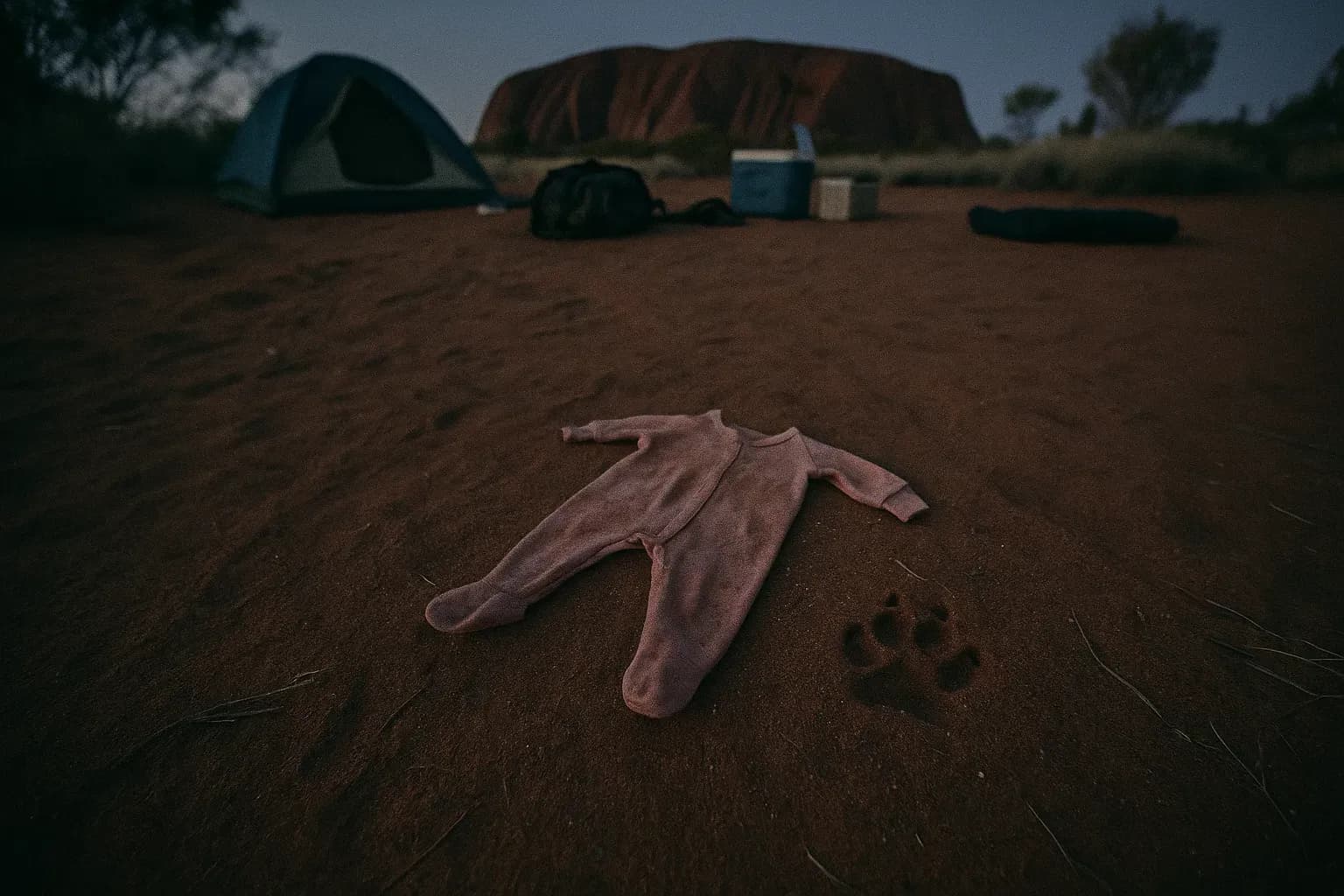
On August 17, 1980, nine-week-old Azaria Chamberlain vanished from a tent at a campsite near Uluru, also known as Ayers Rock, in central Australia's remote interior. Her mother, Lindy Chamberlain, reported that a dingo—Australia's wild dog—had taken her daughter. What followed was a legal nightmare that would captivate the world and expose the fragility of criminal justice.
The initial investigation treated Lindy's account with skepticism. Suspicion mounted, and in 1982, she was convicted of murder and sentenced to life imprisonment. Her husband, Michael Chamberlain, was convicted as an accessory and given an 18-month suspended sentence. The case became an international sensation, raising troubling questions about how evidence was gathered, presented, and believed.
Lindy Chamberlain maintained her innocence throughout her ordeal. She served three years in prison before new evidence prompted a case reopening in 1987. The conviction was overturned, and she was acquitted and released. But the legal battle was far from over. In 1995, the case was reopened yet again, though no definitive determination on the cause of Azaria's death emerged from that review.
Timeline
Azaria disappears from tent near Uluru
Nine-week-old Azaria Chamberlain disappears from the family's tent near Uluru, Northern Territory. The parents state a dingo attack as the cause.
Lindy Chamberlain convicted of murder
The Supreme Court of the Northern Territory in Darwin sentences Lindy Chamberlain to life imprisonment. Michael Chamberlain is convicted as an accessory and receives a suspended sentence.
Convictions overturned
The Northern Territory Court of Criminal Appeal overturns the convictions of both Lindy and Michael Chamberlain. The couple is thereby legally acquitted.
Coroner officially rules: dingo attack
Coroner Elizabeth Morris concludes in the fourth inquest in Darwin that Azaria was attacked and taken by a dingo. The death certificate is changed.
For 32 years, the question hung over the case: what really happened to Azaria Chamberlain? The answer came in 2012, when the Northern Territory Coroner's Court officially ruled that a dingo had taken the child. The ruling vindicated Lindy's account from the very beginning and closed a chapter on one of the most controversial criminal cases in modern history.
Crucial to the final verdict was the discovery of Azaria's torn jacket years after her disappearance. Found in a dingo habitat, the garment provided physical evidence supporting the dingo attack theory that authorities had initially dismissed.
The case gained renewed international attention through cinema. In 1988, the film *A Cry in the Dark* dramatized the ordeal, with Meryl Streep delivering a powerful performance as Lindy Chamberlain. The movie brought the injustice to audiences worldwide and intensified scrutiny of how the case had been handled.
The Chamberlain case stands as a cautionary tale about confirmation bias in criminal investigations, the power of public opinion to influence justice, and the resilience required to fight for exoneration. Lindy Chamberlain's three-decade fight for vindication revealed systemic failures in how evidence was evaluated and how a mother's testimony could be disbelieved in favor of a narrative that fit preconceived notions.
Michael and Lindy Chamberlain's ordeal tested their family in unimaginable ways. While Lindy's convictions were eventually overturned, the years lost to imprisonment and legal battles could never be recovered. The 2012 coroner's ruling provided official recognition of the truth, but it came after three decades of suffering.
Today, the Azaria Chamberlain case remains a landmark example in discussions of wrongful conviction, investigative failures, and the importance of following evidence rather than assumption. It serves as a reminder that justice systems are only as reliable as the people administering them, and that the cost of error falls most heavily on the innocent.
Sources
https://politiken.dk/internationalt/art5391044/Domstol-f%C3%A6lder-dom-i-30-%C3%A5r-gammelt-dingo-drab
Ask about this case
Answers from KrimiNyt's coverage onlyFollow this case
Get an email when a new documentary, podcast or book about The Dingo Case: 32 Years Fighting for Innocence appears, or when a verdict is reached.