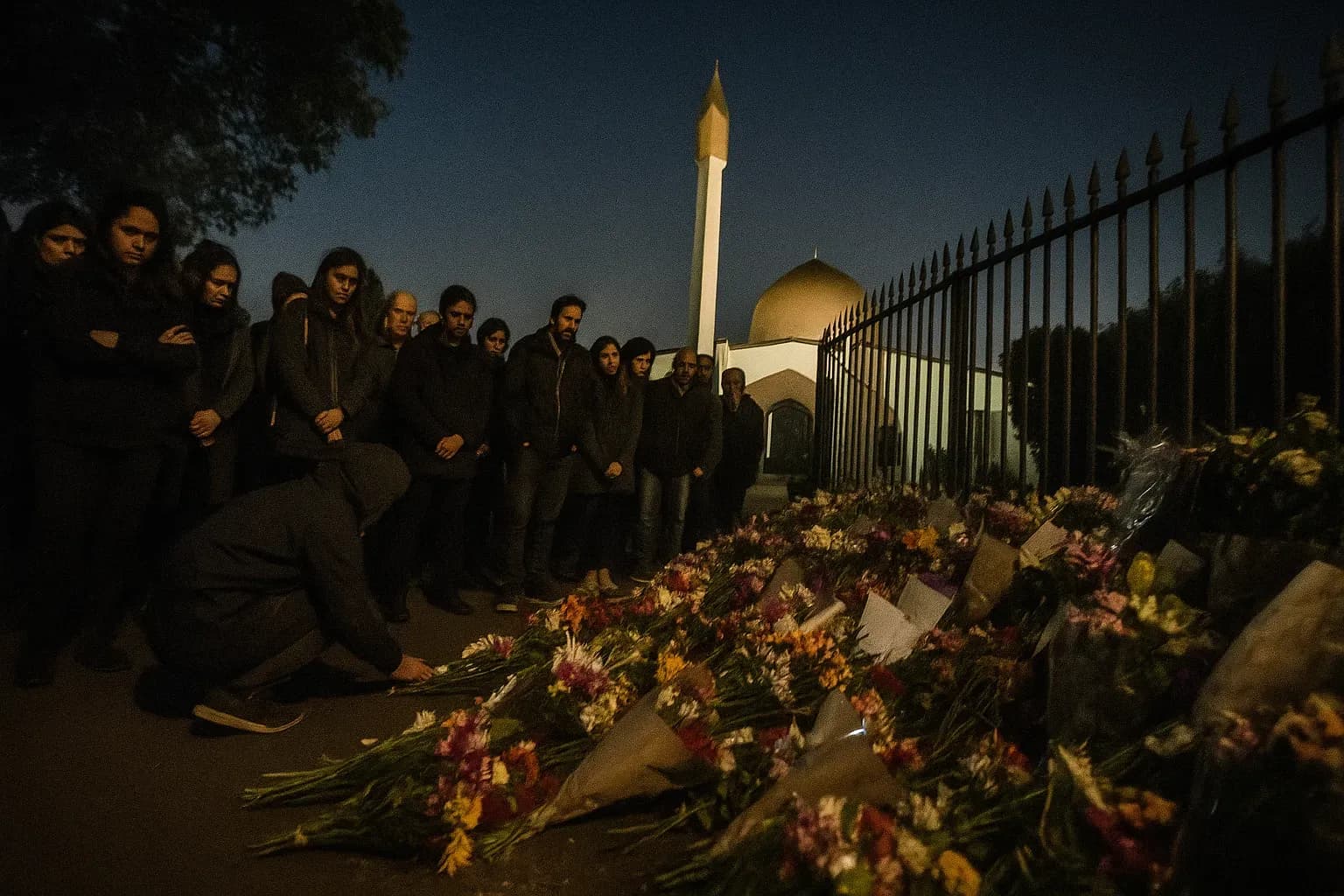
terrorist attack
Violent act meeting the special intent criteria in § 114 of the Danish Penal Code.
A terrorist attack is, in Danish legal terms, a violent act that fulfils the special intent criteria in the Danish Penal Code (straffeloven) § 114, and which therefore differs from ordinary violence or homicide through its purpose and its targeting of society as a whole. The provision defines terrorism as serious offences – including homicide, aggravated violence, deprivation of liberty and destruction of infrastructure – committed with the intent to seriously frighten a population, to compel public authorities or international organisations to act or refrain from acting, or to destabilise or destroy a country's or an organisation's fundamental political, constitutional, economic or social structures.
The word 'terrorist attack' is not in itself a fixed statutory term in Danish law, but is used as a factual and descriptive designation for the type of incident that triggers the application of § 114. It is thus the substance of the act and the underlying intent – not the scale of the attack alone – that determines whether an act is classified as a terrorist attack rather than an ordinary violent crime.
In connection with incidents such as the synagogue attack in Halle in 2019, the shootings in Hanau in 2020 and the Christmas market attack in Magdeburg in 2024, the term is used for attacks motivated by extremist ideology and directed against the civilian population with a view to creating fear and destabilisation. Although these cases were adjudicated under German criminal law, they illustrate the type of act that in a Danish context would fall within the scope of § 114.
The criminal law consequence of qualifying an act as terrorism under § 114 is considerable: the sentencing range is significantly higher than for the corresponding underlying offences, and the classification also has procedural and intelligence-related consequences for how the authorities handle the case.