Stasi
The reign of fear in the GDR – surveillance, 'Zersetzung' and its crushing legacy
Stasi: Discover how the GDR's secret police systematically shattered lives through surveillance, informants, and the dreaded 'Zersetzung' tactic. A chilling legacy.
The reign of fear in the GDR – surveillance, 'Zersetzung' and its crushing legacy
State as perpetrator: Stasi's network of fear in the GDR
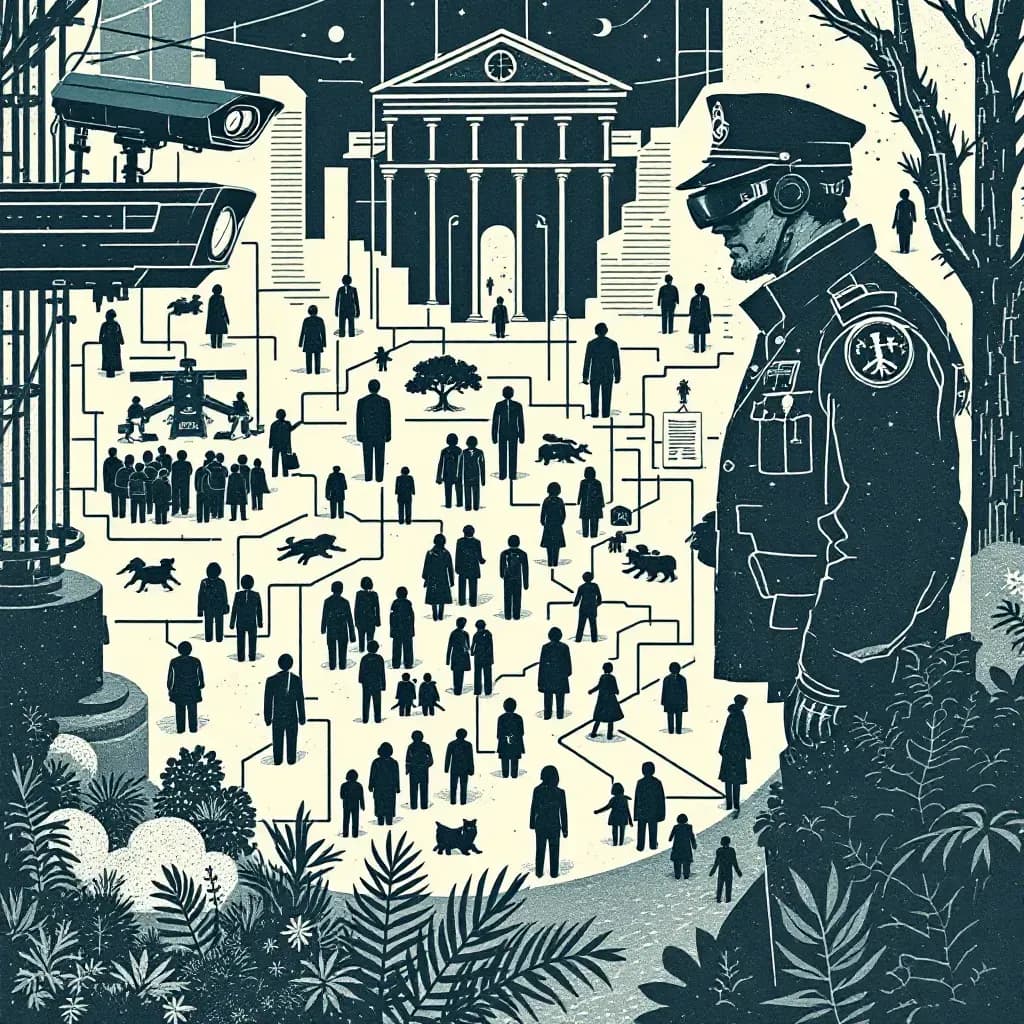
Stasi, an abbreviation for the German *Ministerium für Staatssicherheit* (Ministry for State Security), was the notorious and all-encompassing intelligence and security service in the former East Germany, also known as the GDR. Within true crime, the Stasi serves as a terrifying example of how a state can conduct systematic *surveillance*, *espionage*, and psychological warfare against its own population. Here, the lines between legitimate state power and criminal acts committed by the state itself were deliberately blurred. The core of the Stasi's power was a vast network of full-time officers and an even larger corps of unofficial *informants* – often ordinary citizens pressured or enticed into spying on friends, family, colleagues, and neighbors. This pervasive *surveillance* created a society characterized by fear and mistrust, where any deviation from the socialist state's official ideology could result in severe reprisals, including job loss, social isolation, imprisonment, and systematic psychological breakdown.
Stasi's feared weapon: How the terror of 'Zersetzung' worked
The Stasi's methods were numerous and deeply violated individual privacy. They included, among other things, routine mail opening, phone tapping, secret searches of private homes (known as "konspirative Wohnungssuchen"), infiltration of critical groups, and the use of the notorious "Zersetzung" tactic. *Zersetzung*, which can be directly translated as decomposition, was a particularly perfidious form of psychological warfare designed to slowly destroy a person's mental health, self-confidence, reputation, and social network through targeted rumor-mongering, manipulation, and organized harassment. The goal was often to induce severe *psychological* distress or even mental illness in the victims. Although these actions were carried out under the guise of protecting state security, many of them today constitute clear examples of serious crimes, such as stalking, defamation, severe *psychological violence*, and unlawful detention. Understanding the Stasi's operations is therefore essential to illuminate how a *totalitarian regime* can institutionalize behavior that violates fundamental *human rights* and operates within a criminal spectrum to maintain power.
Legacy of the Stasi: Archives on systematic state abuse
The investigation into the Stasi's extensive crimes, which truly gained momentum after the *fall of the Berlin Wall* in 1989, revealed a shocking system of state abuse and widespread lawlessness. The opening of the vast *Stasi archives* has documented countless personal tragedies and the devastating effect the Stasi's activities had on both individual lives and the general cohesion of society, underscoring the Stasi's significant relevance to the true crime genre. This is not merely about isolated criminal acts, but about a state's systematically organized crime directed against its own citizens. Access to the archives has given many victims painful insight into who betrayed them and how their lives were manipulated. At the same time, it has left a complex legacy of guilt, responsibility, and an enduring need to understand the mechanisms that enabled such a pervasive apparatus of repression in the heart of Europe during the *Cold War*.
The Stasi's methods were brutal – from 'Zersetzung' to extensive surveillance. Has this sparked your interest? Delve into real-life Stasi cases – find our fascinating case studies below.