Lucas Task Force
Texas unit that coordinated Henry Lee Lucas's confessions — later widely criticised
The Lucas Task Force was a special coordinating investigative unit under the Texas Rangers and the Texas Department of Public Safety, established in the United States to manage the unusual flow of confessions given by the killer Henry Lee Lucas from the mid-1980s onward. The unit was not a court and made no determinations of guilt or punishment — its function lay entirely at the investigative stage, prior to any charges or trials.
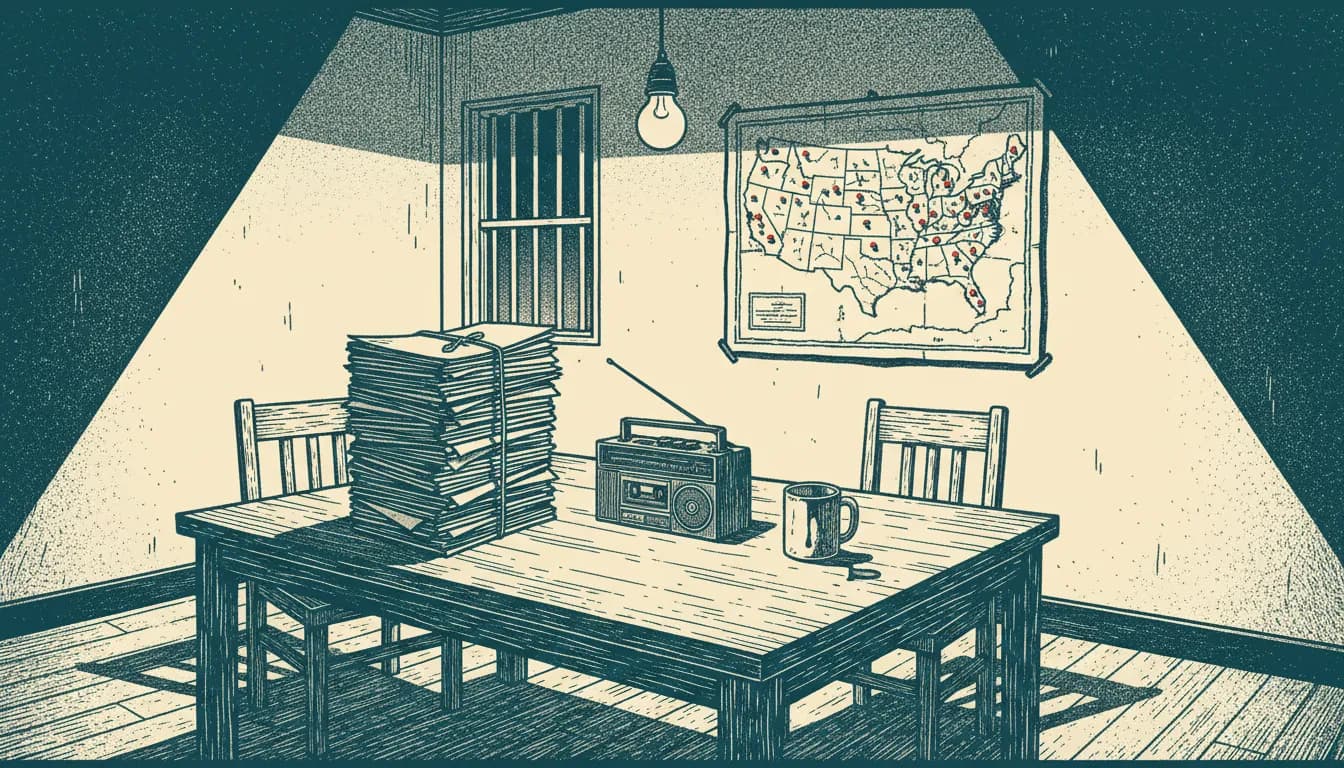
In practice, the Lucas Task Force served as a central point of contact for local and state law enforcement agencies across the United States who approached it with unsolved killings. The unit was to collect, sort and assess Lucas's statements and help individual police departments determine whether his accounts contained sufficient detail to link him to specific cold cases. The scale of the task was extraordinary: Lucas at one point claimed to have committed as many as 600 murders, and inquiries from other jurisdictions poured in at an unprecedented rate. The task force was intended to ensure structured handling of these cases and to prevent local authorities from each making decisions separately on an inadequate basis.
The unit later became the subject of serious criticism, as investigation revealed that a large portion of Lucas's confessions were false or highly problematic. Alibi information, employment records and witness statements placed Lucas somewhere entirely different from the crime scenes on the dates in question, and it gradually became clear that numerous cases had been "solved" on untenable grounds.
In a true crime context, the Lucas Task Force has become a central example of systemic failure in American law enforcement: an investigative structure that — despite its coordinating intent — helped legitimise false confessions, eased the pressure on local authorities to close unsolved cases, and thereby potentially prevented the real crimes from being solved.