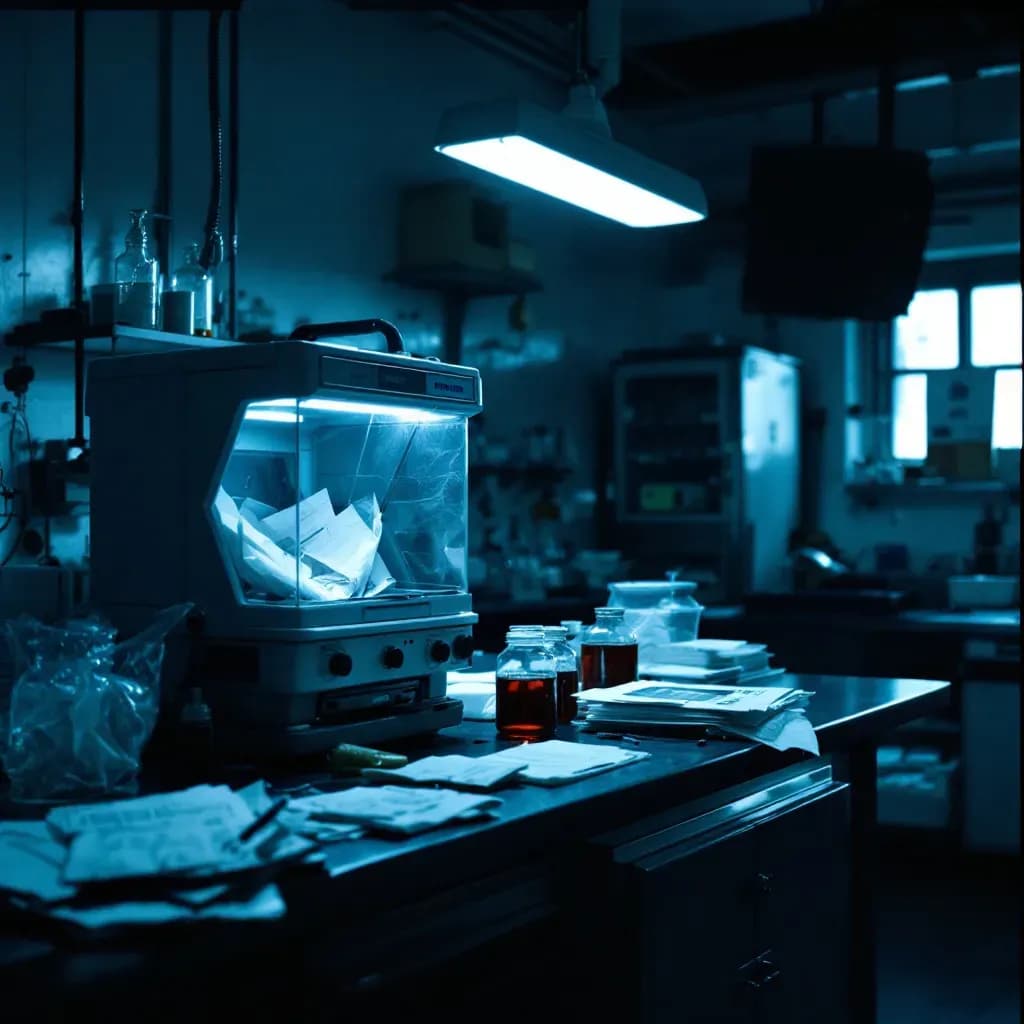
forensic misconduct
Deliberate manipulation of forensic evidence by the professionals entrusted with it
Forensic misconduct is an internationally recognised concept in criminal law and forensic regulation denoting the deliberate or grossly irresponsible manipulation of forensic examinations by a professional responsible for analysing evidence. It differs fundamentally from ordinary laboratory error in that it presupposes an element of intent or gross negligence that undermines the integrity of the forensic process.
The concept covers concrete acts such as fabricating test results, falsifying case information, deliberately tampering with physical evidence, and intentionally failing to follow professional standards where that failure materially affects the reliability of the analysis. It is precisely the combination of professional position and deliberate dishonesty that makes forensic misconduct a particularly serious category of abuse of office.
In practice, the term has been applied in connection with laboratory scandals in the United States, including the Massachusetts Drug Lab scandal, in which chemists systematically falsified analytical results in criminal cases over a period of years. Such cases illustrate how the dishonesty of a single professional can poison a large number of prosecutions and lead to innocent people being sentenced to imprisonment on the basis of manipulated evidence.
The legal consequences of forensic misconduct are far-reaching. Convictions resting on falsified forensic evidence may be set aside, and affected defendants may be entitled to have their cases reopened. In addition, the responsible professional may incur criminal liability, lose their certification, and face civil claims for damages.
Forensic misconduct is addressed in a number of countries through a combination of criminal legislation, professional oversight schemes, and regulation of accredited laboratories. In Massachusetts, for example, the Drug Lab scandal resulted in legislative reforms and the establishment of stricter oversight mechanisms intended to prevent similar cases in the future.