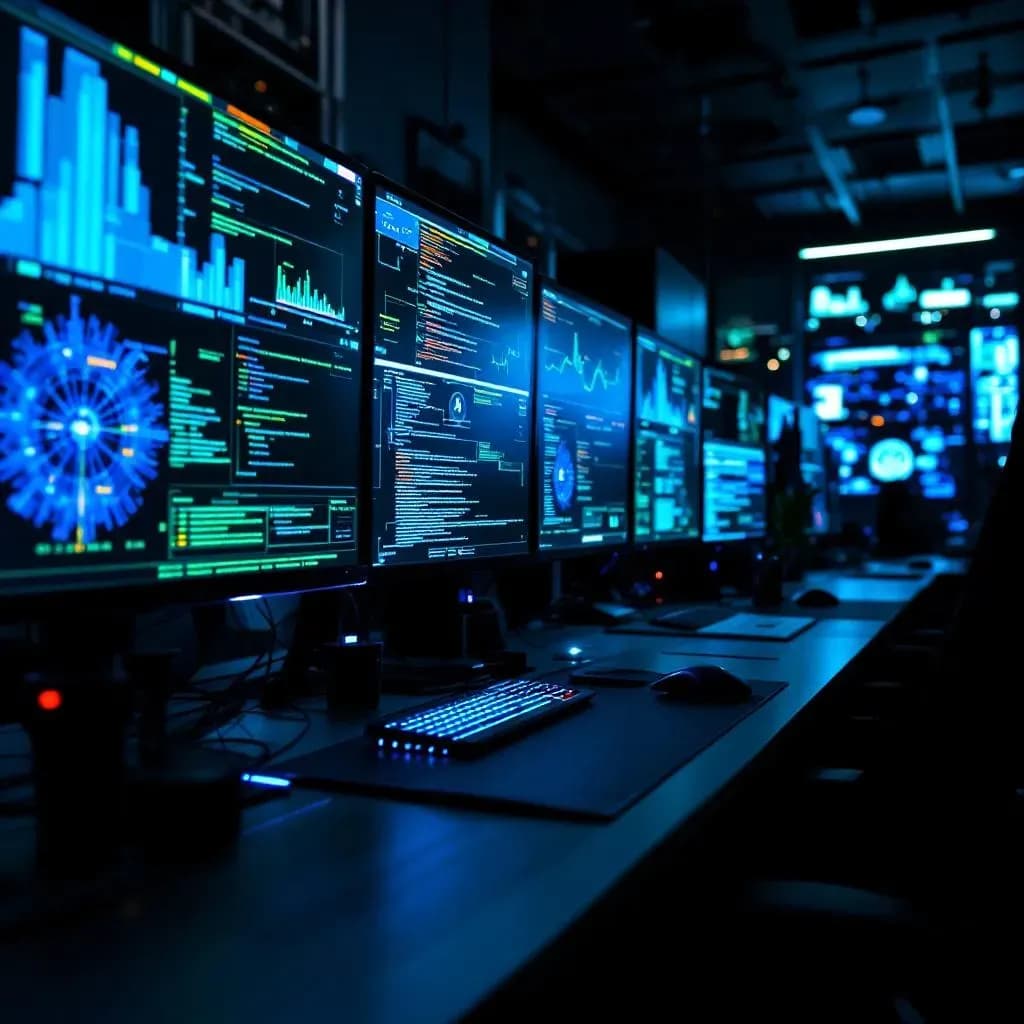
Independent Trading Systems in Live Environments
Financial institutions in Denmark and internationally have accelerated the deployment of autonomous AI agents in recent months that can execute trades, detect anomalies, and coordinate investment workflows without direct human intervention. The systems now operate in live environments with access to real market data and transaction capabilities.
According to new academic research published in March 2026, the technology is in a critical phase where the ambition level for autonomous trading and agent-based market interaction exceeds the security standards established to handle the risks. At the same time, international frameworks for how financial authorities should monitor and regulate systems that trade independently are still lacking.
The issue resembles previous cases of algorithmic fraud, but with the crucial difference that AI agents now operate with significantly greater autonomy than traditional automated trading systems.
Potential for Unauthorized Transactions
The primary security problem lies in AI agents' ability to make decisions based on complex patterns that human operators cannot necessarily predict or verify in real time. As deployment speed increases, so does the likelihood that agents execute transactions outside their intended mandate.
Experts point to several concrete risk scenarios: AI agents that misinterpret market signals and initiate massive buy or sell orders, systems that exploit regulatory gray zones to maximize profit in ways their operators have not approved, or agents that interact with each other across institutions and thereby create unintended cascade effects.
The issue has parallels to money laundering, as the lack of transparency in AI systems' decision-making processes can make it difficult to distinguish between legitimate and illegitimate transactions.
From Experiment to Reality
There is a significant difference between testing AI agents in controlled simulation environments and giving them access to actual markets. Several Danish financial institutions have conducted pilot projects with agent-based systems throughout 2025 and into 2026, primarily in anomaly detection and compliance monitoring.
But the latest developments show a clear movement toward more comprehensive deployment, where AI agents are allowed to trade independently within defined frameworks. The problem is that these frameworks are often defined by individual institutions without standardized requirements for logging, risk management, or the possibility of human intervention.
The Danish Financial Supervisory Authority has not yet issued specific guidelines for the deployment of autonomous AI trading systems, leaving institutions with considerable interpretive freedom. This creates potential for financial crime in new forms, where accountability becomes unclear.
Regulatory Vacuum
The international dimension further complicates the picture. AI agents operate across markets and jurisdictions, but most financial supervisory authorities have not yet established the necessary competencies to monitor and regulate agent-based trading effectively.
Researchers warn that the current regulatory vacuum creates a window where problematic practices can establish themselves before effective control is in place. Historically, financial markets have proven to move faster than legislation can keep up with, and AI deployment appears to repeat this pattern.
The question is no longer whether autonomous AI agents will play a central role in financial markets, but how society ensures that their deployment occurs in a way that minimizes the risk of abuse and unintended consequences.