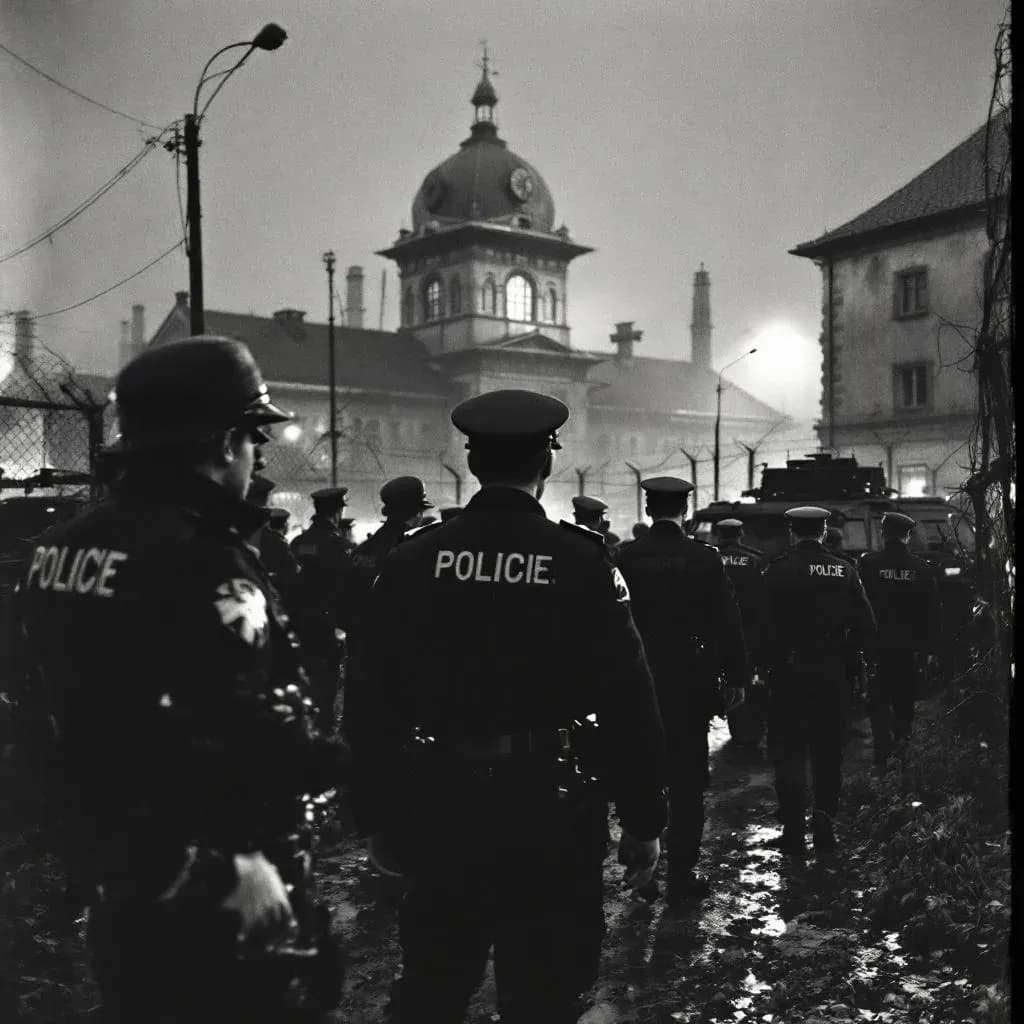
A 34-year-old resident of Odense, Denmark's third-largest city, has been convicted of murdering two men in a case that has consumed the Danish criminal justice system for more than three years. The Odense District Court handed down a 12-year prison sentence on Friday, marking the conclusion of a high-profile investigation that captured significant media attention across Scandinavia.
The defendant has remained in pre-trial detention throughout the entire proceedings—a standard practice in serious Danish criminal cases. The court found sufficient evidence to convict him on both murder charges, establishing guilt beyond reasonable doubt according to Danish legal standards.
What distinguished this case within the Nordic legal framework was the prosecution's request for 'forvaring,' a distinctly Scandinavian legal measure that permits courts to impose indefinite sentences for society's most dangerous offenders. Unlike life imprisonment in common-law jurisdictions, forvaring operates as an indeterminate sentence with periodic review, used sparingly in Denmark for cases involving extreme violence or recidivism risk. The measure represents the harshest penalty available in the Danish penal system short of historical capital punishment, which was abolished in 1933.
The Odense District Court, however, determined that the statutory conditions for imposing forvaring had not been satisfied. This decision represents a significant legal boundary in the case: while the judge accepted the homicide convictions, the bench concluded that the defendant's dangerousness or risk profile did not justify the extraordinary measure of indefinite detention. The fixed 12-year sentence therefore represents the court's calibrated response to the crimes—substantial by international standards, yet limited in duration.
Denmark's criminal justice system reflects broader Scandinavian philosophies emphasizing rehabilitation over purely retributive punishment. Even in cases of extreme violence, Danish courts rarely impose sentences exceeding 16 years except through forvaring. The 12-year term handed down reflects this framework: a punishment deemed proportionate to the offenses while maintaining the possibility of eventual release, parole consideration, and reintegration.
The case has unfolded against the backdrop of Odense, a city of approximately 180,000 residents in the Funen region. Double homicides remain statistically rare in Denmark, where the annual murder rate hovers around 0.8 per 100,000 inhabitants—among Europe's lowest. High-profile cases of this nature typically generate sustained public and media interest throughout Scandinavia and beyond.
During his detention, the defendant exercised rights guaranteed under Danish and European law, including legal representation and access to case materials. The three-year investigation duration reflects the thoroughness required in capital crime cases under Danish procedure, where evidence must meet rigorous evidentiary standards and defense rights are scrupulously protected.
The verdict may be subject to appeal before the Danish Eastern High Court (Østre Landsret), which handles appellate review of serious criminal convictions. Either the prosecution or defense may challenge aspects of the judgment, including the sentence length or the court's rejection of the forvaring request.
The case underscores ongoing debates within Scandinavian criminal justice regarding the balance between punishment severity and rehabilitative potential. While prosecutors sought the harshest available sanction, the court's decision reflects judicial independence and adherence to the principle that indefinite detention requires exceptional circumstances beyond conviction for serious crimes alone.
The defendant will serve his sentence in the Danish prison system, which operates under conditions substantially different from incarceration in many other countries. Danish prisons emphasize dignity, education, and preparation for eventual release, even in cases of serious violent crime. The 12-year sentence, accordingly, begins a custodial period that will include opportunities for vocational training, education, and psychological assessment—standard elements of Scandinavian penal practice.