True crime news logo
  • News

Sign up for our newsletter and get the latest stories

Never miss the latest true crime news, reviews and top lists — plus new podcasts, series, films and books.

You can unsubscribe with one click from any email.

True crime news logo

The international true crime destination. Cases, documentaries, podcasts and travel routes.

© 2026 truecrime.news. All rights reserved.

Sagsmappe

Italy's Fourth Mafia: The Rise and Fall of Sacra Corona Unita

How a Puglia-based criminal organization challenged Italy's established mafia powers before collapsing in the early 2000s
Mappe Åbnet: JUNE 6, 2025 AT 09:59 AM
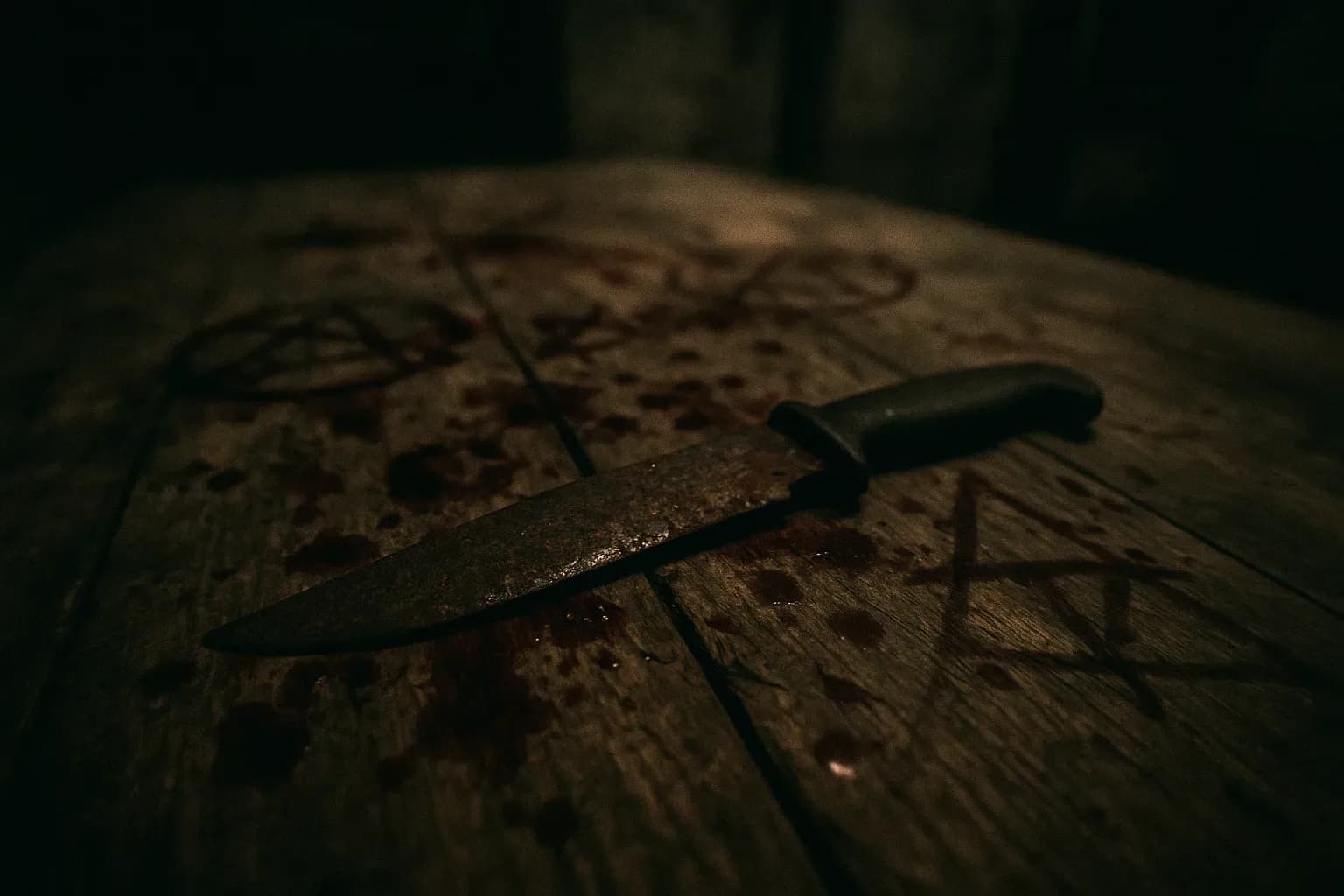
A rusted knife lies on a weathered wooden table in a dimly lit room, surrounded by dark red stains and symbols carved into the surface, reflecting the secretive rituals of Sacra Corona Unita.
BEVIS

Sagsdetaljer

Quick Facts

Klassifikation:

Mafia
Extortion
Narcotics
Italy
Corruption
Bribery
Money laundering

Quick Facts

LocationTrani, Apulia, Italy

In the late 1970s and early 1980s, a new criminal force emerged in Italy's Puglia region. Known as Sacra Corona Unita—translating to "United Sacred Crown"—it would become Italy's feared fourth mafia, rivaling the better-known Cosa Nostra, Camorra, and 'Ndrangheta.

The organization's origins trace directly to Camorra boss Raffaele Cutolo, who initially called it Nuova Grande Camorra Pugliese. Cutolo's strategy was straightforward: extend his Neapolitan Camorra influence southward into Puglia, a region ripe for exploitation. The organization formally established itself in 1983 when a founding document was discovered in prison, in the cell of Giuseppe "Pino" Rogoli, a key figure who would help shape its identity by blending Apulian traditions with practices from the 'Ndrangheta and Camorra. Early blessings came from powerful figures including 'Ndrangheta boss Umberto Bellocco, cementing ties between Italy's major mafia groups.

Unlike the tightly hierarchical structures of traditional mafia families, Sacra Corona Unita operated as a loose association of 10 to 15 clans (some accounts suggest around 50) with approximately 2,000 members. This horizontal structure gave individual clans significant autonomy but also meant the organization lacked the cohesion and stability of its rivals. Leaders including Giuseppe "Pino" Iannelli, Alessandro Fusco, Davide Vadacca, and others controlled different territories and criminal enterprises.

The organization's criminal portfolio was extensive. Drug trafficking formed the backbone of operations—hashish, marijuana, cocaine, and ecstasy moved through international networks spanning the Balkans, Eastern Europe, North America, and beyond. Members controlled key smuggling routes across the Adriatic, working with Albanian partners and establishing branches throughout Europe and North America. Cigarette and arms trafficking provided additional revenue streams, particularly through operations in Romania, Bulgaria, and Montenegro. Giuseppe Cellamare, a Bari boss, emerged as a key figure in the Raimond cigarette smuggling ring before his 1998 arrest in Montenegro.

Violence
Religion
Fangeskab
War crimes
True Crime Podcast 2026
Cardinal Crimes
mordssag
justitssvigt
domstol
forbud
mystisk dødsfald
uløste sager
justitsmordet
forensisk efterforskning
hvidvaskning
cybersikkerhed
mordsager
amerikanske drabssager
amerikanske kriminalsager
magtmisbrug
vold mod kvinder
narkotikasag
Sagsstatus
Løst
Sted
Trani, Apulia, Italy

But Sacra Corona Unita wasn't merely a drug cartel. The organization systematized extortion across Puglia, terrorizing shop owners and residents with dynamite attacks on businesses and vehicles. They collected payoffs for landing rights along the southeast Italian coast, ran clandestine gambling operations, committed armed robberies, and stole vehicles and livestock. Vote-buying in local elections gave them political influence, and their control of financial firms allowed money laundering on a significant scale.

One notable operator was Fabio Franco, who led a fringe group within the organization. In February 2004, Franco was arrested in Brazil, where he had been trafficking hashish, marijuana, cocaine, and ecstasy to Holland and Italy while simultaneously running extortion and illegal gambling schemes back home.

By the early 2000s, however, Sacra Corona Unita's grip was loosening. Defections, arrests of key leaders, and coordinated law enforcement pressure fragmented the organization. A turning point came in October 2004, when police arrested 25 members in Salento following an investigation by the Polizia di Stato, dismantling what remained of a once-formidable criminal enterprise. By the early 2000s, the organization no longer existed as a single viable entity—a stark contrast to the 1980s and 1990s when it posed a genuine threat to southern Italy.

While Sacra Corona Unita never achieved the political power or international reach of Cosa Nostra or the 'Ndrangheta, its existence highlighted Italy's ongoing struggle with organized crime and the willingness of established mafia groups to expand into new territories. Its relatively swift collapse also demonstrated that criminal organizations built on looser foundations remain vulnerable to sustained law enforcement efforts.

**Sources:** - https://gangstersinc.org/sacra-corona-unita-meet-italys-fourth-largest-mafia-group/ - https://en.wikipedia.org/wiki/Sacra_Corona_Unita - https://www.americanmafia.com/Feature_Articles_337.html - https://www.cbsnews.com/news/fourth-mafia-foggia-most-violent-italy/

Read more

A weathered map of the world pinned to a wooden wall, red strings connecting various cities, with small photos of notable United Bamboo Gang leaders around it
Case

United Bamboo Gang: Taiwan's Criminal Empire

A figure resembling Gilberto Orejuela, wearing a business suit, sits at a large wooden desk cluttered with stacks of cash, maps, and a small ornate globe in an upscale office setting.
Case

The Cali Cartel: How a Colombian Empire Conquered Global Markets

A worn wooden door in a narrow Naples alleyway, partially ajar, revealing a tangle of wires and computer screens glowing inside, symbolizing the Camorra's transition from traditional crime to global cybercrime operations.
Case

Naples Mafia Reaches Across Europe: Camorra's Global Empire

Related Content
A weathered map of the world pinned to a wooden wall, red strings connecting various cities, with small photos of notable United Bamboo Gang leaders around it

United Bamboo Gang: Taiwan's Criminal Empire

A figure resembling Gilberto Orejuela, wearing a business suit, sits at a large wooden desk cluttered with stacks of cash, maps, and a small ornate globe in an upscale office setting.

The Cali Cartel: How a Colombian Empire Conquered Global Markets

A worn wooden door in a narrow Naples alleyway, partially ajar, revealing a tangle of wires and computer screens glowing inside, symbolizing the Camorra's transition from traditional crime to global cybercrime operations.

Naples Mafia Reaches Across Europe: Camorra's Global Empire

A table inside a dim room in Vancouver, covered with stacks of cash, a worn map of the Golden Triangle, and a traditional Chinese dragon figurine, symbolizing the reach of the triads.

Chinese Triads Expand Money Laundering Empire Across Europe

Advertisement
SS

Susanne Sperling

View all stories →
Share this post: