True crime news logo
  • News

Sign up for our newsletter and get the latest stories

Never miss the latest true crime news, reviews and top lists — plus new podcasts, series, films and books.

You can unsubscribe with one click from any email.

True crime news logo

The international true crime destination. Cases, documentaries, podcasts and travel routes.

© 2026 truecrime.news. All rights reserved.

Sagsmappe

Colditz Castle: From Royal Residence to Escape-Proof POW Camp

How a medieval Saxon fortress became the most secure Allied prisoner-of-war camp in Nazi Germany—and why inmates kept breaking out anyway
Mappe Åbnet: JUNE 6, 2025 AT 10:00 AM
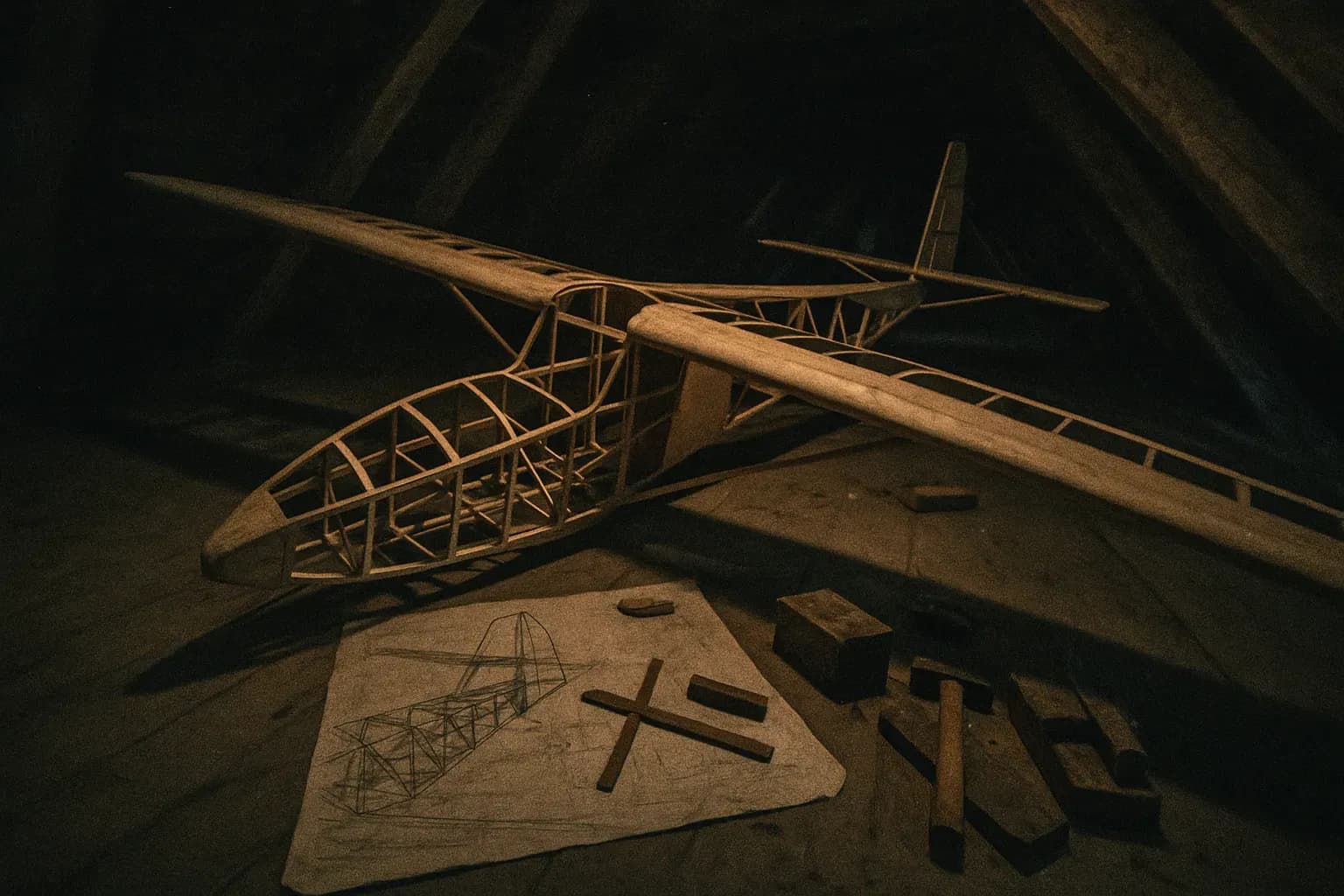
A partially-assembled wooden glider hidden in the attic of Colditz Castle, surrounded by makeshift tools and plans, remnants of a daring escape attempt by Allied prisoners during World War II
BEVIS

Sagsdetaljer

Quick Facts

Klassifikation:

World war ii
Prisoner of war
Escape
Military
Austria
Germany
Espionage

Quick Facts

LocationColditz Castle, Colditz, Saxony, Germany

Colditz Castle stands on a steep hilltop overlooking the Mulde River in the town of Colditz, approximately 25 miles southeast of Leipzig in Saxony, Germany. Its 11th-century stone walls—7 feet thick at the base—once sheltered Saxon royalty. By 1933, under Nazi rule, the castle had been repurposed as a political prison for communists, homosexuals, Jews, and other prisoners deemed "undesirable" by the regime.

When World War II erupted in 1939, the Germans converted Colditz into Oflag IV-C, a maximum-security prisoner-of-war camp reserved exclusively for Allied officers the Nazis considered troublemakers. British, French, Polish, Belgian, American, and Commonwealth prisoners—men who had already escaped from other camps or shown "incorrigible" resistance—were concentrated within its medieval walls. At peak capacity, the fortress held approximately 800 POWs.

The German High Command believed Colditz was escape-proof. The castle's location—roughly 400 miles from neutral Switzerland or Allied territory—combined with its fortress architecture and rocky foundations made it seemingly impregnable. Armed sentries patrolled constantly. Barbed wire enclosed the grounds. The International Red Cross inspected the facility in 1944 and reported it was too cramped and unsuitable for the number of prisoners held there, contributing to low morale and an atmosphere thick with escape plotting.

Yet the inmates refused to accept defeat. Between 1939 and 1945, prisoners launched over 130 escape attempts. Approximately 32 to 35 men reached the frontier without recapture—a remarkable success rate for a camp designed to be escape-proof. British and Commonwealth officers alone accounted for at least 10 successful breakouts.

The methods were ingenious. Prisoners tunneled despite the rocky terrain. They forged documents with meticulous care. They fashioned disguises—most audaciously, some men dressed as German guards. On January 5, 1942, four officers escaped in pairs wearing convincing Wehrmacht uniforms: one English, two Dutch, and one of unspecified nationality.
Fangeskab
Historical
War crimes
False confession
Stasi
Siege
mordssag
justitssvigt
mordsager
True Crime Podcast 2026
politiafhøringer
triple murder
trillingdrab
mystisk dødsfald
uløste sager
finansiel svindel
justitsmordet
forensisk efterforskning
hvidvaskning
amerikanske drabssager
amerikanske kriminalsager
sundhedsbedrageri
kvaksalveri
Sagsstatus
Løst
Sted
Colditz Castle, Colditz, Saxony, Germany

In winter 1944 and 1945, a group of prisoners constructed an aircraft in the attic—the Colditz Cock, a wooden glider designed for a daring aerial escape. Though the war ended before the glider could be deployed, the machine was assembled after liberation and stands as a testament to prisoner ingenuity and determination.

Among the notable prisoners held at Colditz were Winston Churchill's nephew and the nephew of King George VI, illustrating the camp's role as a high-profile detention facility for officers of rank and significance.

Pat Reid, a British officer, survived Colditz and later authored *The Colditz Story* (1953), a firsthand account that helped immortalize the fortress in popular memory and inspired subsequent films and television documentaries.

The camp was liberated by the U.S. Army in April 1945. Soviet forces occupied the region in May 1945, and Colditz subsequently became part of East Germany. In the post-war decades, the castle served various purposes: a prison for criminals, a home for the elderly, a nursing home, and eventually a hospital and psychiatric clinic.

Contrary to some historical misconceptions, verified sources confirm that Colditz Castle was not used as a death camp or execution site during its WWII operation as a POW facility. While prisoners elsewhere in the Nazi system faced execution and deadly conditions, Colditz's grim reputation rested on its role as a maximum-security prison—not a place of systematic killing.

Today, Colditz Castle remains a tangible link to World War II history, its thick walls still standing as a physical reminder of the determination of Allied officers who refused to surrender, even when imprisoned in what their captors believed was an inescapable fortress.

**Sources**

https://www.britannica.com/topic/Colditz-Castle

https://www.nationalarchives.gov.uk/explore-the-collection/explore-by-time-period/second-world-war/escaping-colditz/

https://en.wikipedia.org/wiki/Colditz_Castle

https://www.tripadvisor.com/Attraction_Review-g951335-d586724-Reviews-Colditz_Castle-Colditz_Saxony.html

Read more

A dense jungle setting in Laos with a makeshift bamboo cage, chains, and jungle undergrowth, emphasizing the harsh environment where Dieter Dengler escaped captivity, symbolizing his struggle for survival and resilience
Case

The Pilot Who Escaped: Dieter Dengler's 23-Day Jungle Survival

A narrow, partially hidden tunnel entrance at Stalag Luft III, surrounded by makeshift tools and dirt, symbolizing the escape route used by 76 Allied prisoners during World War II.
Case

The Great Escape: 76 Men, One Tunnel, 50 Deaths

A figure resembling Julius Rosenberg stands in a dimly lit prison cell, his hands gripping cold iron bars, while a guard's shadow looms in the background.
Case

The Rosenbergs: Cold War Spies Executed for Atomic Espionage

Related Content
A dense jungle setting in Laos with a makeshift bamboo cage, chains, and jungle undergrowth, emphasizing the harsh environment where Dieter Dengler escaped captivity, symbolizing his struggle for survival and resilience

The Pilot Who Escaped: Dieter Dengler's 23-Day Jungle Survival

A narrow, partially hidden tunnel entrance at Stalag Luft III, surrounded by makeshift tools and dirt, symbolizing the escape route used by 76 Allied prisoners during World War II.

The Great Escape: 76 Men, One Tunnel, 50 Deaths

A figure resembling Julius Rosenberg stands in a dimly lit prison cell, his hands gripping cold iron bars, while a guard's shadow looms in the background.

The Rosenbergs: Cold War Spies Executed for Atomic Espionage

A dark, cramped underground tunnel with dirt walls, a small group of Union officer uniforms wriggling through, led by a figure resembling Colonel Rose, symbolizing their daring escape from Libby Prison.

The Great Escape: Colonel Rose's Tunnel Out of Libby Prison

Advertisement
SS

Susanne Sperling

View all stories →
Share this post: