About This Episode
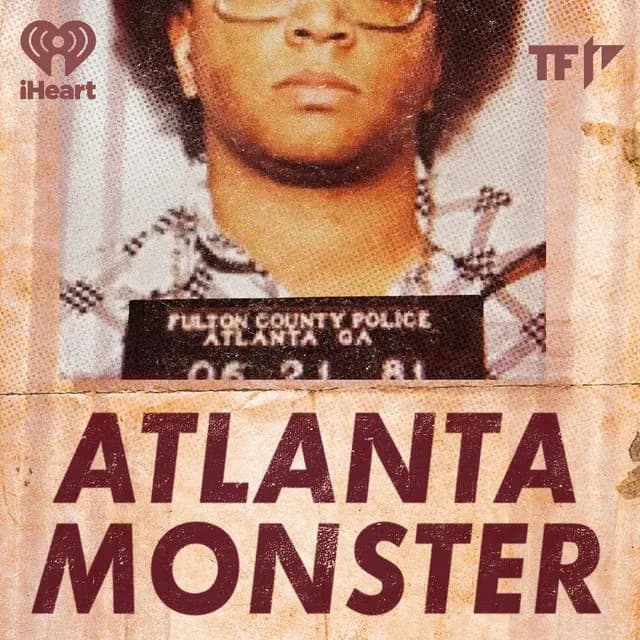
Payne Lindsey's Atlanta Monster stands apart in the crowded true crime podcast landscape because it does something most programs avoid: it systematically questions whether the American justice system convicted the right person.
Produced by Tenderfoot TV and iHeart Media, the podcast focuses on the Atlanta Child Murders, a series of killings that terrorized Atlanta's African American community between 1979 and 1981. Over 25 children, teenagers, and adults were murdered during this period. Among the early victims were Edward Hope, 14, and Alfred Evans, 13, both of whom disappeared in the summer of 1979.
Police arrested Wayne Williams in 1981. At 23 years old, Williams was convicted of murdering two adult victims. He remains imprisoned today. Yet the Atlanta Monster investigation raises a critical question: did law enforcement rush to judgment, convicting one man for crimes committed by multiple killers—or an entirely different suspect?
The podcast explores dimensions of the case that mainstream media largely overlooked. Central to its investigation is how racial tensions between white and Black communities shaped both the police investigation and public perception. Atlanta in 1979-1981 was a city deeply divided along racial lines, and the murders themselves became a flashpoint for examining how differently crimes affecting Black communities were treated compared to similar crimes affecting white populations.
Lindseys's approach scrutinizes media portrayal of the victims and the investigation itself. True crime podcasts typically present a solved case as settled fact. Atlanta Monster instead examines what evidence actually supports the conviction, what gaps exist in the official narrative, and whether reasonable doubt should matter more than it apparently did in the courtroom.
The podcast's success sparked an entire franchise. The format proved so effective that Season 2, titled Monster: Zodiac, launched on January 8, 2019, shifting focus to the infamous Zodiac murders. Season 3, Monster: DC Sniper, followed in January 2020. Season 4 examined the BTK serial killer from Wichita, Kansas, who murdered at least 10 people.
Yet it is the first season that defined the series' identity: investigative journalism that questions institutional power and the finality of conviction. By treating a closed case as genuinely open, Lindsey modeled an alternative to true crime's usual formula—entertainment that treats solved cases as entertainment rather than justice definitively served.
For international audiences, Atlanta Monster demonstrates how American racial divisions infiltrate even the criminal justice system. The case became a lens through which to examine whether a young Black man in 1981 Atlanta could receive a fair trial, whether evidence mattered as much as narrative, and whether closure for victims' families required conviction of the guilty or merely conviction of someone.
The podcast ultimately raises uncomfortable questions about American justice that extend far beyond Atlanta. It suggests that some cases we consider closed might deserve reopening, that conviction isn't the same as guilt, and that true crime storytelling carries responsibility to interrogate official narratives rather than simply amplify them.
Atlanta Monster remains significant not because it definitively solves the Atlanta Child Murders, but because it refuses to pretend they are solved in any way that satisfies scrutiny.
Sources: - https://en.wikipedia.org/wiki/Atlanta_Monster - https://atlantamonster.com - https://atlantastudies.org/2018/10/16/paul-renfro-tough-on-crime-atlanta-monster-and-the-politics-of-true-crime-podcasting/ - https://reallyintothis.com/atlanta-monster-podcast/