Untold: The Murder of Air McNair
Netflix, 2024 — the murder-suicide of NFL star Steve McNair in Nashville, Tennessee
Quick facts
What Is the Series About?
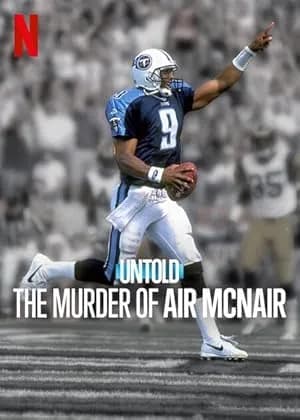
Untold: The Murder of Air McNair is a Netflix documentary episode that examines one of the most shocking and enduring tragedies in modern NFL history: the murder of celebrated Tennessee Titans quarterback Steve "Air" McNair on July 4, 2009, in Nashville, Tennessee. Clocking in at 57 minutes, the film is part of Netflix's broader Untold anthology series, which revisits consequential and often overlooked stories from the world of sports. Directed by Rodney Lucas and Taylor Alexander Ward, the documentary premiered on August 20, 2024, and immediately reignited national debate about a case that had never fully left the public consciousness.
The Case
In the early hours of Independence Day 2009, Steve McNair — 36 years old, a two-time Pro Bowl selection and co-MVP of the 2003 NFL season — was found dead inside a condominium on Lea Street in Nashville, a property rented under his name. He had been shot four times. Beside him lay Sahel "Jenni" Kazemi, a 20-year-old waitress McNair had been seeing romantically. Kazemi had a single gunshot wound to the head, which investigators determined was self-inflicted.
Kazemi, also identified in some early media reports as Sahel Kazmi, had reportedly met McNair at a Dave & Buster's restaurant where she worked. By the summer of 2009, the two were in a relationship, though McNair was a married man. According to accounts that emerged after the deaths, Kazemi had recently been struggling with financial pressures and personal distress in the weeks leading up to the killing.
Nashville police conducted a swift investigation and ruled the deaths a murder-suicide, concluding that Kazemi shot McNair multiple times while he slept on a sofa and then took her own life. The key physical evidence cited by detectives included gunpowder residue detected on Kazemi's hand and the specific position of the firearm, which was found beneath her body in a manner consistent with a self-inflicted wound. Because Kazemi died at the scene, no criminal charges were ever filed and no trial ever took place.
McNair left behind a wife, Mechelle McNair, and four sons. His death at 36 stunned the NFL community and the city of Nashville, where he had spent the prime years of his career and remained a celebrated figure. He had only officially retired from professional football in 2008.
Lingering Questions and Controversy
Despite the official police ruling, the case has attracted persistent speculation over the years. Some observers and commentators have questioned whether all the facts surrounding the killing were fully explored, pointing to other individuals connected to both McNair and Kazemi in the period before the deaths. The documentary revisits these threads without overturning the official conclusion. As Sports Business Journal noted, the film "resurfaced many of the details" of a case that has remained a long-haunting subject in Nashville sports circles.
The filmmakers draw on available investigative records, contemporary news coverage, and contextual interviews to reconstruct the timeline of events. The documentary does not present new forensic evidence that contradicts the Nashville Police Department's finding, but it does give space to the grief and unresolved feelings of those who knew McNair and to the broader cultural and emotional context of his death.
Production
Untold: The Murder of Air McNair was directed by Rodney Lucas and Taylor Alexander Ward and produced as a standalone episode within Netflix's Untold documentary anthology. The Untold series has built a reputation for examining sports stories that carry significant human and social weight beyond the scoreboard, and the McNair episode fits squarely within that mandate. The 57-minute runtime is consistent with the single-episode format used for several installments in the franchise.
The production draws on archival footage of McNair's football career — including his celebrated years with the Tennessee Titans and his 2000 Super Bowl appearance — to establish who he was as an athlete and public figure before shifting into the true-crime reconstruction of his final days. The IMDb title page for the documentary is registered under the ID tt33038082.
Reception
Critical reception was decidedly mixed, leaning negative among professional reviewers. The Guardian's review was particularly blunt, advising readers to "save yourself an hour and google it" — a pointed dismissal suggesting that the documentary added little to what is already publicly known about the case. The Wall Street Journal offered a more measured assessment, describing the film as covering the case straightforwardly while balancing McNair's football legacy against the grim circumstances of his death.
Among general audiences and NFL fans, particularly those with ties to the Tennessee Titans, the documentary sparked active online discussion. Reddit threads from Titans fan communities showed genuine engagement with the material, reflecting how deeply the tragedy still resonates in that community more than 15 years after McNair's death. No verified aggregate audience score is available at the time of publication, and IMDb has not published a crowd-sourced rating in the available data for this title.
The Case Today
The official ruling on Steve McNair's death has not changed since Nashville police announced their conclusion in July 2009. The case remains closed as a murder-suicide, with Sahel Kazemi identified as the perpetrator. No new criminal proceedings have been initiated, and no new forensic evidence has publicly emerged to contradict the original findings.
Steve McNair was inducted into the Pro Football Hall of Fame in 2024, the same year this documentary was released — a coincidence that amplified public attention on both his athletic legacy and the circumstances of his death. His family has continued to grieve privately, and the Nashville community has grappled with how to remember a beloved sports figure whose life ended in violence and tragedy. The Netflix documentary, whatever its critical limitations, ensured that a new generation of viewers encountered his story in full.