Unabomber: In His Own Words
Netflix, 2020 — Ted Kaczynski's two-decade mail-bomb campaign against modern technology
Quick facts
What Is the Series About?
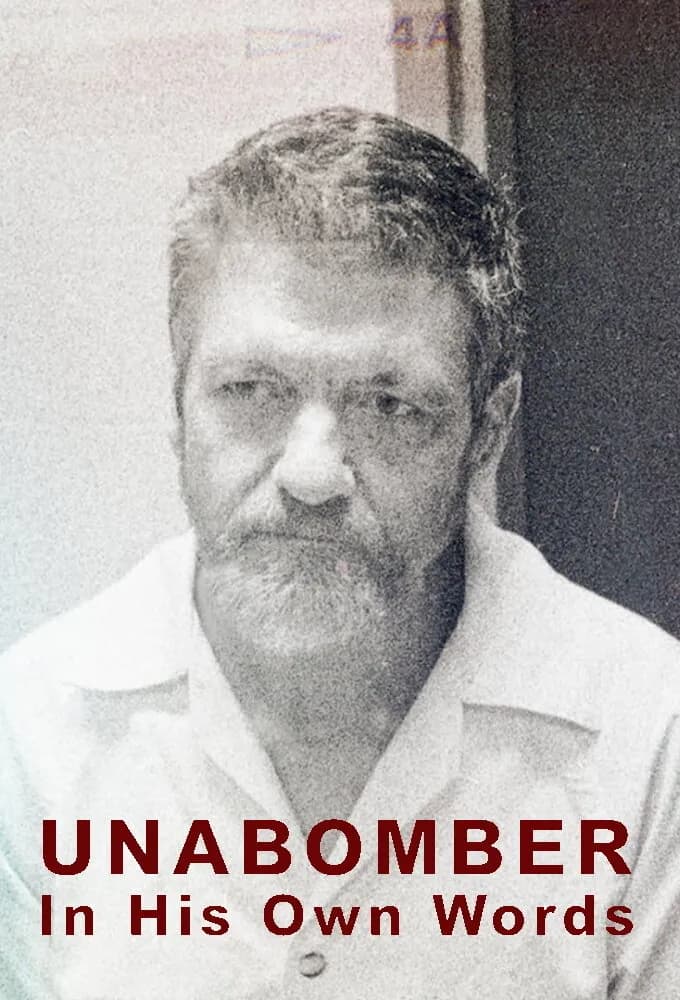
Unabomber: In His Own Words is a three-episode Netflix documentary series that tells the story of Theodore John Kaczynski — the Harvard-educated mathematician turned domestic terrorist who terrorised the United States with a series of mail bombs between 1978 and 1995. Directed by Stephen Kay, the series places Kaczynski's own recorded words at the centre of the narrative, drawing on archival material, interviews, and the writings of the man himself to reconstruct one of the longest and most complex domestic terrorism investigations in FBI history.
The title is deliberately pointed. Rather than framing the story primarily through the eyes of investigators or survivors, the series lets Kaczynski speak — a creative choice that drew both admiration and sharp criticism from viewers and commentators.
---
The Case
A Campaign Two Decades in the Making
Between May 25, 1978 and April 24, 1995, Ted Kaczynski sent or planted at least 16 bombs targeting universities, airlines, and individuals he associated with modern technology and industrial society. The FBI's investigation, codenamed UNABOM — a portmanteau of UNiversity and AirBline OM) — gave Kaczynski his enduring public alias: the Unabomber.
The campaign killed three people and injured 23 others across nearly two decades:
- Buckley Crist, a Northwestern University professor and airline executive, was injured in the very first attack in 1978 but survived.
- Hugh Scrutton, a computer store owner in Sacramento, California, was killed in December 1985 — the first fatality of the campaign.
- Thomas J. Mosser, an advertising executive, was killed by a mail bomb at his New Jersey home in December 1994.
- Gilbert Brent Murray, a timber industry lobbyist, was killed in Sacramento in April 1995 — the final murder of the campaign.
The Perpetrator: Ted Kaczynski
Ted Kaczynski was, by any conventional measure, a prodigy. Born in Chicago in 1942, he entered Harvard University at the age of 16, earned his undergraduate degree, and went on to complete a PhD in mathematics at the University of Michigan. He was subsequently appointed as an assistant professor of mathematics at the University of California, Berkeley — one of the most prestigious mathematics departments in the world.
In 1969, at the age of 26, he abruptly resigned his position and eventually retreated to a primitive, electricity-free cabin he built himself near Lincoln, Montana. It was from this isolated structure that he conducted his bombing campaign, driven by a deeply held conviction that modern industrial technology was destroying human freedom and the natural world.
His ideology found its fullest expression in his 35,000-word manifesto, Industrial Society and Its Future, which he submitted to major newspapers in 1995 with a chilling ultimatum: publish it, or the bombings will continue. The Washington Post and The New York Times complied, running the full text in September 1995.
The Break in the Case
The publication of the manifesto proved to be Kaczynski's undoing. His brother, David Kaczynski, recognised the distinctive phrasing and ideological arguments as unmistakably his brother's. After consulting with his wife and wrestling with the moral weight of the decision, David contacted the FBI in late 1995.
On April 3, 1996, federal agents descended on Kaczynski's Montana cabin and arrested him. Inside, they found an active bomb, bomb-making materials, and thousands of pages of journals in which Kaczynski had meticulously documented his crimes.
Trial and Conviction
Kaczynski's legal proceedings were complex and at times chaotic. He repeatedly clashed with his defence attorneys over their strategy of presenting a mental health defence — a strategy Kaczynski himself vehemently opposed. In January 1998, he accepted a plea agreement, pleading guilty to all federal charges in exchange for life imprisonment without the possibility of parole, along with fines and restitution. He avoided the death penalty.
He was imprisoned at ADX Florence, the federal government's highest-security facility in Florence, Colorado — sometimes called the "Alcatraz of the Rockies."
---
Production
Directed by Stephen Kay, Unabomber: In His Own Words is structured around the documentary device its title promises: Kaczynski's own voice, filtered through archival recordings, journal entries, and his published manifesto. This approach places the audience in an unusually direct relationship with the perpetrator's inner world — a technique that amplifies both the intellectual coherence and the chilling detachment of Kaczynski's worldview.
The series incorporates interviews with investigators, journalists, and individuals connected to the case, providing counterpoint to Kaczynski's perspective. The use of archival FBI footage and materials from the investigation helps ground the series in the procedural reality of one of the most expensive and resource-intensive investigations in American law enforcement history — involving the FBI, the Bureau of Alcohol, Tobacco, Firearms and Explosives (ATF), the U.S. Postal Inspection Service, and numerous local agencies.
The three-episode format is relatively compact for a case of this scope and duration. Some critics noted that compression inevitably meant certain threads — particularly the experiences of survivors and victims' families — received less attention than the perpetrator's ideological framework.
---
Reception
Reception for Unabomber: In His Own Words was mixed to positive among true-crime viewers and critics. Audiences drawn to the series praised its use of primary source material and the unsettling clarity with which Kaczynski's own words conveyed both his intelligence and his capacity for rationalised violence.
However, the series was not without controversy. A persistent and legitimate debate in true-crime criticism concerns whether documentary series that centre perpetrators — particularly ideologically motivated ones — risk amplifying the very notoriety and ideas the criminal sought to project. In Kaczynski's case, this tension is especially acute: his manifesto contains a coherent, if extreme, critique of technology and industrial society that some commentators have noted has found unexpected resonance in certain corners of contemporary discourse.
Critics who found fault with the series argued that allowing Kaczynski's words to anchor the narrative, without sufficiently robust challenge or contextualisation, tips the balance uncomfortably in the perpetrator's favour. Supporters of the approach countered that understanding how a highly intelligent person constructed and maintained a violent ideology is itself a form of public education.
The series holds a listing on IMDb under the title ID tt11611358, though its rating fluctuates over time and should be verified directly on the IMDb title page.
---
The Case Today
Ted Kaczynski spent the years following his conviction at ADX Florence, where he continued to write and correspond with researchers, journalists, and admirers — a fact that itself generated ongoing controversy about the management of high-profile ideologically motivated prisoners.
In June 2023, Kaczynski died in federal custody at the Federal Correctional Institution in Butner, North Carolina, where he had been transferred for medical care. He was 81 years old. His death prompted a fresh wave of coverage revisiting both his crimes and the uncomfortable question of his intellectual legacy.
For the victims and their families, Kaczynski's death closed a chapter but did not erase nearly two decades of fear, loss, and injury. The three people he killed — Hugh Scrutton, Thomas Mosser, and Gilbert Murray — and the 23 he injured represent the human cost that the ideological framing of documentaries like this one can, at its worst, obscure.
The UNABOM investigation itself remains a landmark case study in domestic terrorism and long-running forensic investigation, studied at the FBI and in criminology programmes to this day.