Tro, håb og voldtægt
TV 2 Play, 2024 — Danish documentary about Kiran Vesterholm, drugged and raped by her husband within the Mormon church
Quick facts
What Is the Series About?
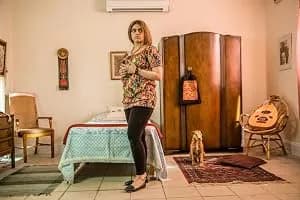
Tro, håb og voldtægt — translated roughly as Faith, Hope and Rape — is a 2024 Danish documentary streaming on TV 2 Play. Running 41 minutes, it tells the story of Kiran Vesterholm, a Danish woman who says she was repeatedly drugged and raped by her husband, Peter, over the course of several years while the couple were active members of Jesu Kristi Kirke af Sidste Dages Hellige — the Church of Jesus Christ of Latter-day Saints, commonly known as the Mormon church. At the centre of the documentary is not only the abuse itself, but a damning allegation: that when church leadership learned of Peter's conduct, they chose to handle the matter internally rather than report it to Danish police.
The documentary was driven by investigative journalist Michael Teschl, whose reporting gave Kiran Vesterholm a platform to tell her story in full — and forced a national conversation about what happens when religious institutions act as parallel justice systems.
---
The Case
Kiran Vesterholm says she first became aware something was wrong in spring 2013, when she woke to find her husband in the act of raping her. That moment was the beginning of what she would later come to understand as a pattern of drug-facilitated sexual violence. Over the years that followed, Kiran came to believe she had been assaulted 30 to 40 times before she fully grasped what was being done to her — incidents she had previously dismissed, slept through, or struggled to make sense of, all pointing to the same perpetrator: her husband, the father of her three children.
What makes the case particularly disturbing — and what gives the documentary its broader social resonance — is the conduct of the Mormon church after the abuse came to its leaders' attention. Rather than contacting Danish authorities, church leadership processed the matter internally, imposing what TV 2 describes as a one-year "silence" sanction on Peter. No police report was filed. No victim support was formally arranged through official channels. The institution, in effect, treated a serious criminal matter as a spiritual one.
Peter was eventually arrested in September 2022, years after the abuse is alleged to have begun. He has denied committing crimes beyond the two rapes for which he was ultimately convicted. Available sources do not confirm a specific prison sentence length, and his current custodial status could not be independently verified at the time of publication.
---
Production
The documentary was produced for TV 2 Play, Denmark's major streaming platform, and reflects the kind of deep-access investigative journalism that has defined Scandinavian true-crime documentary-making in recent years. Investigative journalist Michael Teschl is credited by industry publication Journalisten as the driving force behind the project. Kiran Vesterholm appears to have cooperated directly with the production, making her account central to the film's structure and emotional impact.
The road to broadcast was not smooth. Before the documentary could air, TV 2 faced an attempted fogedforbud — a Danish legal mechanism equivalent to a pre-publication injunction — which sought to prevent the documentary from being shown. TV 2 temporarily delayed its broadcast while the legal challenge was active. The broadcaster ultimately won the injunction case and the documentary went out as planned in 2024. The legal battle itself became part of the story, drawing additional public attention before a single frame had been broadcast.
---
Reception
The documentary landed with considerable force in Denmark. TV 2's own reporting described the case as having "shocked experts", with legal and religious scholars weighing in on how a church could have effectively shielded a convicted rapist from criminal accountability. The documentary was reviewed by Ekkofilm, Denmark's leading film magazine, reflecting its standing as a serious journalistic work rather than a sensationalist production.
At the end of 2024, Tro, håb og voldtægt was named Best Danish true-crime documentary or series of 2024 at the Mørkeawards — the Danish true-crime community's annual recognition awards — underscoring both its quality and its cultural impact. No IMDb rating was available at the time of writing.
---
The Case Today
The fallout from the documentary extended well beyond the courtroom verdict against Peter. Following the broadcast, the case prompted scrutiny at a governmental level: Altinget reported that *Kirkeministeriet* — Denmark's Ministry of Ecclesiastical Affairs — launched a review into whether the Mormon church in Denmark should lose its formal recognition as a religious community. Researchers simultaneously called for systematic, government-led collection of data on abuse, violations, and due-process rights within religious councils and internal religious courts across the country.
For Kiran Vesterholm, the documentary represents the most public chapter of a years-long ordeal — one that began in silence, was compounded by institutional failure, and ultimately reached both a criminal court and a national audience. Her willingness to be named and to speak publicly has made her a central figure in a growing Danish debate about the accountability of religious institutions, the limits of internal church discipline, and the rights of crime victims who belong to close-knit faith communities.
The case is a reminder that no institution — however defined by faith, community, or tradition — is above the criminal law.