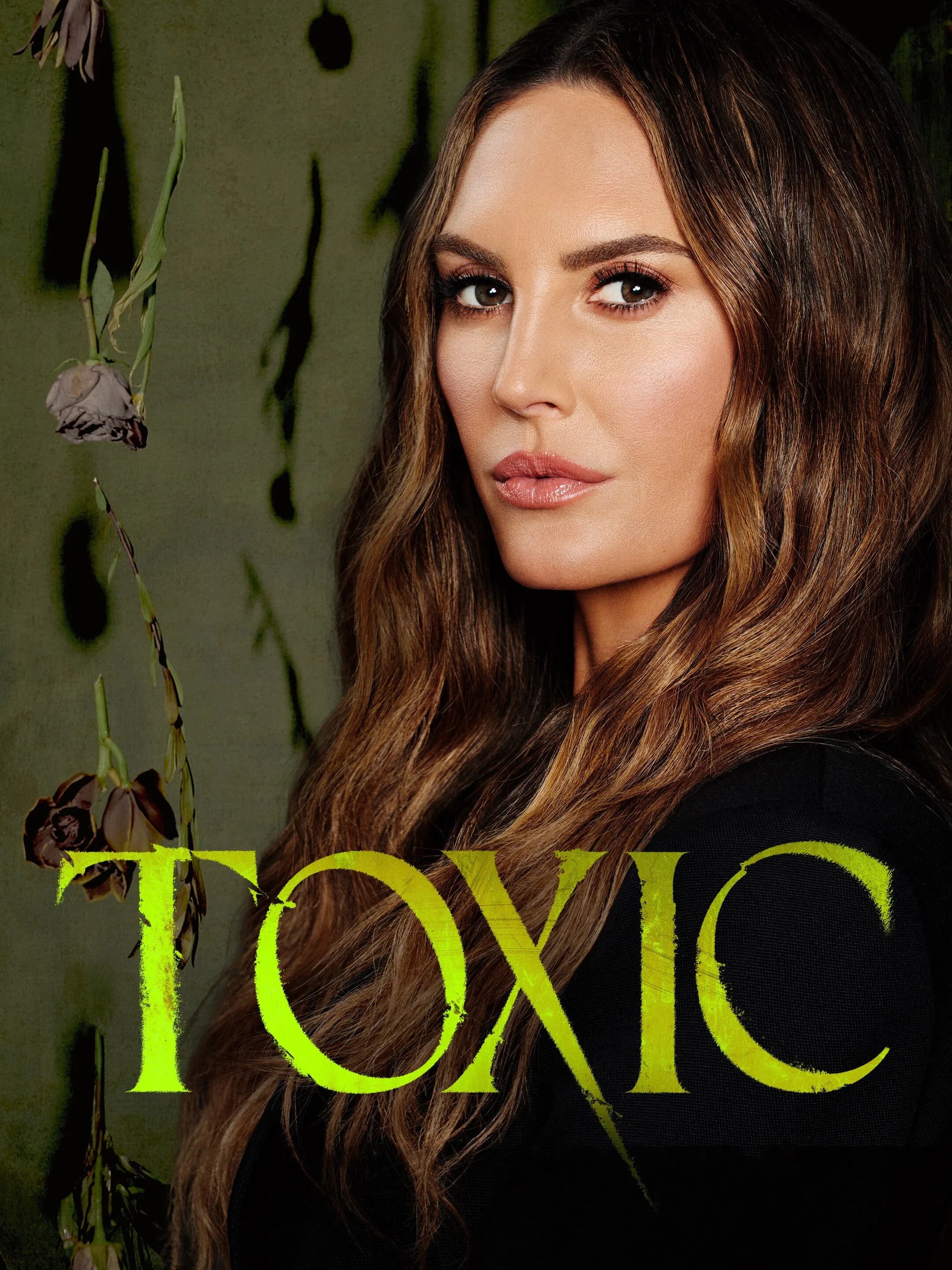
Toxic
HBO Max / ID, 2025 — Elizabeth Chambers investigates how love turns deadly
Quick facts
What Is the Series About?
Toxic is a six-part true-crime docuseries hosted by Elizabeth Chambers that premiered on May 5, 2025, on Investigation Discovery and its streaming home, Max (HBO Max). Unlike single-case true-crime documentaries that follow one investigation from crime to verdict, Toxic is structured as an anthology series — each of its six episodes examines a distinct real-life story in which a romantic or intimate relationship turned dangerous, manipulative, or deadly.
The official series premise, as described by Investigation Discovery, centers on Chambers meeting directly with survivors and victims to investigate "how love turns toxic and can lead to tragedy." The show explores the psychological mechanisms behind intimate-partner violence and coercive control, using first-person testimony, case evidence, and expert commentary to reconstruct how relationships that began in apparent normalcy descended into darkness.
The series is particularly notable because of who is hosting it. Elizabeth Chambers — model, entrepreneur, and television personality — became a public figure in her own right partly through her high-profile divorce from actor Armie Hammer, a separation that played out against a backdrop of serious public allegations. That personal context gives Chambers an unusual proximity to the subject matter, lending the series a degree of lived credibility that distinguishes it from more clinically hosted true-crime programs.
The Cases
Because Toxic is an anthology-format docuseries, there is no single perpetrator, victim, or criminal case at its center. Instead, each of the six episodes is understood to profile a separate story of a relationship that crossed into abuse, violence, or fatal tragedy. The show's marketing frames these as real cases drawn from across the United States, examined through the lens of what warning signs were present, how the relationships escalated, and what the aftermath looked like for survivors, families, and communities.
The publicly available synopsis from Rotten Tomatoes describes the series as an exploration of "the dark and twisted side of relationships," a framing consistent with Investigation Discovery's broader programming identity as a network specializing in intimate-partner crime, domestic homicide, and relationship-based true crime. Specific episode subjects — including perpetrator names, victim identities, crime dates, and court outcomes — are detailed within the episodes themselves rather than in pre-release promotional materials, a common approach for anthology true-crime series that allows each story to unfold without spoiling its outcome.
What unites the six episodes thematically is the question of how ordinary-seeming relationships become vehicles for control, harm, and ultimately tragedy — and what victims, law enforcement, and communities can learn from each case.
Production
Investigation Discovery announced the series on April 10, 2025, roughly three weeks before its premiere date, positioning it as one of the network's featured spring 2025 titles. The series was produced for dual broadcast on the linear ID channel and simultaneous streaming availability on Max, reflecting the Discovery/Warner Bros. Discovery strategy of releasing Investigation Discovery content across both its cable home and the Max platform.
Elizabeth Chambers serves not merely as a presenter reading scripts off-camera but as an active on-screen investigator who, according to the network's description, personally meets with victims and participants in each case. This approach — more immersive than a traditional narrator role — is consistent with the post-Dateline evolution of true-crime hosting, where audience connection to the host's emotional engagement has become a production priority.
The director or directors of the series have not been publicly identified in available pre-release materials. Production credits beyond the host have not been confirmed in indexed sources at the time of publication.
Reception
Early audience reception for Toxic has been moderately positive. The series holds an IMDb rating of 6.9/10 based on 276 ratings registered shortly after premiere — a score that places it in the middle tier of Investigation Discovery docuseries, neither a breakout critical hit nor a poorly received title. For context, ID anthology series frequently score in the 6.5–7.5 range on IMDb, where genre fans tend to rate content based on production quality, case selection, and host chemistry rather than pure cinematic ambition.
Rotten Tomatoes has a listing for the series, though a formal aggregated critics' score had not been widely indexed at the time of publication. The platform listing confirms the series is accessible via multiple streaming services, broadening its potential audience beyond Max subscribers.
The casting of Elizabeth Chambers as host drew attention in entertainment media given her public profile. Some coverage noted the implicit resonance between the series subject — toxic intimate relationships — and her own widely publicized personal circumstances, though the series itself does not appear to use her biography as overt framing material. Whether audiences and critics view that casting as meaningfully authentic or as reductive remains a point of informal debate in early viewer commentary.
The Cases Today
Because Toxic covers multiple cases across its six episodes rather than a single ongoing investigation, there is no unified "case today" to summarize. Each episode's real-world case will carry its own current status — some perpetrators may be serving sentences, others may have cases still working through appeals, and some episodes may focus on cases where no criminal conviction was obtained.
The series' broader cultural contribution sits within a growing body of true-crime programming that foregrounds survivor voices and relationship psychology rather than centering the investigation or prosecution process. In that sense, Toxic joins a wave of ID and Max productions that ask not just "what happened" but "how did it happen, and what does it tell us about how we understand love, control, and danger?"
For viewers interested in the individual cases profiled, episode-specific research using the names and details disclosed within each installment will yield the most complete picture of outcomes and current status.